Improving how we coach shooting starts with understanding what separates a make from a miss. A shot can miss to the left or right, or it can miss short or long. This piece is about the second kind — the misses that come down to how well a player controls the distance of the shot.
Distance control was the mission when we set out to study the shot in the way that became our research paper on release curvature — the shape of the ball's path as it rises into the release (Slegers & Love, 2024). It gave us our first real clue about the habits that lead to better, or worse, control of distance. And like most things you can finally put a number to, it disproved a few ideas coaching had taken for granted for years.
Distance control lives in the ball path
Whether a shot is short, long, or perfect comes down to two things working together: the angle at which the ball is shot (its release angle) and how fast it’s moving (its velocity). With each shot there are a variety of different solutions that can result in the ball being shot the correct distance, and how well a shooter controls those variables will determine how well they control their distance.
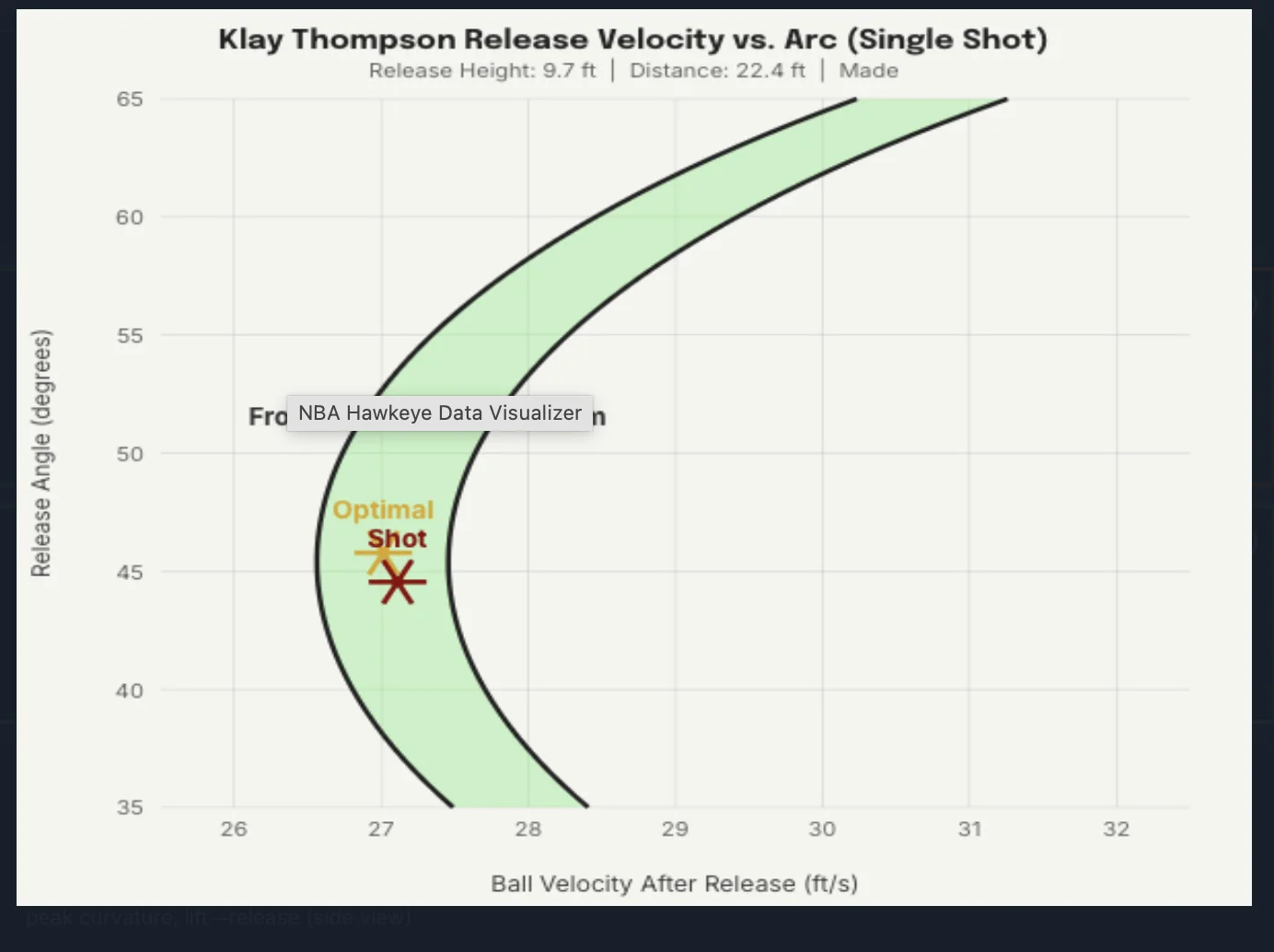
The point here is simple: once we could quantify the factors that contribute to distance control, we were then able to see who did this well and why.
The myth we set out to prove — and couldn’t
We went into this research with a belief that felt obvious. A smoother ball path — one without a sharp, pronounced change of direction — should give a player better distance control. It is the instinct behind a hundred cues: “one motion,” “smooth it out,” “no hitch.” We fully expected the data to confirm it.
It did not.
When we lined up the numbers, there was almost no correlation between how much a player’s ball path changed direction and how good a shooter they were. Excellent shooters with smooth paths, and excellent shooters with sharp, abrupt ones. Poor shooters with smooth paths, and poor shooters with sharp ones. The amount of change of direction — the thing coaching has fussed over for decades — simply did not predict who could shoot.
“In a research paper, we set out to prove that a smoother ball path makes a better shooter. The data said no. Smoother ball paths were not the common traits of better shooters.”
Tweet thisThat is not a disappointing result. It is the entire reason you measure. A belief everyone shared, held for years, dissolved the moment we could put a number on it.
Different shots are shot differently
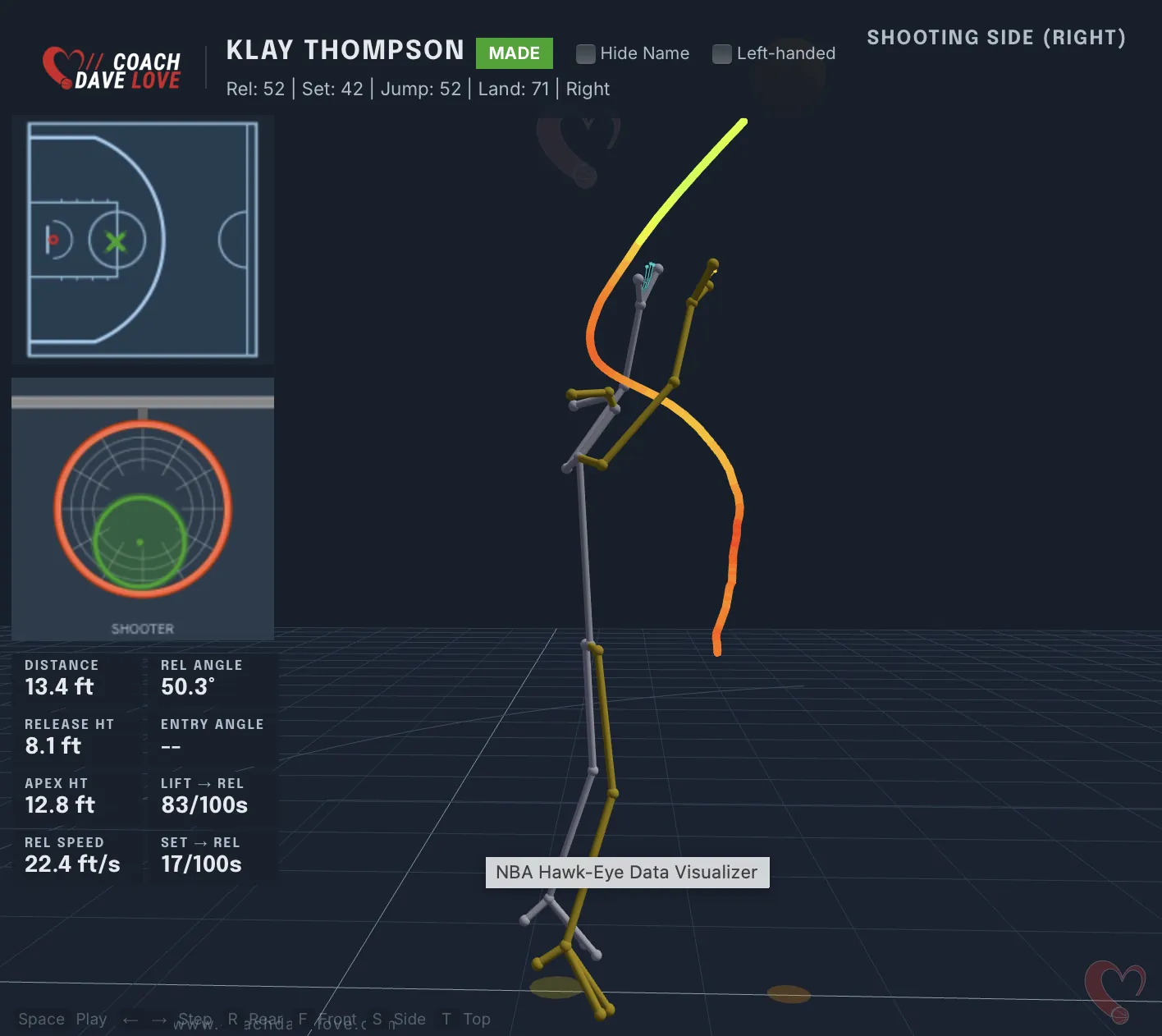
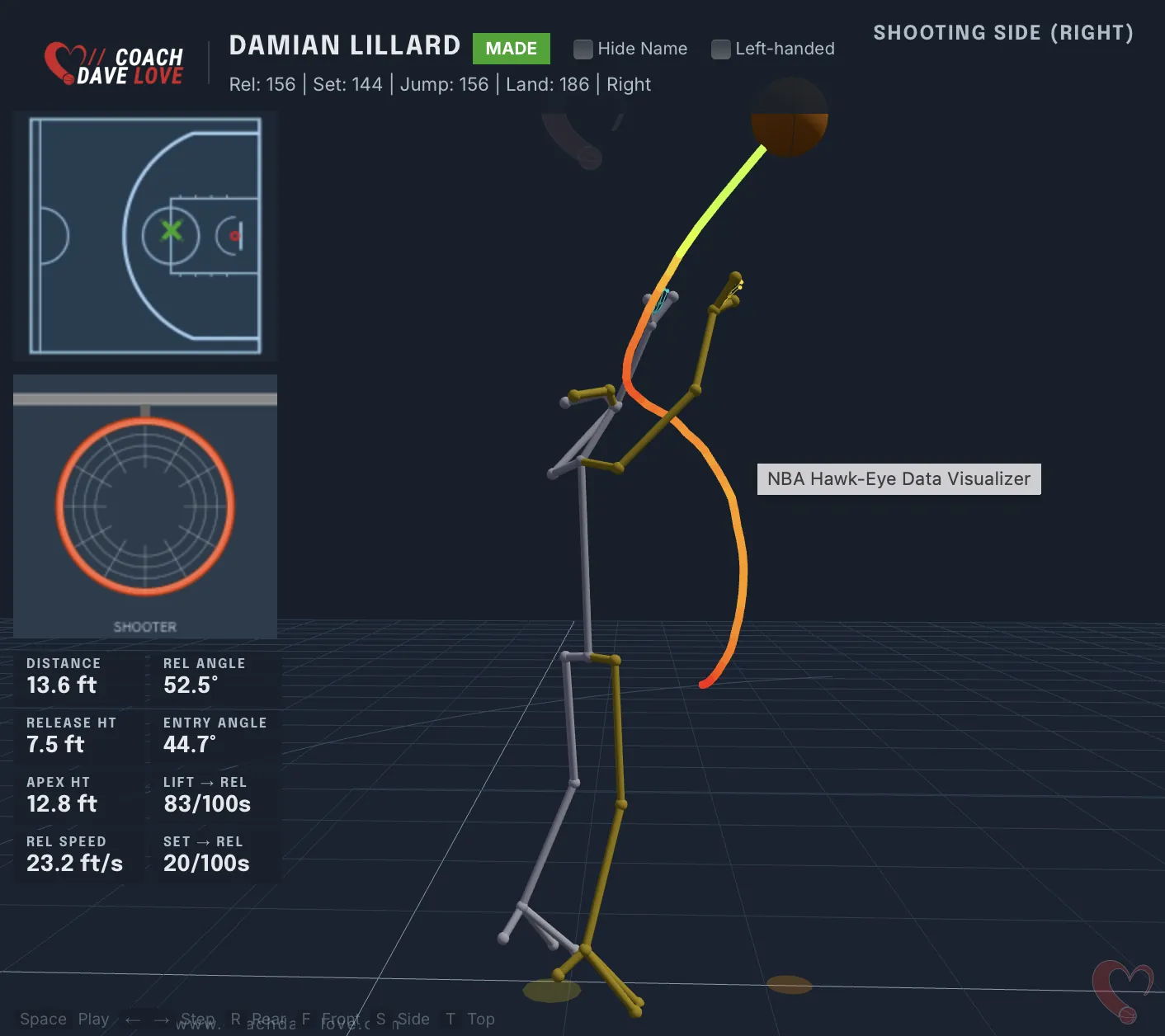
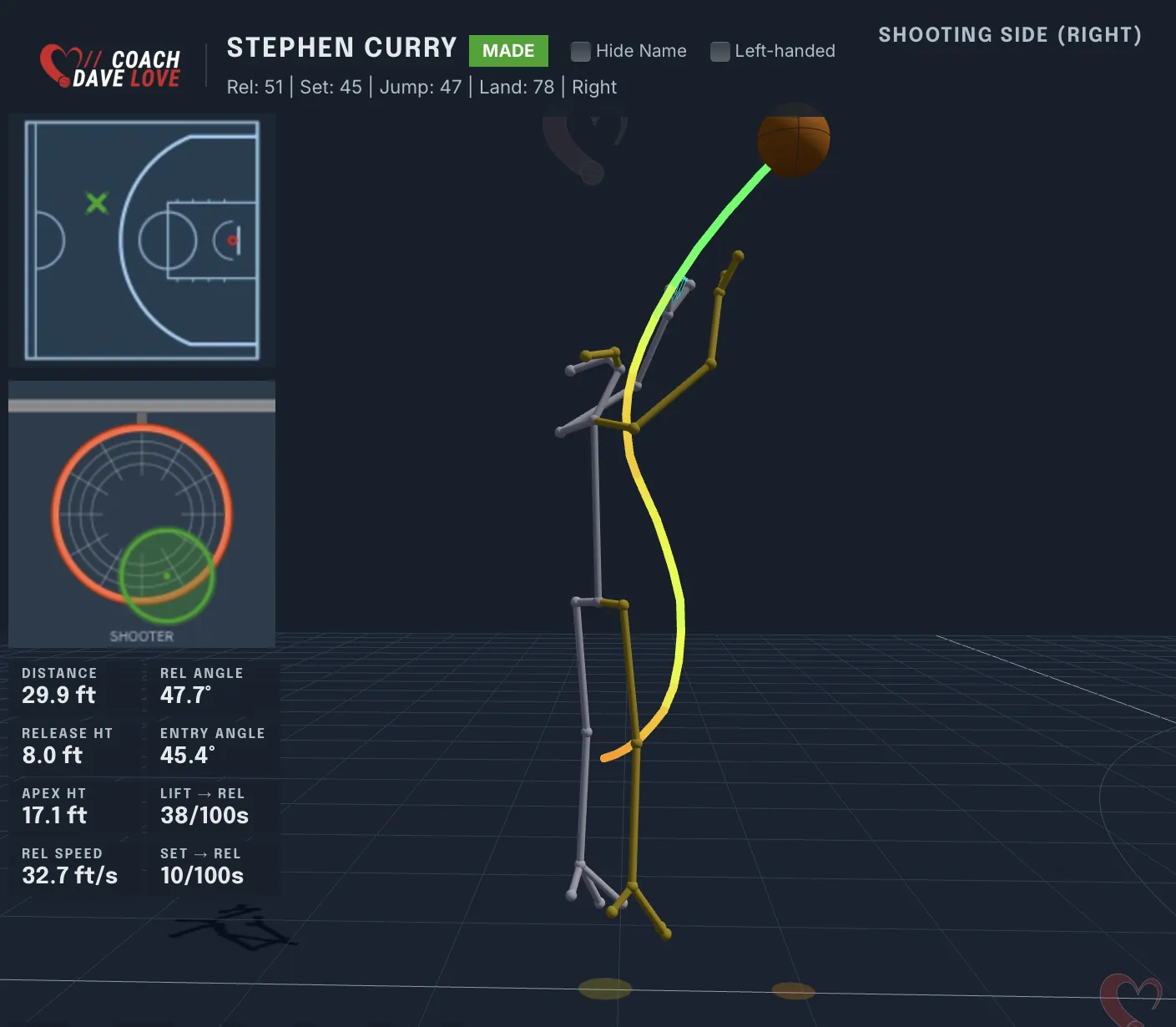
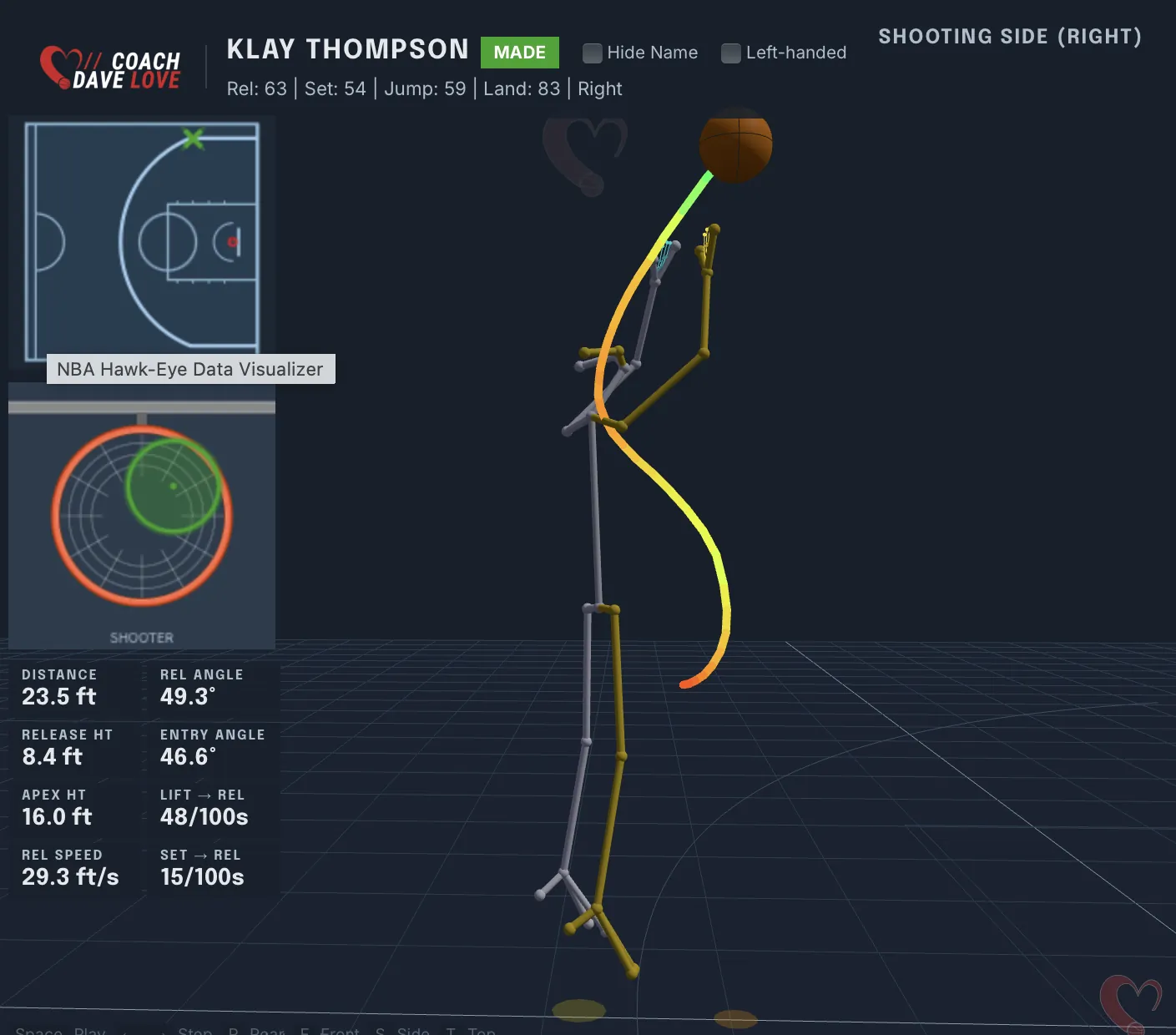
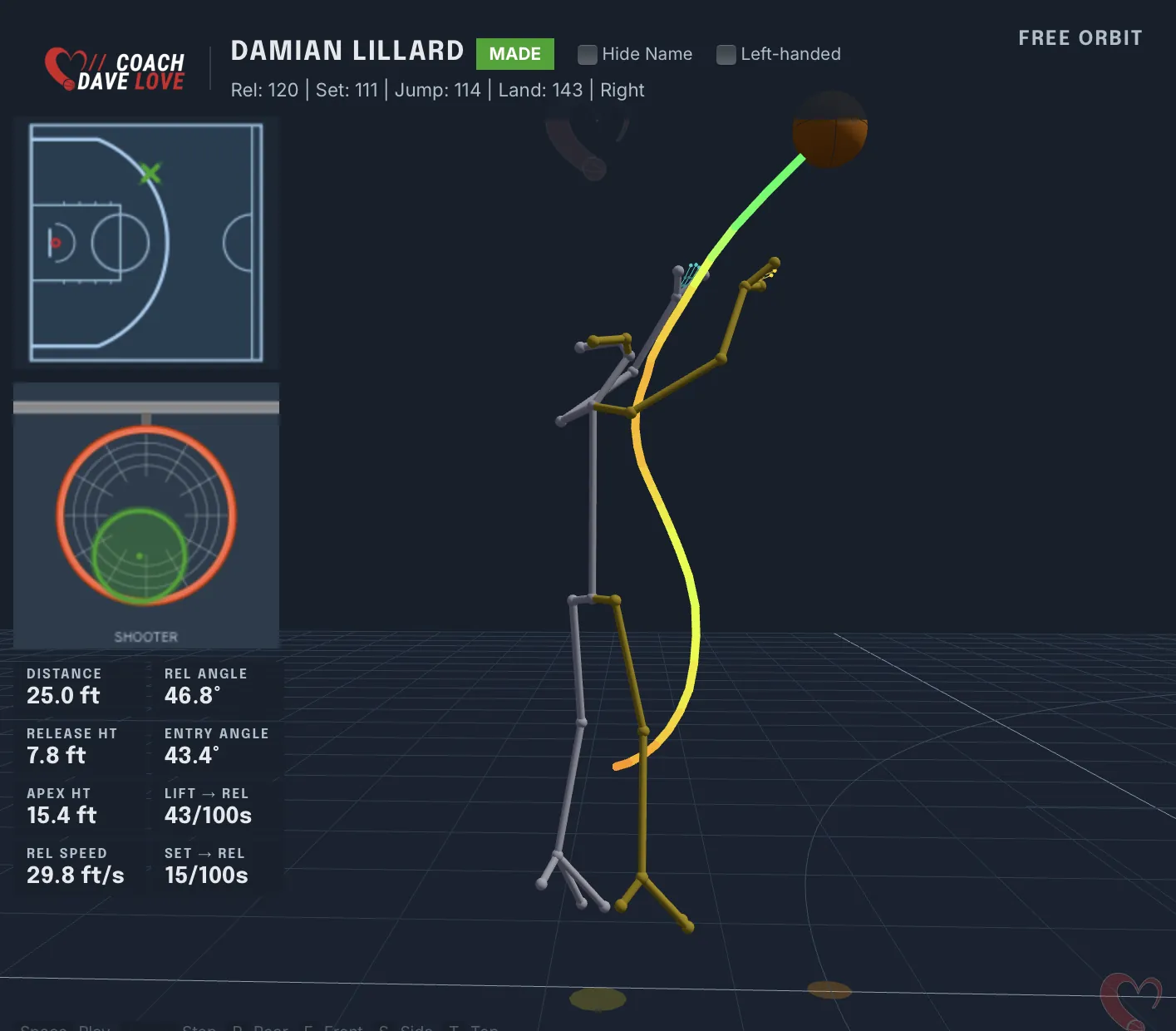
Quantifying the path also let us see something we had never been able to see clearly: different shots are shot differently. Line up a player’s free throws next to their in-game threes and the general shape of the ball path is usually not the same. In fact, most players show a bigger change of direction at the set point on their free throws — a less “smooth” path — on the very shot they make at a higher percentage than any other.
It is another crack in the smoothness myth, and our follow-up work on in-game NBA free throws found the same pattern (Zhu, Love & Powers, 2025).
“Even the best shooters have different shots. The shape of a free throw is not the shape of a three — even for the very best in the world.”
Tweet thisThe top row is each player’s free throw; directly below, the same three players’ game threes:
What actually mattered: the straight line into release
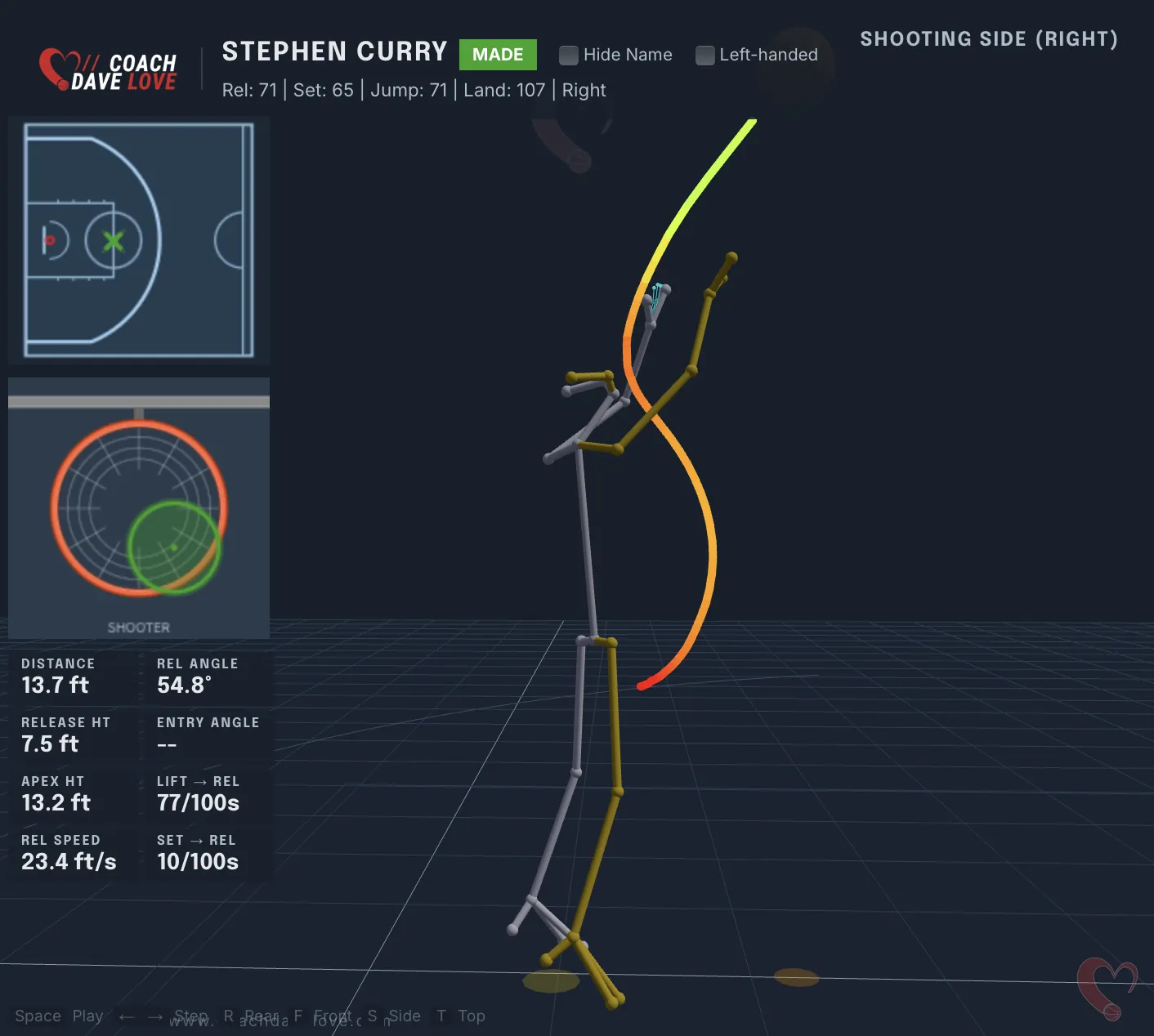
So if it is not overall smoothness, what is it? When we dug in, the signal was hiding in one specific stretch of the shot. It was not how straight the whole path was. It was how straight the ball traveled from the set point to release — and, most of all, how straight it ran in the last moments before it left the hand.
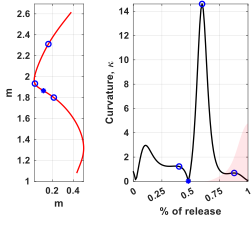
We measured two features of that S-shaped path: its biggest bend (the maximum curvature) and the bend right at the very end (the terminal curvature). Across thirty-one professional shooters, two results reshaped how I coach the finish of a shot (Slegers & Love, 2024):
- The biggest bend was larger in the better shooters. Good shooters tended to have a clear two-part motion — a distinct gather, then a drive — rather than one fluid stroke. The sharp change of direction is not the enemy.
- What separated them was the straightness at the very end. The straighter a player’s terminal path, the more consistent their release velocity — and release-velocity consistency is distance control. That relationship was strong: a correlation of about 0.73.
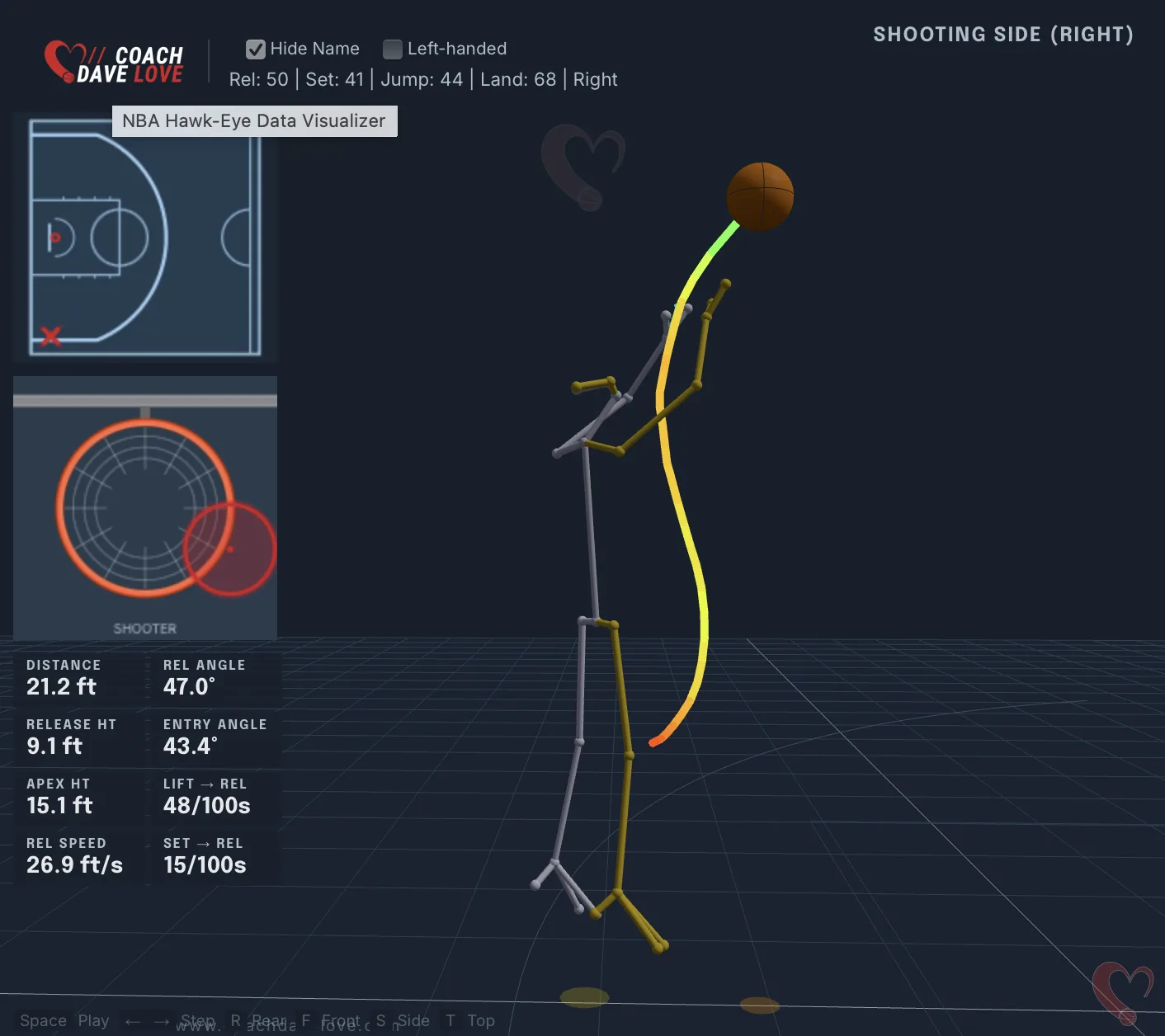
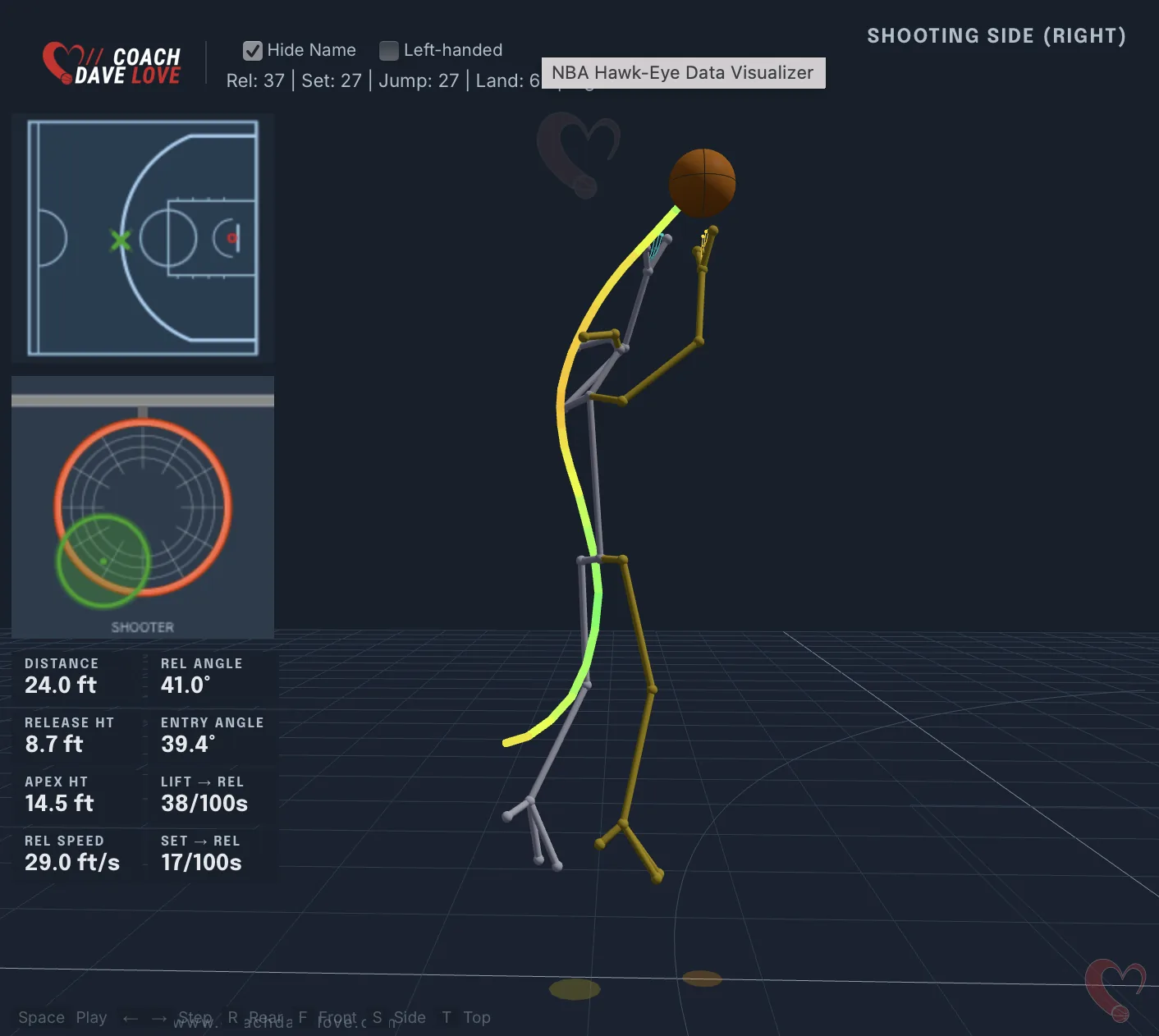
These two findings are not in conflict; they are about where on the path the curve lives. A big, deliberate change of direction early — the set point — is fine, even useful. What matters is that the path then settles into a straight line by the time the ball leaves the hand. The best shooters bend more at the set point and run straighter at release. That straightness in the final inches — how much the ball path is still curving as it leaves the hand — is what we mean by release curvature: less of it is better.
It is not the overall smoothness of the whole shot that matters. What predicts distance control is how straight the ball travels in the final moments, right before it leaves the hand.
ShareThe difference looks like this — two shots side by side, one still curving as the ball leaves the hand, the other running straight through release:
You can see the same thing when you plot the curvature of the ball path across the release — for a strong shooter and a weaker one:
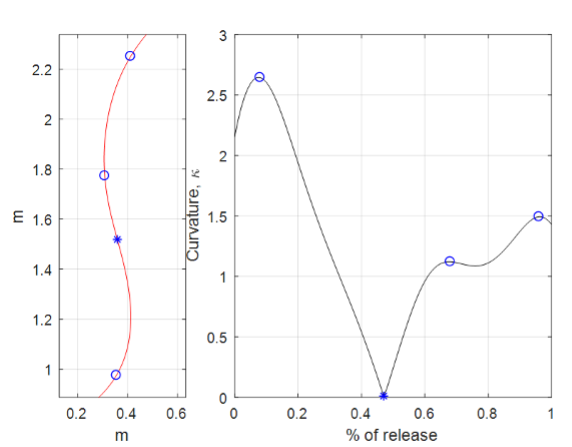
“A big change of direction at the set point has been viewed as a flaw to correct. But the data suggests a more nuanced view is needed: the change of direction may offer value to those strong enough to use it.”
Tweet thisThe difference is subtle — a few degrees of bend over a few inches, invisible in real time. It is also one of the clearest signals we have found for distance control.
Why quantifying the invisible matters
The last point matters most. You cannot see terminal curvature with your eyes. It happens too fast, in too small a space, on a ball moving too quickly. For as long as coaching has existed this piece of the shot has been invisible — so we guessed at it, and mostly we guessed smooth.
The moment you can measure it, two things change. You can tell a player something true about their finish instead of something that merely sounds right. And you can work backward — from the number to the movement — and ask which habits, in the gather and the wrist and the fingers, push a player toward a straighter release or a curved one. That is where the real coaching starts. Measuring the invisible does not replace coaching. It finally points it at the right thing.
CDL Coaching Toolbox
Release, arc, balance, and the ball path itself — the measurements behind everything I coach, in your hands to use on your own players. Free to try.
References
- Slegers, N., & Love, D. (2024). The role of ball path curvature in basketball shooting accuracy. Journal of Sports Sciences, 42(21), 2052–2060. https://doi.org/10.1080/02640414.2024.2422735
- Slegers, N., & Love, D. (2022). The role of ball backspin alignment and variability in basketball shooting accuracy. Journal of Sports Sciences, 40(12), 1360–1368. https://doi.org/10.1080/02640414.2022.2080164
- Zhu, J., Love, D., & Powers, S. (2025). Ball path curvature and in-game free-throw shooting proficiency in the NBA. Working paper, Rice University.