Ask a coach to fix a player's follow-through and you'll often get a two-minute explanation: where the elbow goes, how the wrist snaps, which finger releases last, how high to hold the hand. The player nods along. And then, under any real pressure, none of it survives. That detailed instruction feels like helping. Often, it's quietly holding the player back.
The players who change fastest usually get the fewest, best-chosen words at the moment it counts — a cue, not another round of explanation. This is about the difference between the two, why the wording of a cue matters far more than most coaches realise, and the process I use to find the cue that actually sticks for a given player.
A cue is not an instruction
An instruction is the full how-to — the explanation of what a movement is and how the body should produce it. It's knowledge transfer, and it has its place, usually early, when a player genuinely doesn't yet know what you're asking for.
A cue is a different tool. It's a short prompt — often a single word or image — that points a player's attention to one thing, right before or during the action. It isn't there to teach the whole movement; it's there to bias one part of it. The best cues are so compact they can fire mid-shot, when there's no time to think through a paragraph.
“A cue isn't another explanation. It's the one word or image that points a player's attention to the thing that matters — fast enough to survive a real shot.”
Tweet thisInternal cues: aiming at the body
Cues come in two flavours, and the difference is simply where they point the player's attention.
CDL Coaching Toolbox
A cue only works if it's aimed at the right thing. The Toolbox helps you see exactly what to change — and whether it's actually changing. Free to try.
An internal cue points attention at the body — a joint, a limb, a body movement. In shooting, these are the ones every gym has heard:
- “Snap your wrist.”
- “Keep your elbow in.”
- “Bend your knees.”
- “Extend your arm all the way.”
They're intuitive, and they're what most of us reach for first. The problem is where they send the player's mind: inward, onto the mechanics of their own body — in the exact moment the body needs to run automatically.
External cues: aiming at the effect
An external cue points attention away from the body — at the effect of the movement, the target, the ball, or an image in the environment. Same shot, very different focus:
- “Reach into the cookie jar” — instead of “extend your arm.”
- “Leave your hand in the rim.”
- “Land the ball soft, like it's dropping onto a pillow.”
- “Shoot up and over a tall defender.”
Every one of those still shapes the mechanics — but the player isn't thinking about mechanics. They're thinking about a result or a picture, and letting the body organise itself to get there. Here are a few of the external cues I actually use with players:

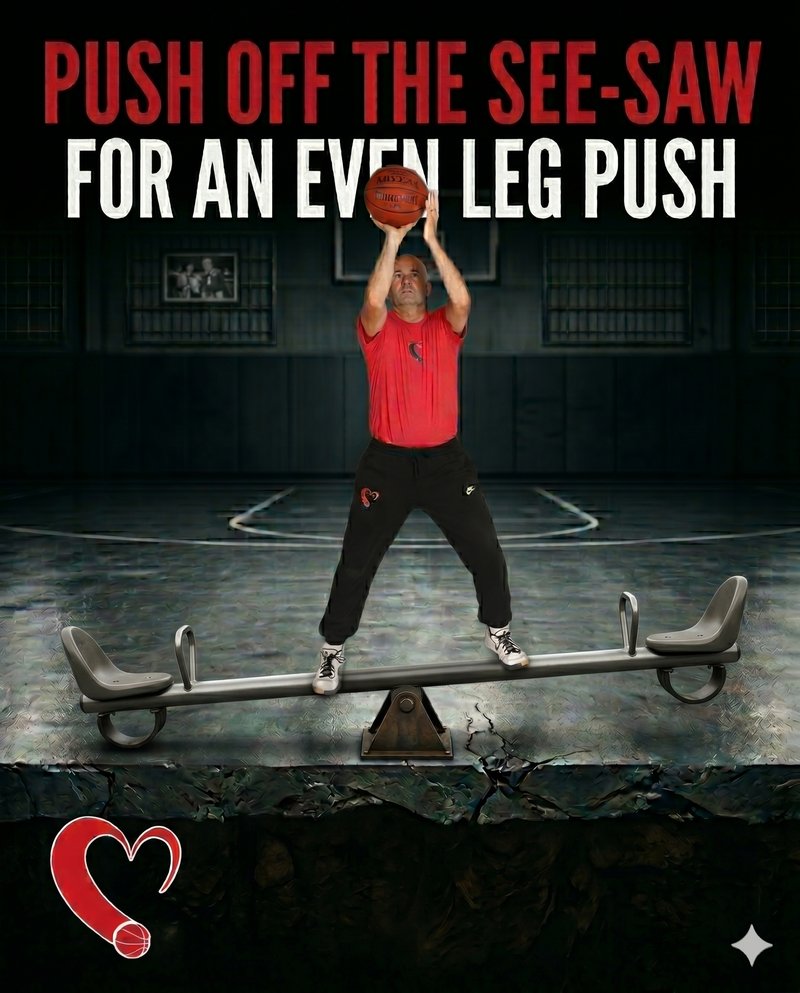
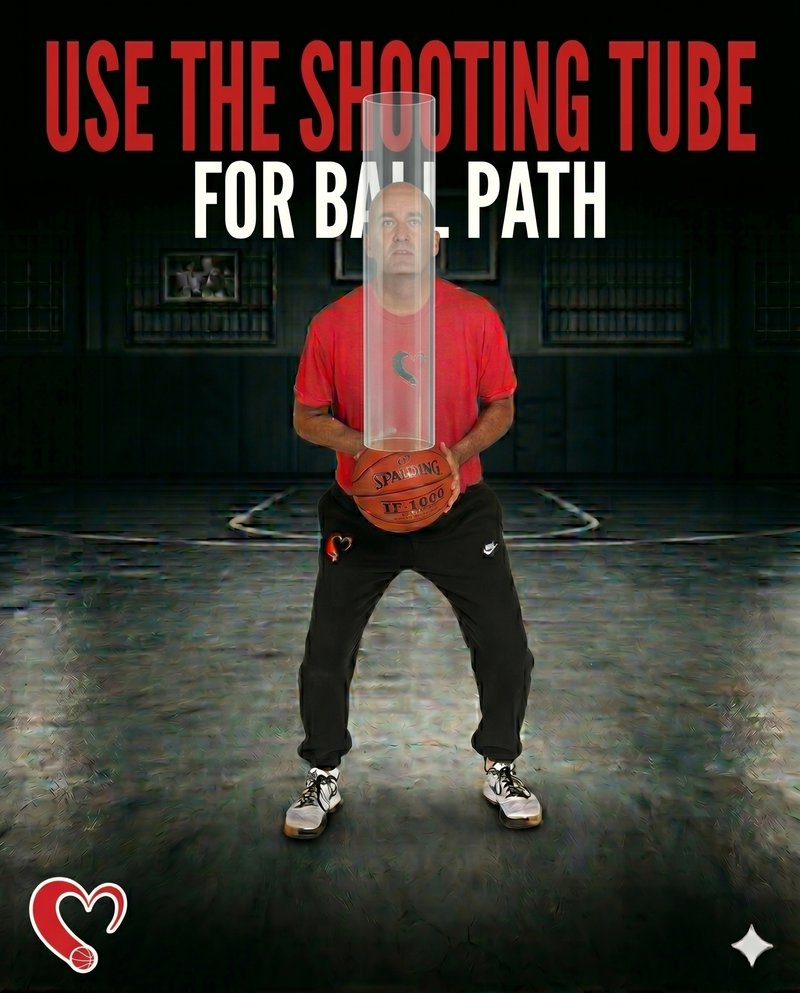
“Internal cues aim at the body. External cues aim at the effect — and the effect is what the shot is actually for.”
Tweet thisWhy external cues win
This isn't just a stylistic preference. It's one of the most replicated findings in motor learning. Across a wide range of tasks and skill levels, an external focus of attention produces better performance, better learning, and better transfer than an internal one (Wulf, 2013).
The right cue can change a shot in a single word. Learn how Coach Dave Love coaches shooters to say less and change more.
ShareThe leading explanation is the constrained action hypothesis (Wulf, McNevin & Shea, 2001): focusing on your own body movements introduces a conscious, deliberate style of control that interferes with the automatic processes that actually run a skilled movement. Focus on the effect instead, and you get out of your own way — the system self-organises, more efficiently and more reliably.
That said, external focus is a strong general rule, not a law. As I've written about in the context of the Constraints-Led Approach, a group-level finding doesn't mean every player in every moment responds the same way — and sometimes a little internal language is exactly what a player needs to understand what you're even asking for. Which brings me to the process.
How I find the cue that clicks
A lot of coaches treat cues as fixed — one “correct” cue per fault. I don't. The right cue is the one that makes sense to this player, and finding it is a process. Mine is built on the work of Nick Winkleman, whose book The Language of Coaching is the best thing written on the subject. It runs in three steps:
- Start with understanding — even internal language, if that's what it takes. Before I cue anything external, the player has to understand what we're actually working on. This is where a fuller, more detailed explanation genuinely belongs — sometimes naming the body part or movement plainly: “we're changing what your wrist does here.” There is a time and place for detailed verbal instruction, and it's right here: before the drills, while we build a shared picture of the problem. Once the reps begin, that explanation gives way to the cue.
- Move to a proven external cue. Then I offer an external cue that's landed with other players before — a “cookie jar,” a “hand in the rim.” Often that's enough. But not always: a cue that's vivid for one player can be meaningless to another.
- Mine for the player's own cue. When a stock cue doesn't click, I ask questions to find one that does. What did that feel like? What were you trying to do there? What would make it easier to picture? The best external cues often come out of the player's own words and world — and once a player hands you their own image, it sticks far better than anything I'd have scripted.
The goal isn't to deliver the perfect cue. It's to help the player find their cue — the shortest possible pointer to the thing that matters, in a language their body already understands.
“The best cue isn't the one that makes sense to me. It's the one that makes sense to the player in front of me.”
Tweet thisSay less
In the moment, trade the extra explanation for a cue, aim that cue at the effect rather than the body, and treat finding the right one as a search you run with the player, not a script you read at them. Change the words, and you'll be surprised how often the habit changes with them.
References
- Wulf, G. (2013). Attentional focus and motor learning: A review of 15 years. International Review of Sport and Exercise Psychology, 6(1), 77–104.
- Wulf, G., McNevin, N., & Shea, C. H. (2001). The automaticity of complex motor skill learning as a function of attentional focus. Quarterly Journal of Experimental Psychology, 54A(4), 1143–1154.
- Winkleman, N. (2020). The Language of Coaching: The Art & Science of Teaching Movement. Human Kinetics.