When we misunderstand what it means to be skilled we can practice attempting to achieve the wrong goal. When we truly understand what it means to be skilled, we practice more effectively.
The Sandbox Analogy was my way of making sense of my role as a coach in shooting development.
It's my ontological view — my answer to the question: What does it actually mean to be a skilled shooter?
In this blog, I want to do two things:
- Give coaches a clear picture of the "shooting sandbox" and how it influences the way we should practice.
- Help coaches understand the true importance of shooting mechanics and the coach's role in developing them.
What is the shooting sandbox?
Think about why parents in past generations took their kids to an old-school sandbox at the playground.
A sandbox represents a space for exploration, keeping the child safe and allowing the parent to relax. Inside the sandbox, kids can dig, build, fall, and experiment with relatively low risk. Outside the sandbox there were usually things parents didn't want them exposed to: rocks, sticks, broken glass, or other hazards.
And where inside the sandbox did parents feel most comfortable?
- The middle of the sandbox is the safest place to play — the child has maximum room to move in any direction before getting into danger. They can explore, fall, and stumble without instantly hitting the edge.
- Near the edge brings the child closer to danger — one step outside and they're on the concrete or bumping into something. There's less room to move without creating a problem.
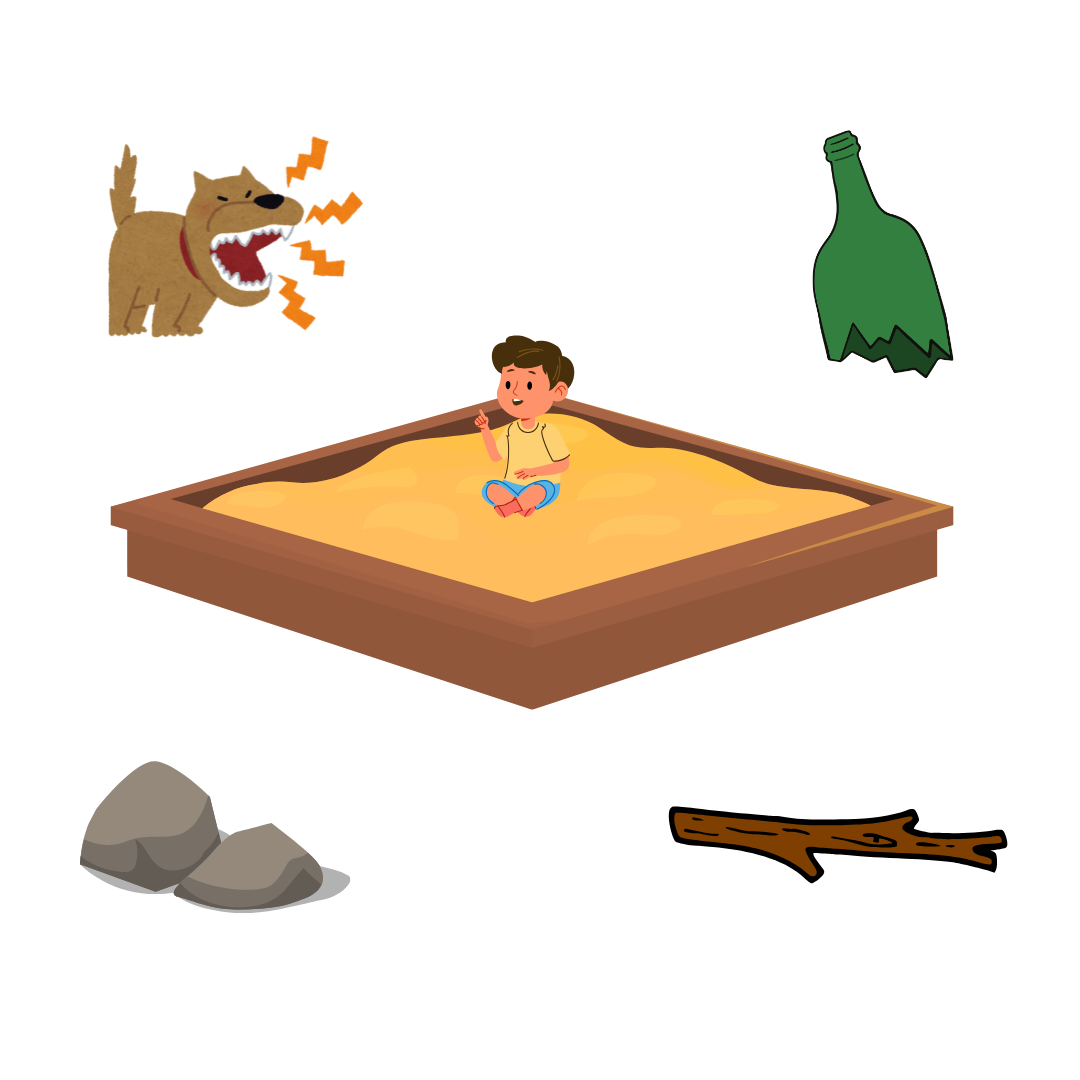
That's exactly how I think about skilled shooting:
- One part of skill is living closer to the middle of the sandbox — where the physics of the shot are working for you as much as possible (energy direction, balance, arc, etc.).
- The other, equal part of skill is your ability to adapt — using different solutions, footworks, rhythms, and contexts while still staying functional.
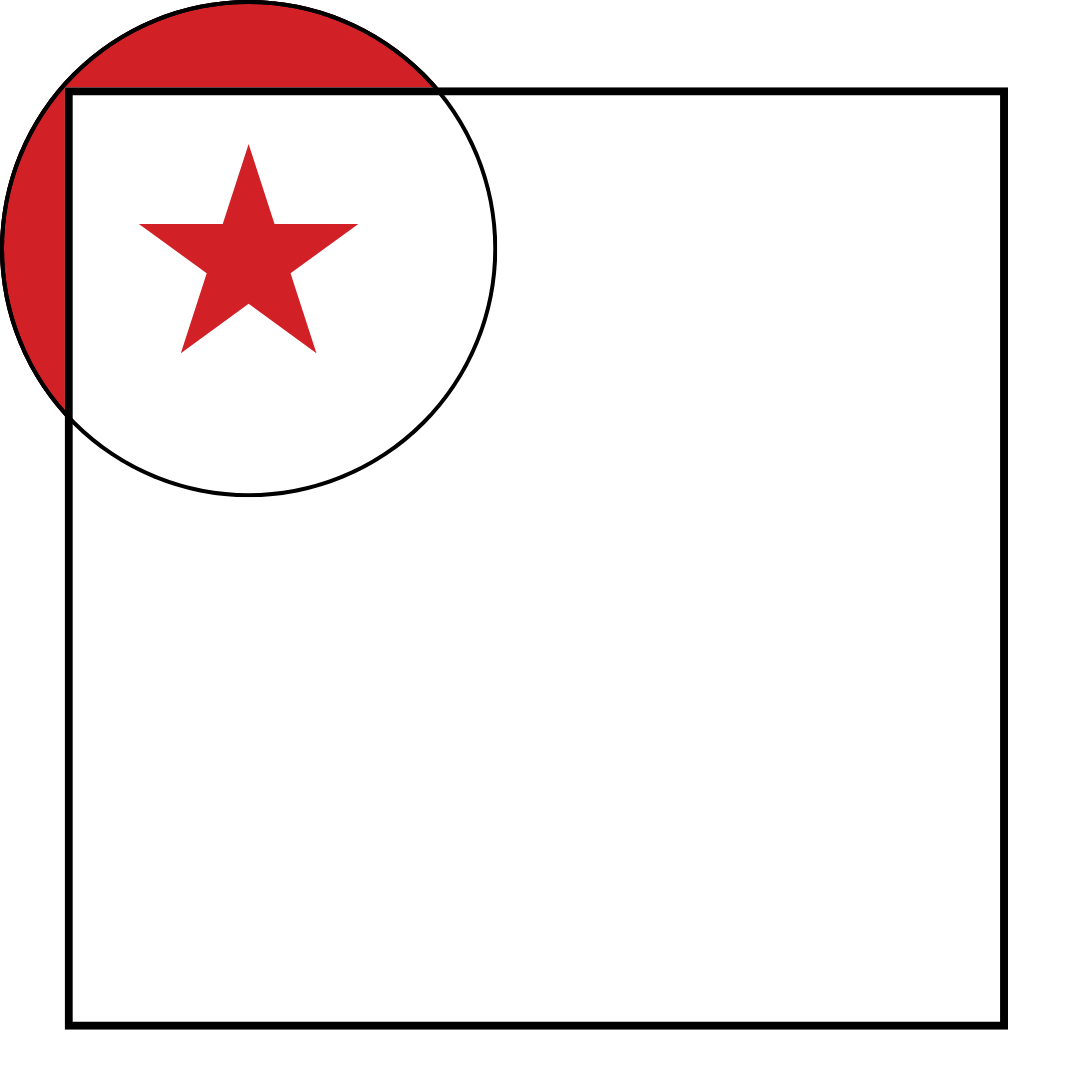
In the rest of this blog I'm going to be illustrating the sandbox, and it will be important that we understand its components:
- The square represents the sandbox — all the different movement patterns or ways of shooting that can result in made shots.
- Outside the square are the movement patterns or ways of shooting that just don't work as well. We could call these bad habits or dysfunctional attractors.
- The star represents a player's preferred motor pattern, or the baseline shooting form they use on open shots.
- The circle represents degeneracy, or the variety of different adjustments that are made to the shooting motion — whether intentionally by the shooter, forced by the defender, or just caused by being a human executing a complex skill.
Misunderstanding what it means to be skilled
Many coaches, parents and players have an incorrect perception of what it means to be skilled, and it ends up holding players back.
Total Shooter Transformation
The full system behind the sandbox — every phase, drill, and constraint, in one program.
They believe that the important skill in shooting is having near perfect form (as close to the middle of the sandbox as possible) and repeating it with precision. Unfortunately, this is inaccurate, and not only can we see it both with our own eyes, but it's also been proven by decades worth of research.
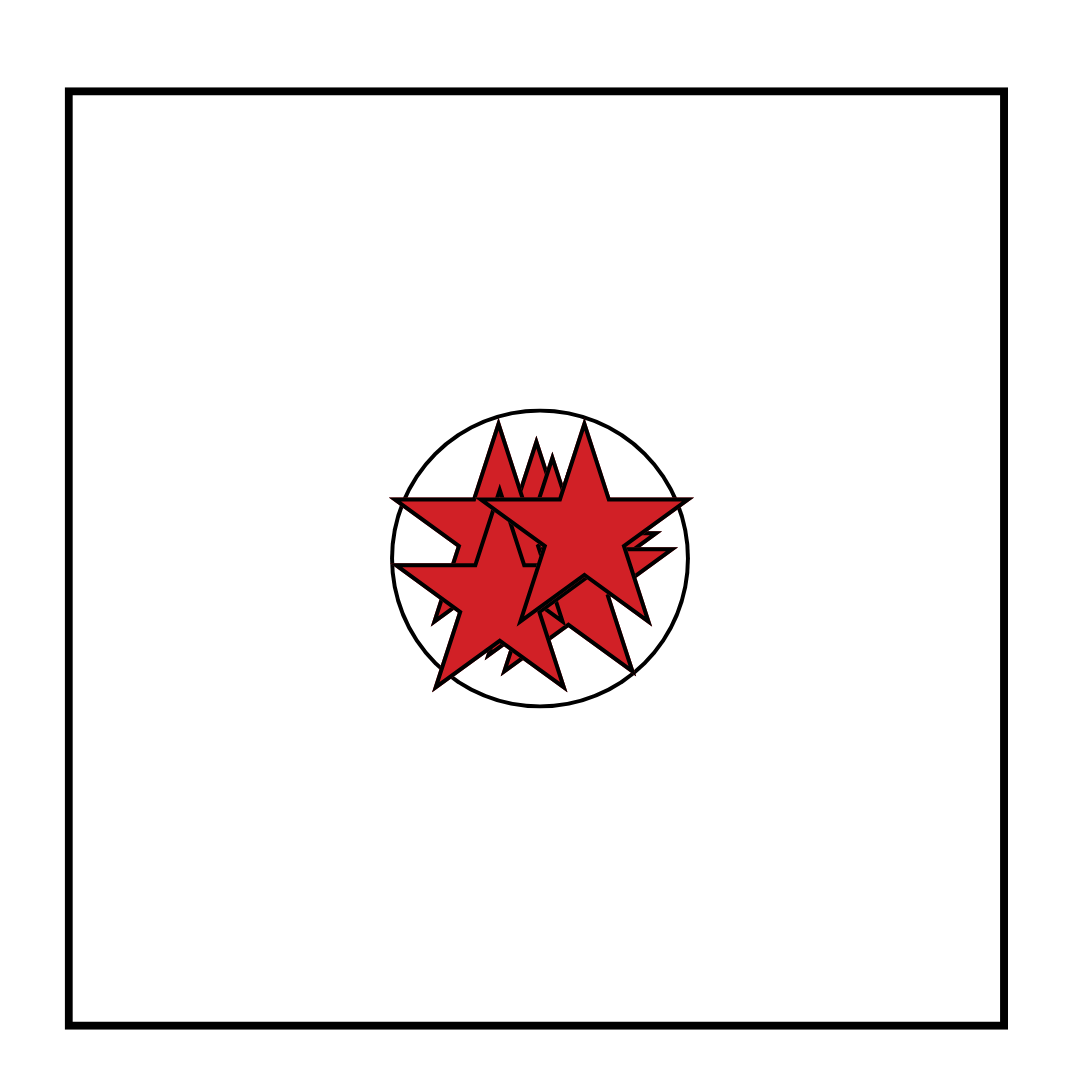
Going back to our analogy, a traditional view of skilled shooting would mean the parent should:
- Measure the sandbox
- Find the exact middle
- Place the child in precisely that spot
- Correct them and move them back to the middle every time the child moves.
If a parent did this, how much fun would both the parent and child have at the playground? How much safer would the child actually be?
Skilled shooters don't all have exactly the same mechanics, nor do they shoot the ball the exact same way on each shot.
Take Steph Curry for example. Below is a representation of the ball path of 20 open 3 point shots taken, if you imagined viewing the path of the ball when standing behind Steph.
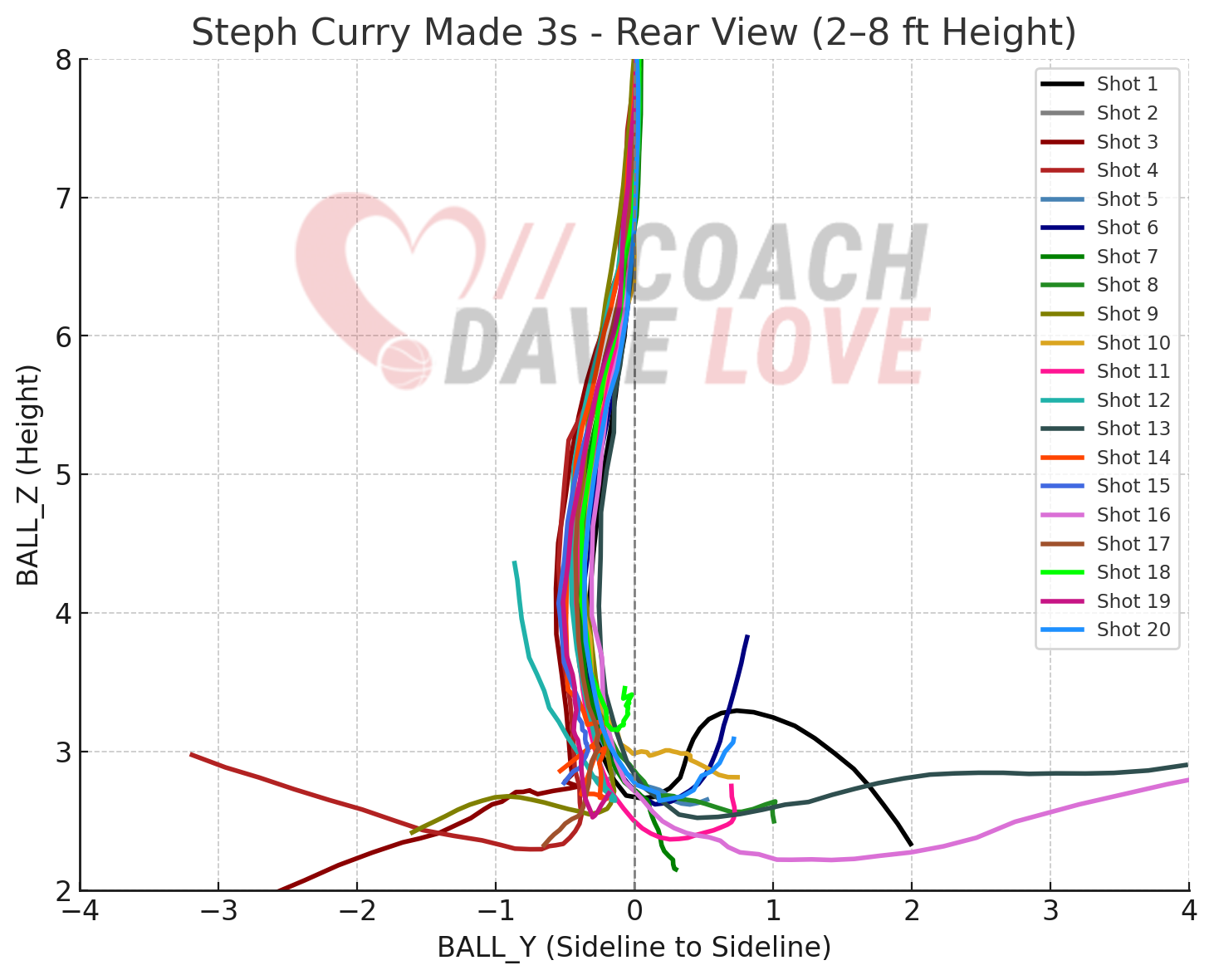
Each shot is different depending on where he was on the floor, where the pass was coming from, the direction he was moving, and countless other factors. Each shot required a slightly different adaptation to its unique conditions.
This is just a statement of fact: the game forces players to adjust their shooting motion from shot to shot. The same motion is never repeated like a robot. We saw that from Steph Curry, yet so many coaches still believe in teaching players to repeat the same motion from shot to shot, and simplify practice in order to facilitate that repetition.
"Players don't need PERFECT mechanics, and then to learn to repeat it without error. That is not what skill in basketball is. Players want FUNCTIONAL mechanics because they allow the most room to adapt, and the game WILL force adaptation."
Tweet thisGuiding towards the middle of the sandbox
What do we do about players that struggle making shots?
If we apply what is happening in their mechanics to the Sandbox Analogy, these players have a motor pattern (shooting form) that puts them closer to the edge of the sandbox. That spot means that many of the variations of their shooting form fall outside the sandbox. Their shooting mechanics are functional in certain situations, but not as functional in others. Too much of their circle (the representation of degeneracy or variability) falls outside the sandbox. In other words, they aren't as adaptable in a certain way.
With these players, a skilled coach can help determine in which way the player's movement pattern is holding them back (falling outside the sandbox) and design tasks to encourage exploration around more effective movement patterns. It is not that the coach needs to take the player back to traditional form shooting and remove all context, variability and challenge to help the player learn to perfect one specific movement.
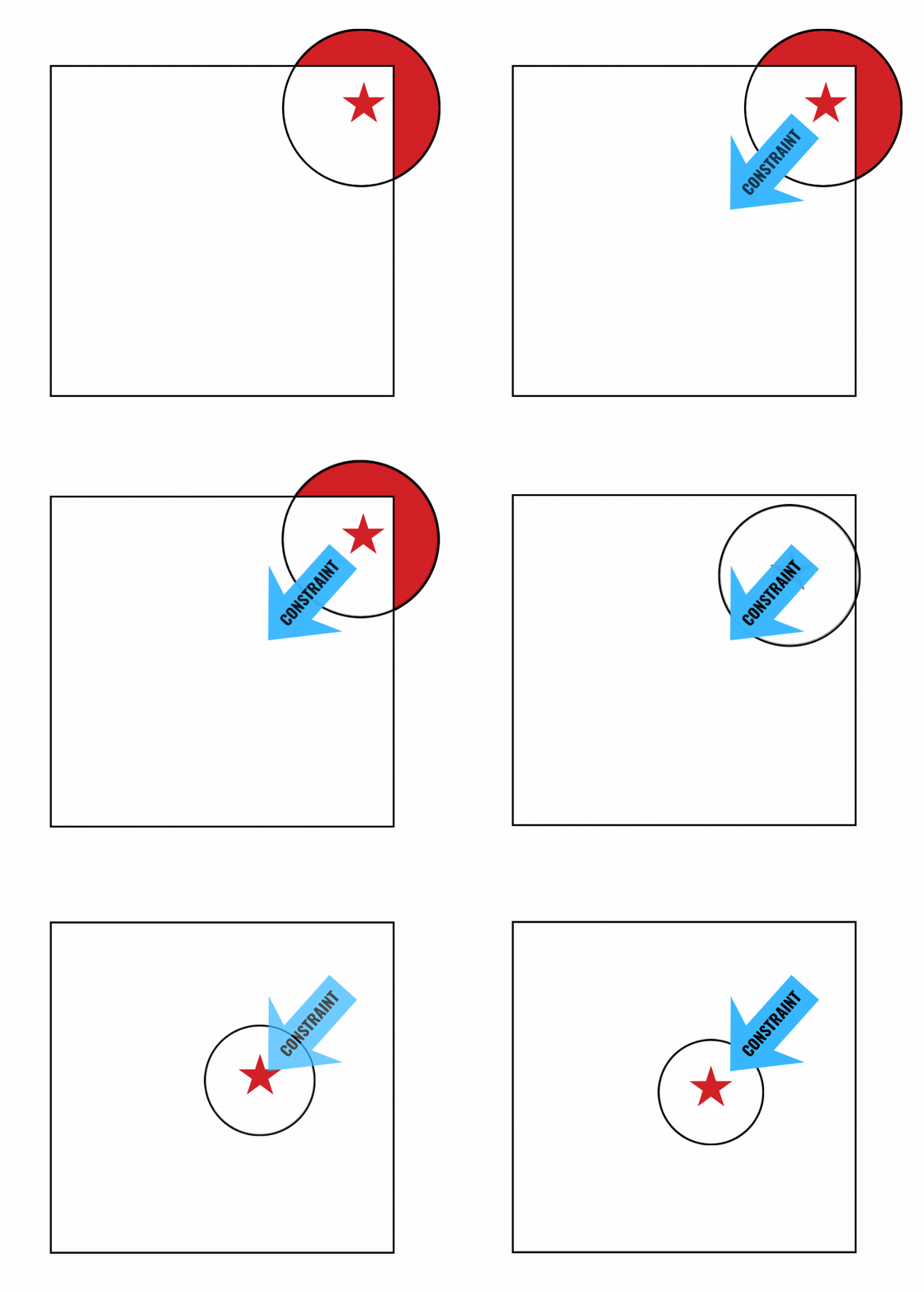
Rather, the coach can constrain the activity/drill to guide the player towards a more functional movement or away from a less functional habit, while maintaining appropriate amounts of game-representativeness to encourage degeneracy around the new habit.
Most coaches misunderstand what it means to be skilled, and practice to achieve the wrong goal. Learn about Coach Dave Love's Sandbox Analogy to better understand the real goal.
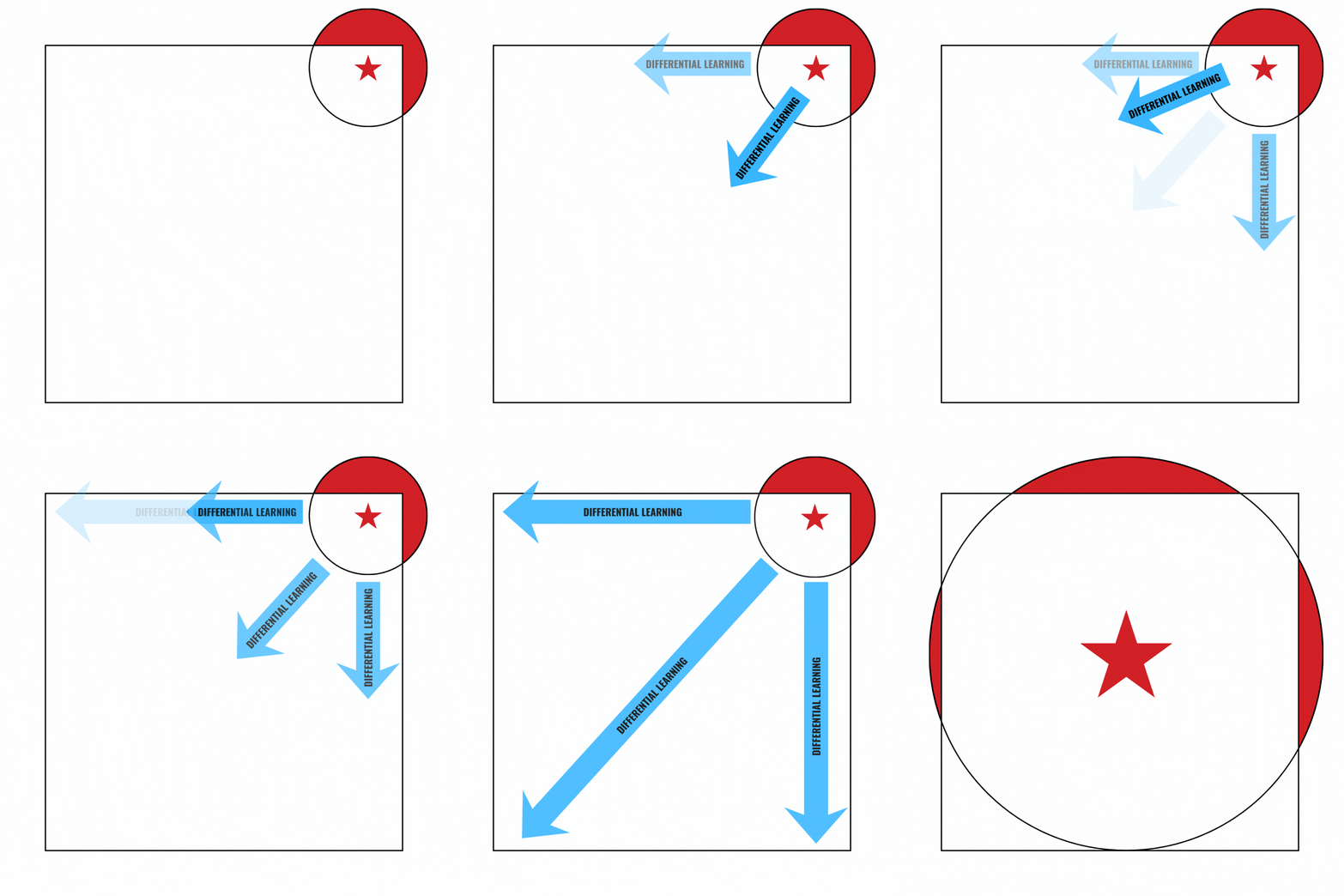
ShareA coach can also use Differential Learning or Guided Discovery to promote exploration of the sandbox and allow the player to self-organize in a way that best suits their own individual constraints.
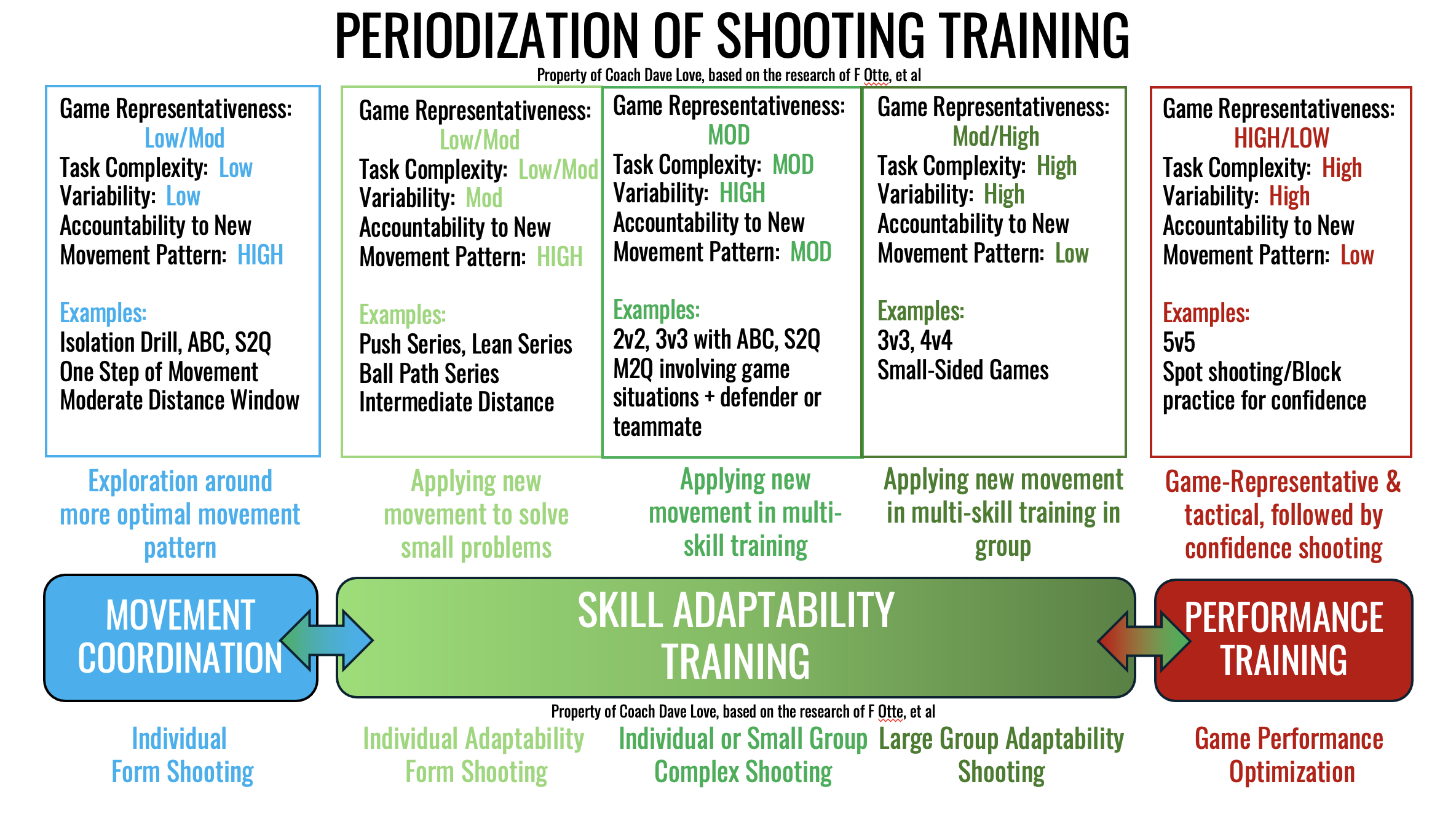
Both methods would be examples of a Movement Coordination Phase of the PoST framework. Said in another way, the coach can design drills that move the player closer to the middle of the sandbox, while also expanding their circle.
Expanding the circle
As we've said many times, being skilled has two components:
- Having functional habits that get the physics of shooting working for the player as much as possible (a space near the middle of the sandbox).
- Being able to explore and adapt around those functional habits for different game conditions (expanding the circle).
Since better shooters already have a functional space in the sandbox, the role of the coach then becomes helping them expand their circle.
This can be done by encouraging variability through informational cues, but better done by maintaining appropriate amounts of game-representativeness in practice. Rather than simplifying drills to encourage repetition of idealized movements, practice should remain challenging and as game-like as possible to give players experience in expanding their circle in the ways they will need to in games. This can be done within Skill Adaptability Phases of the PoST framework.
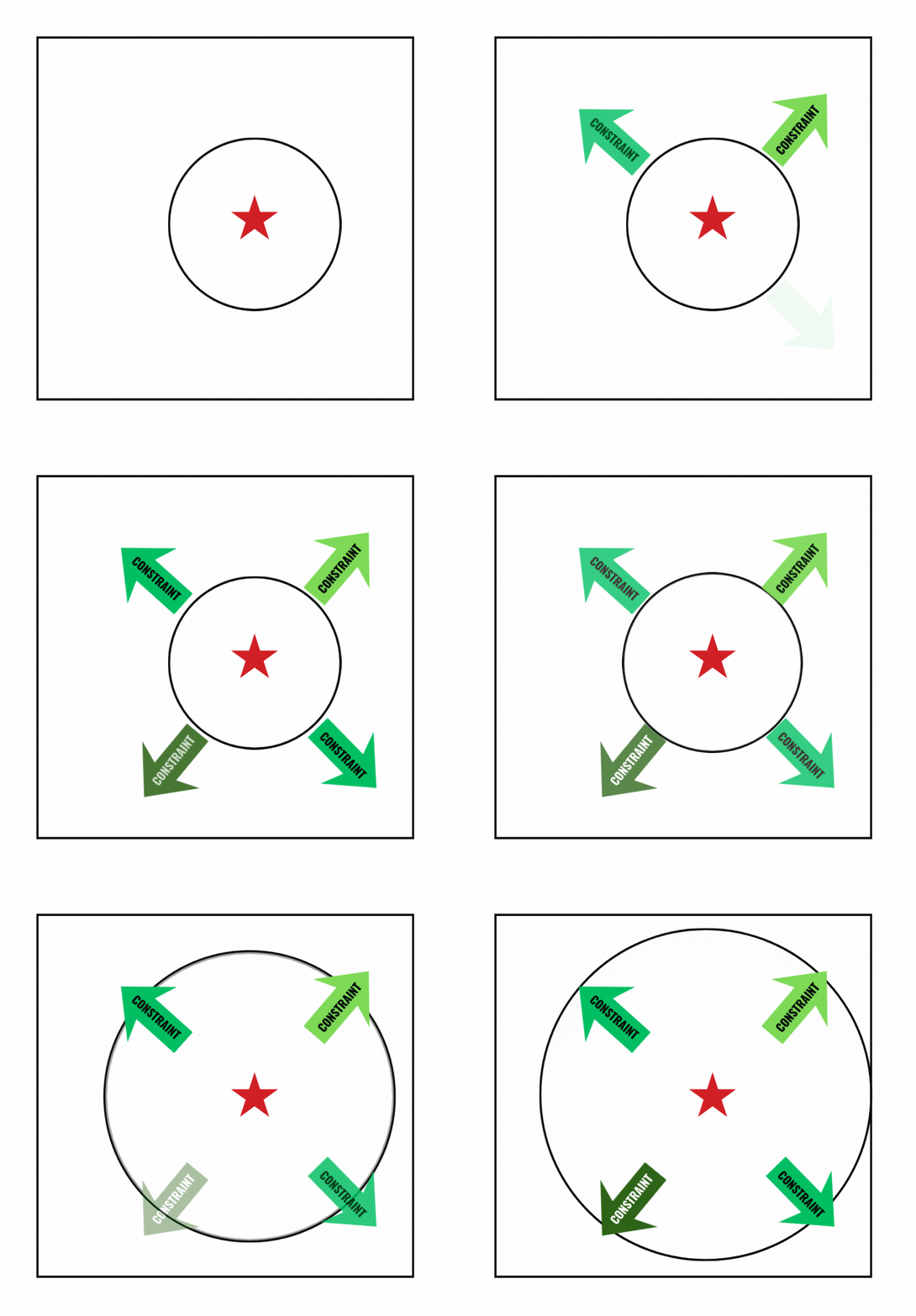
"Effective shooting practice accomplishes two goals in ways that are appropriate for each individual player. It balances the need to 1) find a functional space near the middle of the sandbox, and 2) increase their adaptability."
Tweet thisPutting it all together
The Sandbox Analogy isn't just a metaphor — it's a framework for making better decisions every time you design a practice.
It starts with understanding what skill actually is. Skilled shooting isn't about perfecting one movement and repeating it. It's about having functional habits that give the physics of the shot the best possible chance of working for the player, combined with the adaptability to adjust when — not if — the game demands it.
That changes everything about how you coach.
The mistake most coaches make isn't caring too much about mechanics. Mechanics matter — that's the whole point of the middle of the sandbox. The mistake is believing that mechanics are the end goal rather than the foundation for adaptability.
Functional habits. Expanded adaptability. That's what skilled shooting looks like. And it's what effective shooting development has to be built around.