Making sense of shooting form can be overwhelming for coaches and players alike. With so many moving parts (or "degrees of freedom") within the shooting motion, and so many different individual constraints that players can have, it can take decades to understand where to focus our attention.
In 2005 I coined the terms "Positive and Negative Power" to help me make sense of complex shooting mechanics, and to give me an anchor to reference back to with each player I work with. The concept simplifies shooting, even at the highest level. Instead of trying to memorize infinite rules (that likely don't apply in the same way to all players anyway), players and coaches can just refer back to this simple concept to guide them.
The basic idea: Positive vs Negative Power
When a player shoots, they're constantly giving energy to the ball. Some of that energy is helpful. Some isn't.
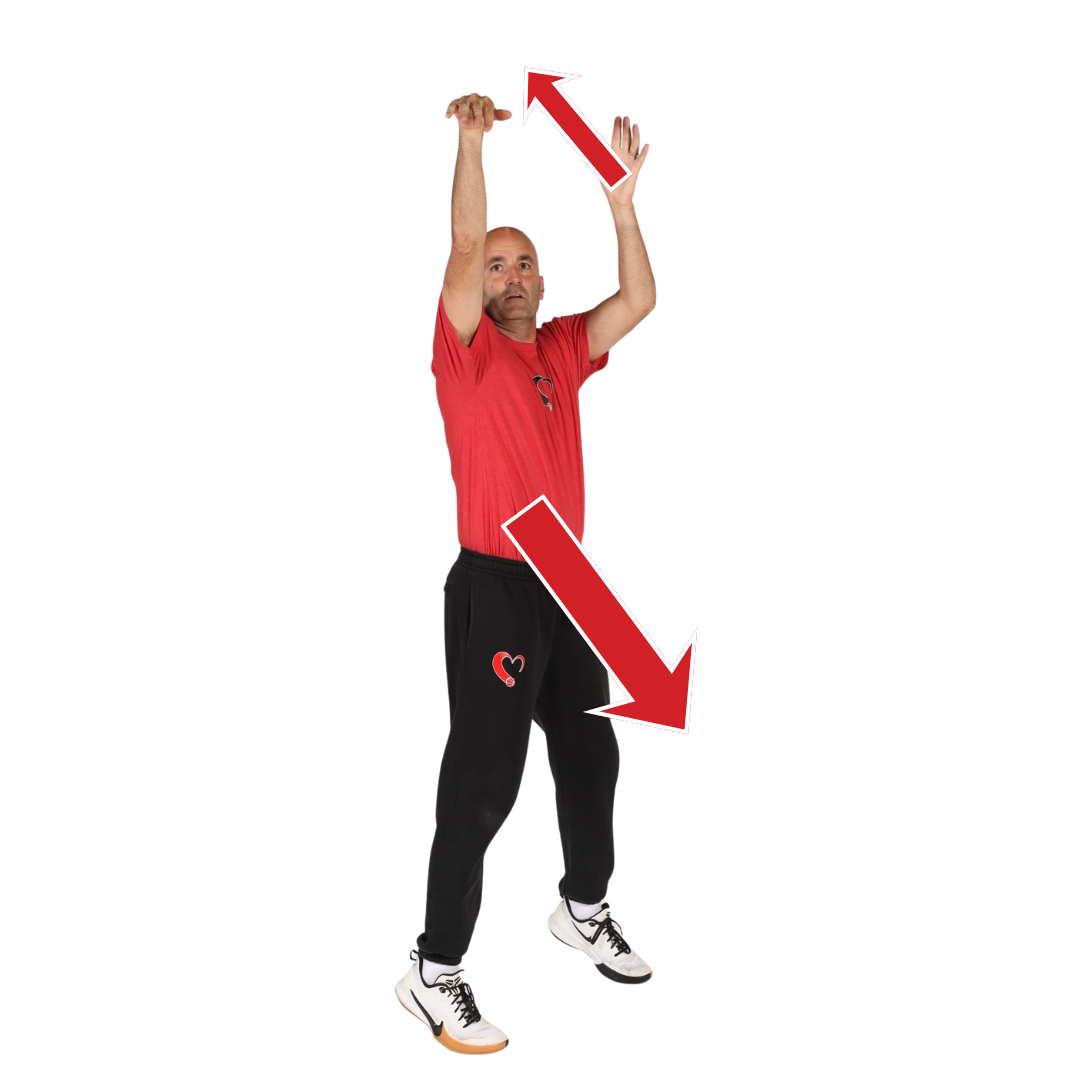
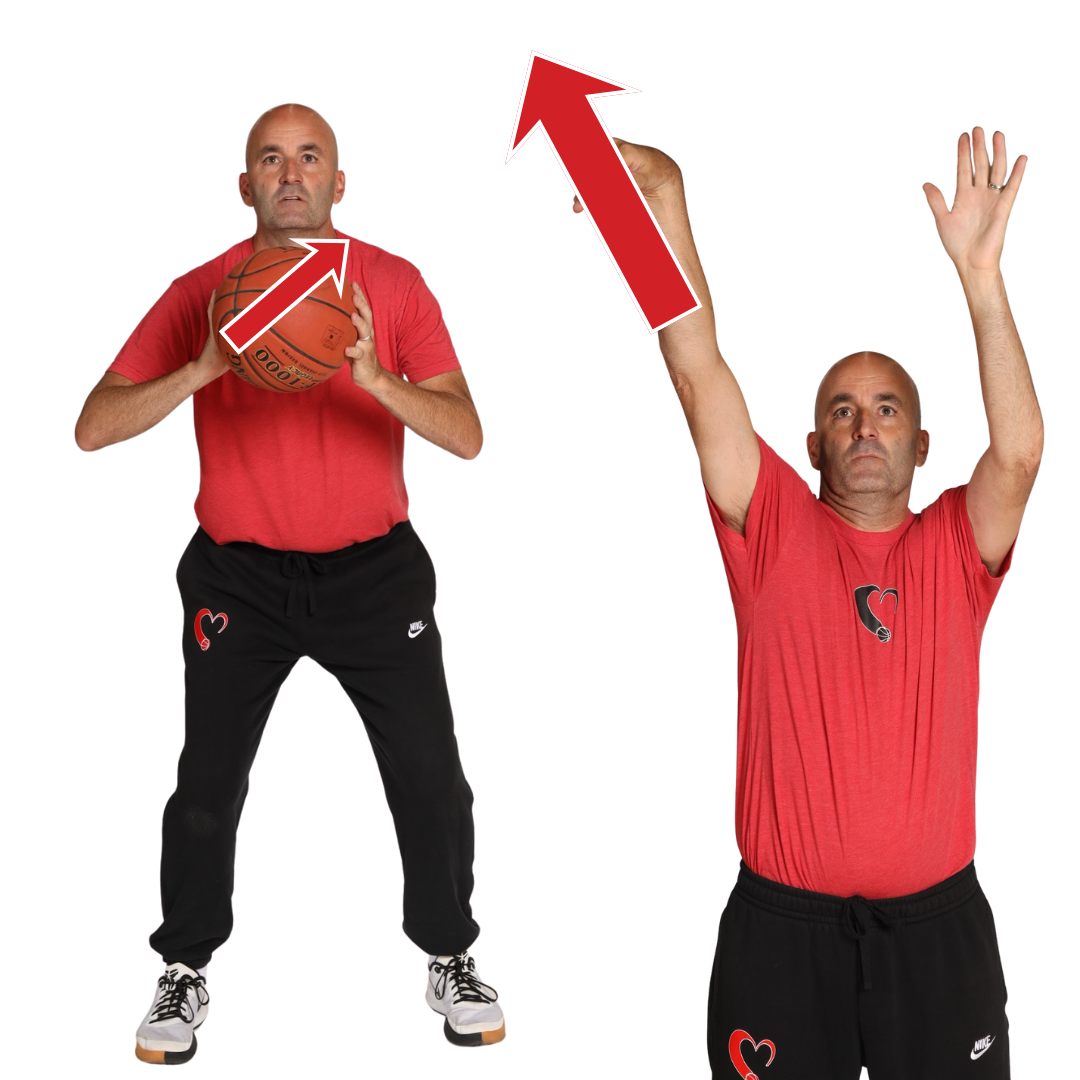
Positive Power = energy that sends the ball toward the target and/or upward toward the trajectory it needs. Negative Power = energy that sends the ball away from the target line in any direction (left, right, backward, etc.).
Tweet thisIf every piece of movement in a shot only created Positive Power (straight at the rim or straight up), the player would never miss left or right. That's obviously impossible in reality, but it gives us a useful way to think about mechanics: the fewer negative components the player builds into their shot, and the less they need to "cancel out" those negatives, the more repeatable the shot becomes.
It is possible to cancel out one negative movement with an opposite negative movement, but the more we have to do that — both in frequency and magnitude — the harder it will be to remain consistent.
All "good form" really is: a movement solution with lots of Positive Power and minimal Negative Power that the player can repeat under pressure. Now let's put some academic language around that.
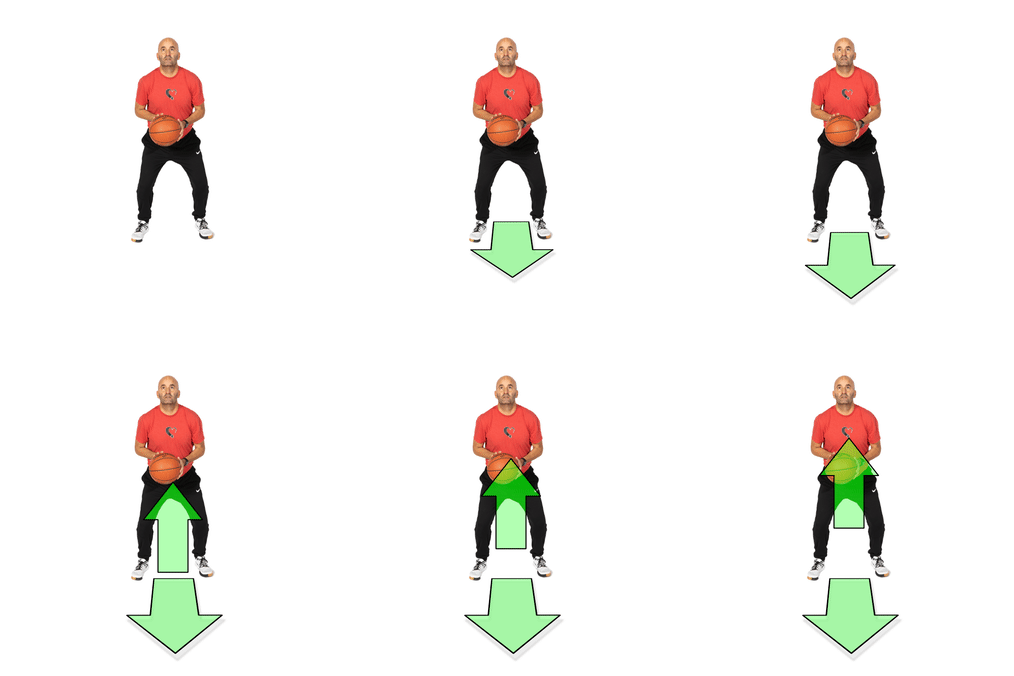
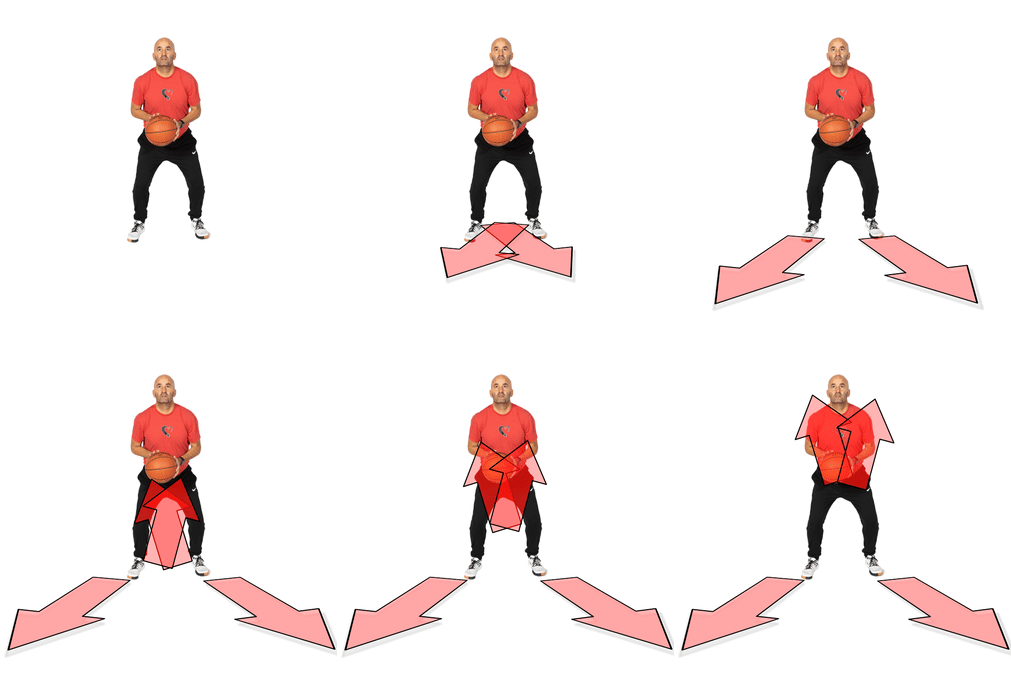
Physics as task constraints
Let's talk about physics in shooting in ecological terms. Every shot must satisfy some non-negotiable task demands:
- The ball has to get above the rim and drop down on the rim.
- The ball has to travel toward the hoop, not off-line and outside the rim.
- The ball has to have enough force to travel the correct distance for the shot.
In Ecological Dynamics, these are called task constraints or performance invariants:
- They don't tell us exactly how the body should move.
- They simply define what the shot must accomplish to be successful.
So when I say:
“We want to push both sides of the ball evenly, and up and along the target line. That is the most efficient way to release the ball.”
Tweet thisI'm not arguing there is one correct form. I'm saying: any functional movement pattern must eventually apply force in that general direction. The way that is done can vary between shooters, but the task demands can't.
This is what I mean by Positive Power:
Total Shooter Transformation
Rebuild your shot around Positive Power — the full 6-week system for a simpler, more repeatable stroke.
- Forces that move the ball up and toward the target are working with the task.
- Forces that move the ball sideways, backward, or twist it unnecessarily are working against the task and have to be compensated for.
That compensation is where shooters get into trouble, especially in complex situations like live games.
Canceling negatives: why complex mechanics break under pressure
Imagine a player whose:
- Shooting hand is a little too far to the right of the ball, pushing it slightly to the left.
- Guide hand is a little too involved and pushes slightly the opposite way at release.
In theory, those two negative forces might cancel each other out and produce a straight shot. In practice, this requires perfect timing, perfect matching of force, in a dynamic environment. That's incredibly fragile.
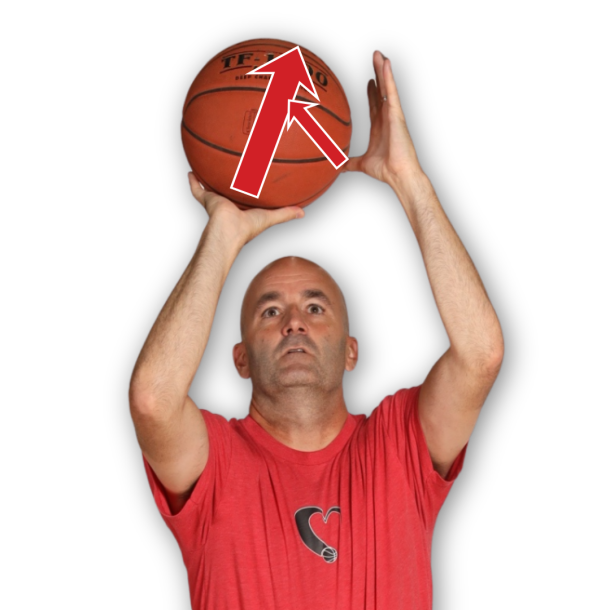
From a coordination-dynamics standpoint, this is a complex attractor with lots of Negative Power being applied to the ball that must be constantly balanced by other Negative Power. It can "work," but it is potentially more fragile to elements of the game like speed, dynamic movement before the shot, a defender, or fatigue.
The more the shot relies on multiple negative components that must cancel each other out, the less robust it becomes when the constraints change (game pressure, movement, contests).
Compare that with a shot where:
- The ball is more consistently centered over the shooting hand,
- The primary force is upward and toward the hoop,
- The guide hand doesn't add much sideways force.
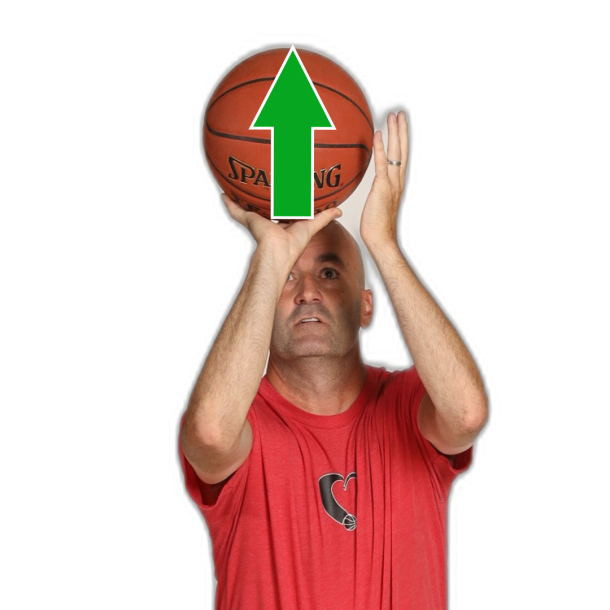
That's a more functional movement solution (better habit): it satisfies the task constraints, it has fewer competing forces, and it forms a more stable attractor that holds up better as constraints shift.
This can, and does, happen in various parts of the shooting motion to varying degrees for each shooter. A player can jump to their left but push back to the right with their guide hand. They could get their elbow out but follow through to the right.
There are countless ways this could be done. In each case, the two individual movements compensate for each other, but also increase the complexity of the overall shooting motion. And it's our job as coaches to understand if the player can control that movement, or whether we need to help them simplify it.
Defenders as "Negative Power sources"
Now think about what defenders do, especially against good shooters. They don't just "contest the shot." They try to force the shooter into positions where they have to create more Negative Power:
- Requiring them to move quickly to open space
- Making them lean sideways away from contesting hands
- Forcing them to turn mid-air because they didn't have time to square themselves
- Bumping them off their line early in the shooting motion
- Rushing their timing
- Forcing them to shoot from awkward body positions
Each of these changes the direction of force, the amount of Negative Power that has to be compensated for, and the stability of the attractor.
Every shot is a tug-of-war between energy that helps the ball and energy that fights it. Learn how Coach Dave Love uses Positive and Negative Power to build more reliable shooters.
ShareThis is a classic Ecological Dynamics story:
- A defender is a constraint that reshapes the affordance landscape — they remove some movement options and invite others (removing positive movements and inviting negative ones).
- Good shooters have functional attractors and degeneracy — they can still find positive-power solutions in new body positions.
- Weak shooters have dysfunctional attractors — add more Negative Power and things unravel fast.
So when we say "those are tough shots" (pull-ups, step-backs, contested threes), what we're really saying is:
“A defender and a tough situation force the shooter to generate more Negative Power in each shot — the shooter should be working to reduce this, but practicing in situations that appropriately require it.”
Tweet this"Good form" = fewer negatives, more robust positives
This is where I'd like to reframe the idea of good form or good mechanics for coaches. Instead of thinking "good form = looking like Steph Curry or some textbook photo," think more like: "good form = a movement solution that gives mainly Positive Power, minimizes unnecessary Negative Power, and doesn't need lots of big compensations on its own — because the game is going to be forcing so many compensations."
That type of pattern is easier to repeat, and has more functional degeneracy (the player can tweak it in different directions and still get good outcomes).
If you think back to my Sandbox Analogy, "good form" puts players closer to the middle of the sandbox where they have more room to adapt to different game constraints. "Bad form" puts players closer to the edge of the sandbox where they can't adapt as much.
And so when a player has a part of their shooting motion that adds significant amounts of Negative Energy, it's not that we need to make that perfectly positive — we just need to nudge them toward less negative.
What this means for practice design
Let's pull this straight into how we design drills.
For weaker shooters
- They often have stable but dysfunctional attractors (strong bad habits) with lots of built-in Negative Power.
- They are sometimes left open in games, which means the environment doesn't constrain them into better movement — it actually allows the dysfunctional pattern to keep repeating.
- Just throwing them into "game-like" reps doesn't magically fix the attractor.
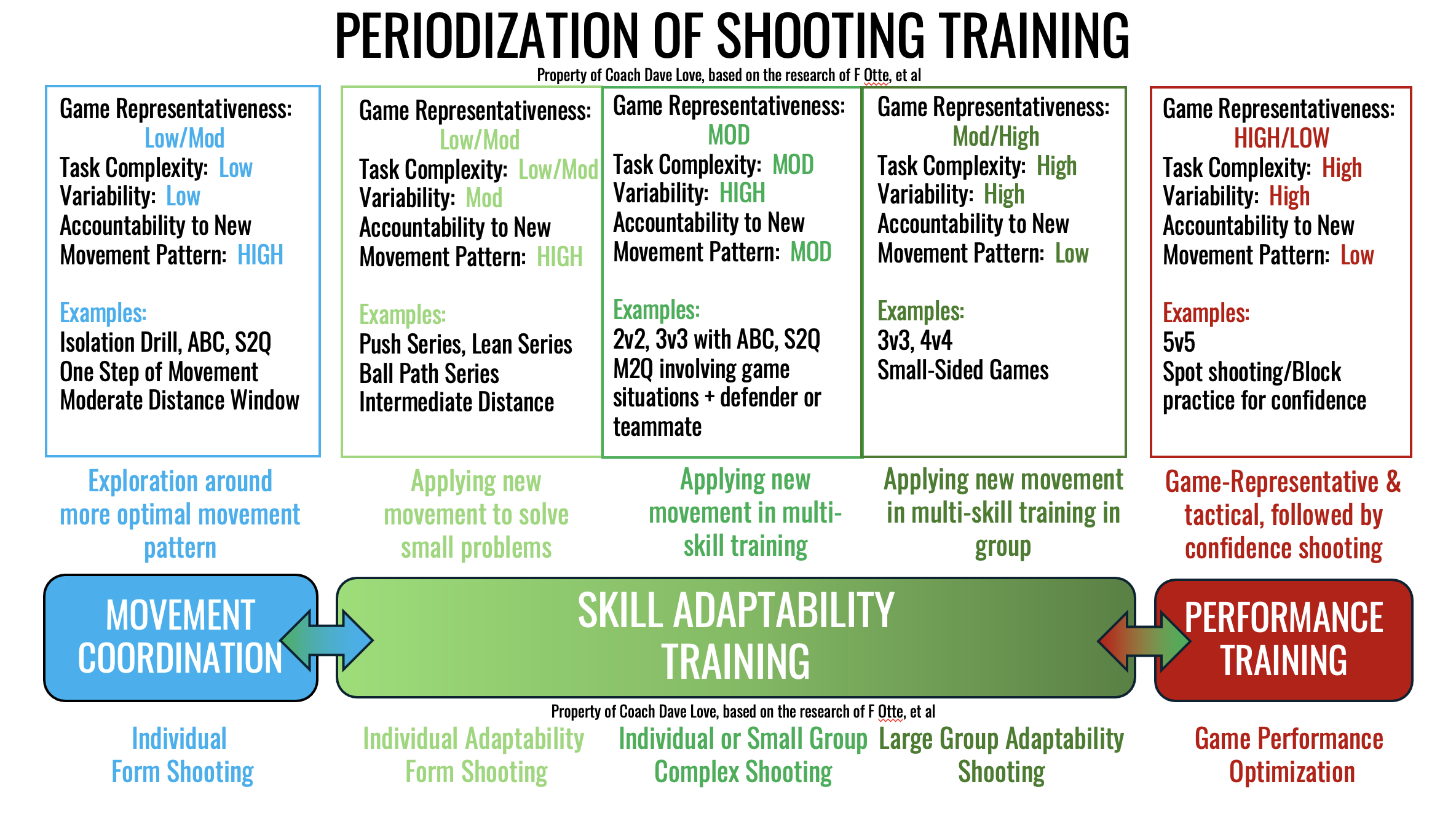
So with them, we often need Movement Coordination Training first: drills that simplify the task enough to reduce variables, explore new ways of organizing Positive Power, and reduce the number of negative components. That doesn't mean we prescribe a single ideal technique — it means we help them discover a pattern with fewer built-in problems.
For stronger shooters
- They already have functional attractors (habits that help accomplish the goal) with mainly Positive Power.
- They need more work on degeneracy — finding variable solutions under changing constraints.
So with them, we can increase defenders, increase speed, change angles, add decision-making, and allow more contextual interference. The underlying shot is solid; we're testing and expanding it.
Conclusion: building positive habits
The goal for coaches and players should be to develop habits that maximize Positive Power, while recognizing that the game will always introduce challenges and imperfections. Great shooters are not defined by perfect form, but by their ability to adapt and maintain simplicity in the most complex situations.
The focus should be on developing efficient habits — particularly those that simplify the process and generate consistent Positive Power.