Finding what's wrong with a shot is one job — I've written separately about how I diagnose it by reading the ball. Deciding what to fix first is another, and it's the one that trips up a lot of coaches. Once you've spotted two or three real problems in a shooter, which do you attack first?
My answer starts with what I call the two connections. There are two places in a shot where force actually gets transferred — the hand to the ball, and the feet to the floor — and they're where I prioritise almost every correction I make. If a player is significantly fighting physics at one of those two spots, we probably need to deal with it, because physics is going to win.
The two connections
In my opinion, these are the two most important parts of the shot:
- The hand to the ball. How the shooter transfers force into the object they're actually trying to move.
- The feet to the floor. How the shooter transfers power into the ground to build the shot from the bottom up.
Everything else in a shot matters — but it matters largely in service of these two. So when I'm deciding what to correct first, this is where I look before anywhere else.
“Two connections matter most: the hand to the ball, and the feet to the floor. If a player is fighting physics in either one, physics is going to win.”
Tweet thisWhy the hand comes first
Between the two, I lean heavily toward prioritising the hand-to-ball connection. The reason is simple: the hand is where force is actually transferred to the ball — the thing we're shooting. Everything the feet and legs do is upstream of that; it all feeds the hand. A problem at the hand is a problem at the point of delivery — and you can't fully compensate for a bad point of delivery with a better base.
CDL Coaching Toolbox
Ball speed, the set point, spin, and release — the connections in this article, measurable and trackable on your own players. Free to try.
Within the hand: the set point
And within the hand-to-ball connection, I put more of my attention on the set point — how the hand is connected to the ball as the ball arrives there — than on anywhere else in the shot.
Here's the thinking. Everything before the set point gives the player time to organise into a more functional position. And realistically, a player is never going to be in a “perfect” position at triple threat in a real game — triple threat is highly variable. There, the goal is problem-solving, not chasing perfection. The set point, by contrast, is far more consistent from shot to shot.
There's also a physical reason it matters so much. Just about every player slows the ball down as it reaches the set point, then begins to accelerate it out again. Before the set point, the force on the ball is actually diminishing; the set point is where force really starts to be applied. So the set point isn't a pause in the shot — it's the launch.
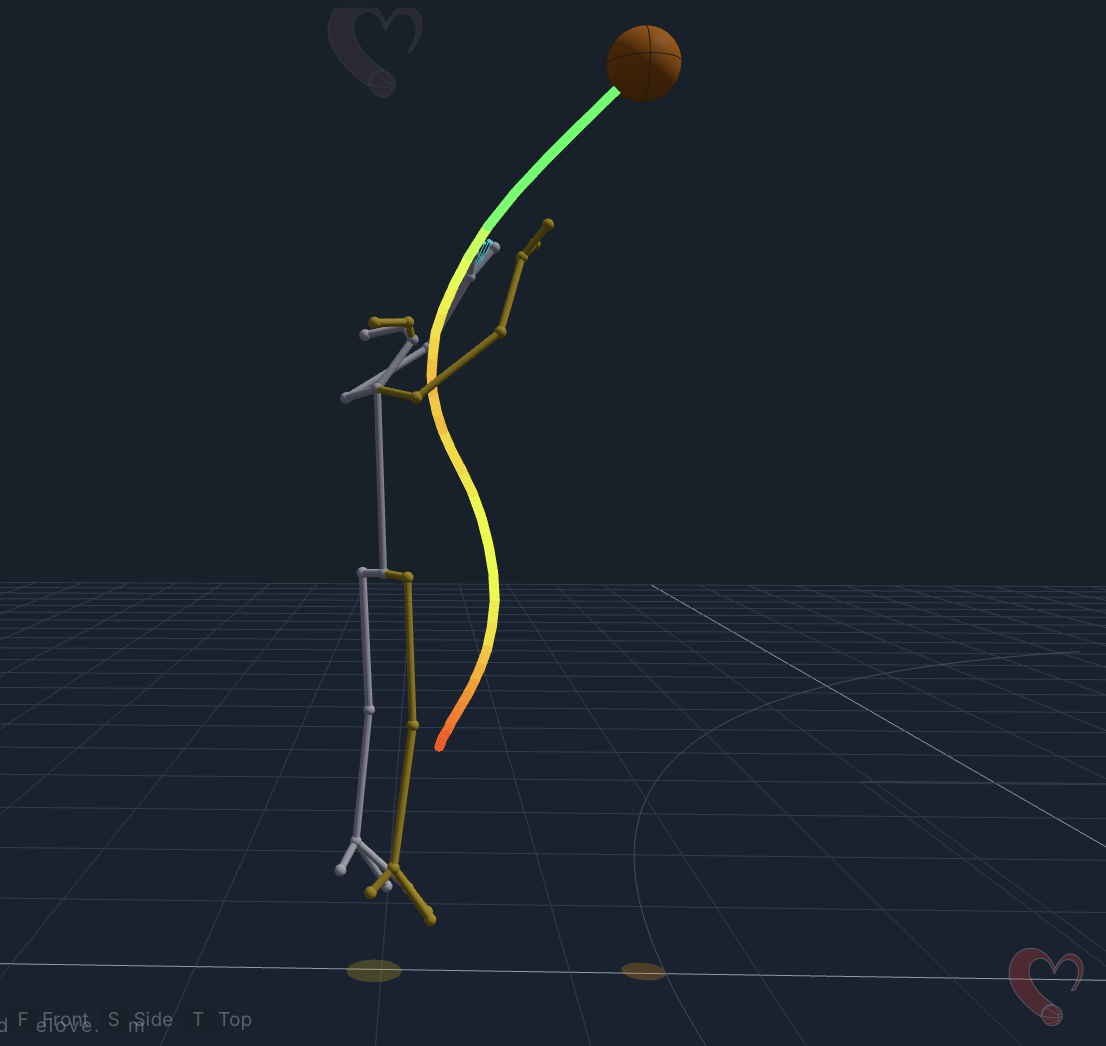
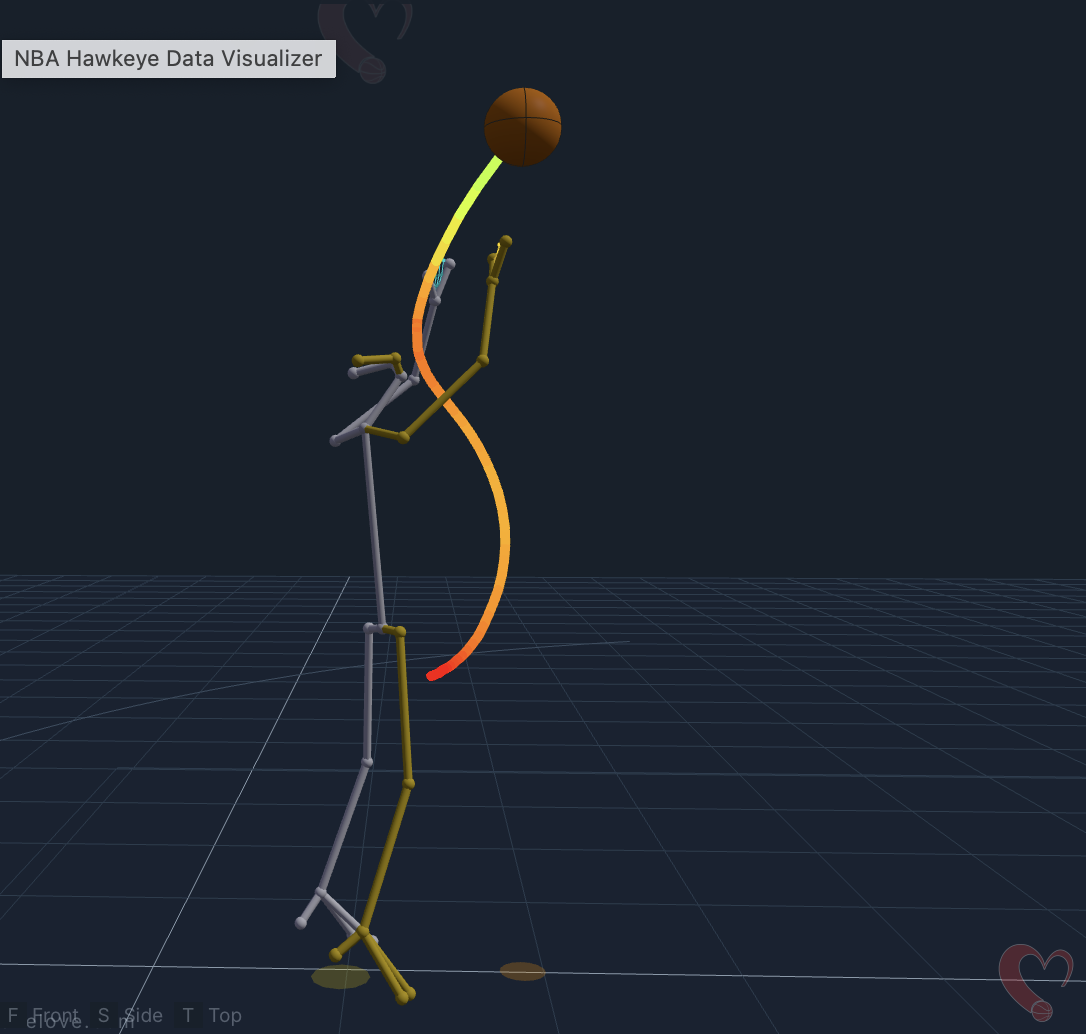
This is why I spend so much time on the set point with weaker, mature shooters. They're usually in a position — or making a move into the set point — that causes the physics of the shot to work against them from that moment on.
Every shot is built on two connections: the hand to the ball and the feet to the floor. Learn how Coach Dave Love decides what to fix first.
ShareIt's like a golfer trying to hit consistently straight shots while constantly leaving the clubface open: the physics are fighting them. It doesn't make the objective impossible — but it makes the whole thing more complex, and not every player is talented enough to get away with a more complex move.
“The set point is the most important moment in the shot. It's the launch — where the body really begins to apply force to the ball in the direction we want it going.”
Tweet thisThe feet-to-floor connection
The second connection — the feet to the floor — has two jobs, and a player can struggle with one, the other, or both:
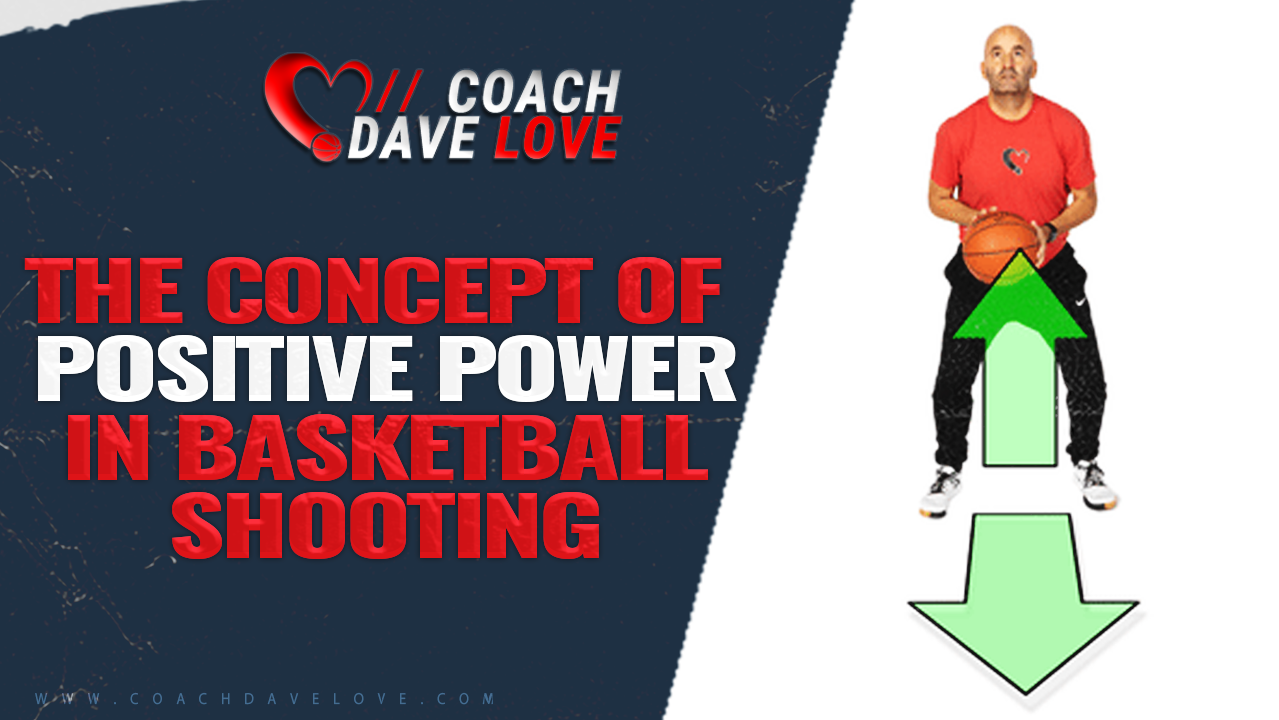
- Stop the Negative Energy the player creates by moving around the floor before the shot.
- Create as much Positive Energy as possible in the shooting motion itself.
A coach needs to know which of those two is the actual problem — they call for very different work. And there's a catch worth respecting: the two can trade off against each other. The habits that make a shooter more stable can cost them power, and the habits that add power can cost them stability. There's no universal answer — only the right balance for this player, in this situation.
“Habits that make a shooter more stable can cost power; habits that add power can cost stability. The job is finding the right trade-off for this player.”
Tweet thisA starting point, not a rulebook
I want to be clear about what this is and isn't. It isn't a definitive list that says the only things I ever work on are the two connections. It's a way to narrow a coach's initial focus — to know where to look first — before broadening the perspective when the situation calls for it.
Diagnose the shot, then start at the connections: the hand to the ball first, the feet to the floor close behind. Fix what's fighting physics there, and a surprising number of the other problems get easier to solve.
References
- Slegers, N., & Love, D. (2024). The role of ball path curvature in basketball shooting accuracy. Journal of Sports Sciences, 42(21), 2052–2060.
- Slegers, N., & Love, D. (2022). The role of ball backspin alignment and variability in basketball shooting accuracy. Journal of Sports Sciences, 40(12), 1360–1368.