When the Orlando Magic drafted Aaron Gordon fourth overall in 2014, nobody was talking about his jump shot. In his one season at Arizona he had shot just 42.2% from the free throw line — and a player who can't make free throws isn't really a shooter yet.
The doubt was public. Not long after the draft, a well-known college-basketball writer published a piece titled “Why Aaron Gordon Will Never Shoot Better Than 62 Percent at the Line.” It wasn't an unreasonable take at the time. It just turned out to be wrong.
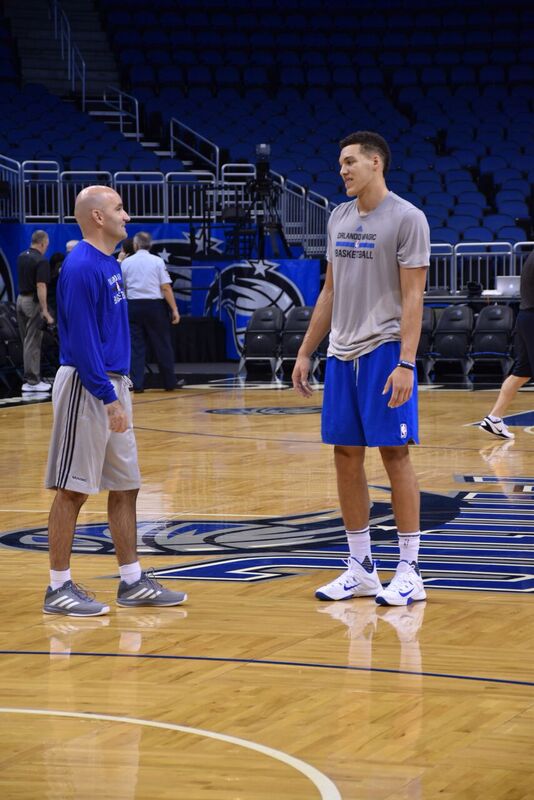
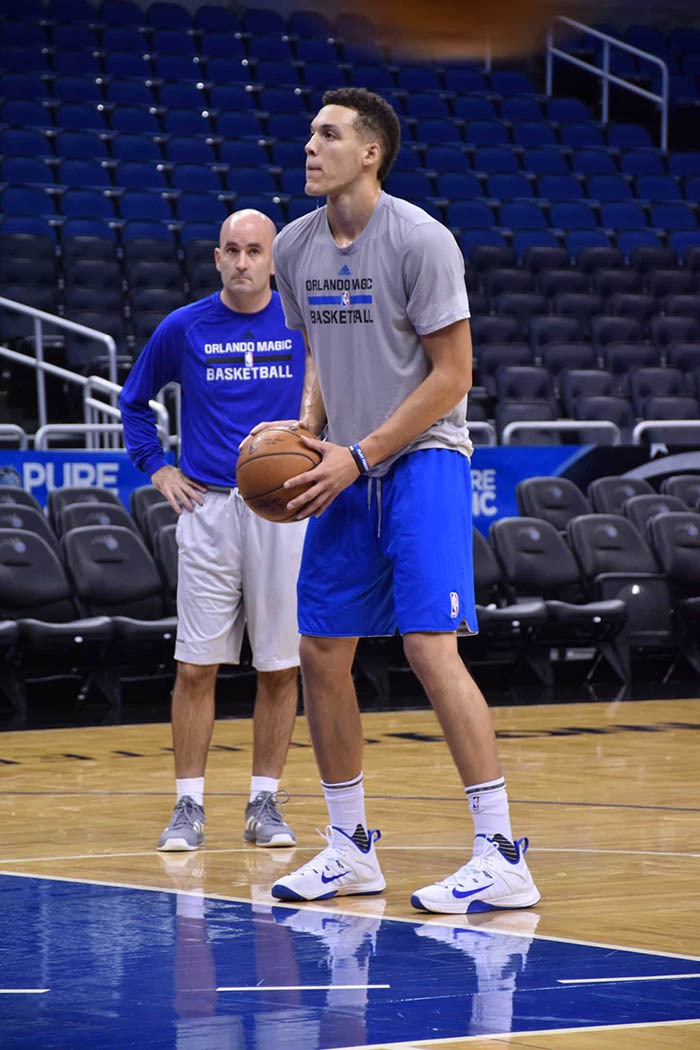
I was hired by then-Magic Head Coach Jacque Vaughn and started with Aaron in the middle of July, once Summer League had finished — which left us half an off-season before his rookie year began. What we did with that time is the story, and some of the most important decisions we made, the things I want you to learn, had nothing to do with his form.
One honest caveat before we start. In 2014 I had no formal education in skill acquisition or motor learning — I'd spent the previous fifteen years building my own understanding of shooting from the gym floor. I've since learned that much of what I'd arrived at lines up well with the research. But not all of it does, and there are things I did back then that I'd approach differently today. What held up best — and what this story is really about — were the decisions around the work, more than every detail of the work itself.
The smartest decision came first
The first smart decision — and I want to be clear this was as much Jacque Vaughn and Magic GM Rob Hennigan as it was me — was to spend Aaron's rookie-year development focused on one thing: becoming a better free throw shooter.
With a shortened off-season and where Aaron was starting from, that was the reasonable, attainable goal for the time we had. The honest truth is he didn't make shots at a high enough rate for any other shot to be worth much yet. So we narrowed the aim to stabilising something functional at the free throw line — so that he simply wasn't a liability there.
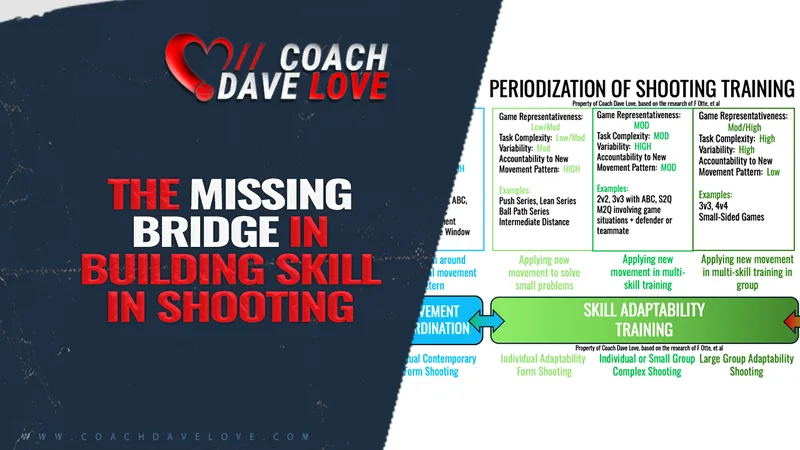
This is underrated. Too many people go in with a plan that's unrealistic or skips steps, and set the player up for failure before the work even begins. The thinking usually sounds something like: “him being able to make free throws doesn't move the needle that much for us, so let's skip that and go right to becoming a good three-point shooter.” Unfortunately, the player is now in a position where he has to stabilise a new movement and learn to adapt it, in a rushed time frame — and often the coach isn't even aware those are two separate jobs.
CDL Coaching Toolbox
The off-axis spin I spotted in Aaron's first few shots is exactly what ShotMetrics measures — release quality, symmetry, and arc, put in your hands to diagnose your own players. Free to try.
It wasn't that we believed skill at the free throw line was more valuable than making threes in the flow of the game. We simply knew it would take Aaron time to stabilise a new movement first, and the free throw line aligned with that reality. A goal a player can actually reach in the time you have isn't a small thing — it's the thing that makes the rest of the work possible.
“In player development, too many people go in with a plan that's unrealistic or skips steps — and set the player up for failure before the work even begins.”
Tweet thisThe diagnosis: reading the ball
I'd watched every shot of Aaron's I could find on video — but nothing beats seeing it in person. Once we got in the gym, the diagnosis came very quickly.
In the very first shots he took, I could see the spin of the ball was significantly off axis. I didn't yet know in what way — but I could see it was significant. That one observation cued me to start looking for the habit that might make him release the ball that way.
It only took a few more shots. He gripped the ball poorly — his shooting-hand thumb wrapped around the front of the ball at the set point, almost like he was trying to palm it. Once we'd identified that, the goal became simple to state, if not simple to do: stabilise a more functional grip and release.
“When a shooter's ball comes off with the spin clearly off-axis, that's your first clue something's wrong. The ball tells you where to look.”
Tweet thisStabilising the new movement
Here's the part people underestimate. At this level, a habit isn't a blank slate you write over — there's significant hysteresis in an attractor. The old movement doesn't just fade; under any pressure, it pulls back.
So the early work with Aaron was very constrained and deliberate, designed to give him the room to get comfortable with — and learn to control — the new movement. I didn't have this language at the time, but we were essentially spending extended, necessary time in what I'd now call an MCT phase: consolidating the new pattern long enough to ensure a genuine, lasting shift — a functional bifurcation — without regressing to the old grip.
That patience isn't glamorous. With a player at this level, it is the work.
NBA Shooting Coach Dave Love helped Aaron Gordon improve nearly 30% from the free throw line between his college and rookie seasons. Learn what went into it.
ShareAnd it shines a light on what I think is the most common misconception when theorists start discussing the constraints-led approach or ecological ideas about skill acquisition for NBA shooters. Plenty of people would look at the work Aaron and I did — no defender in sight, and me clearly intentional about the habit we were building — and conclude it wasn't ecological at all.
They'd be missing two things. First, Aaron's representative environment for the year ahead — the free throw line — doesn't have a defender in it. Adding one wouldn't have made the practice more representative; it would have made it less. Second, I wasn't being intentional about prescribing a specific movement pattern. I was being intentional about getting him to explore around a solution I believed would be more functional, without sliding back into the old, dysfunctional habit.
Factor those in — along with the reality that a 42% free throw shooter may need dramatically scaled-down work at the very start — and what we did was, in Aaron's specific case, actually quite ecological.
“When you rebuild a shooter's movement, the old habit doesn't just fade — it has gravity. Most of the early work is protecting the new pattern while staying away from the old.”
Tweet thisThe result
That extended period of stabilising a new movement paid off. Aaron shot 72.1% from the free throw line in his rookie year — a jump of nearly 30 percentage points from his college number, and comfortably past the 62% ceiling that blog had so confidently set for him.
And it didn't stop there. A stable, functional free throw became the platform for the years of Skill Adaptability work that followed — the kind that eventually helped Aaron become a genuine 40%-plus three-point shooter in the NBA (a career-high 43.6% in 2024–25). None of that would have been possible without first stabilising something that worked.
What actually made the difference
If you take one thing from Aaron's story, don't make it the grip fix. Make it the four decisions around it:
- Accurate diagnosis. Correctly identifying the dysfunctional habit — the attractor — before touching anything else.
- The right task design. Building constrained activities that let a more functional movement actually stabilise.
- Patience. Giving him the time to consolidate the new pattern, instead of rushing to the next thing and inviting a regression.
- Realistic goals. Setting a target he could reach in the time we had, so he could focus on the necessary work — and not unintentionally sabotage his own improvement.
The grip was the easy part. Everything around it was the coaching. And it's the same order of operations I'd use with any shooter, from an NBA lottery pick to a twelve-year-old: read the ball, find the habit, stabilise something functional, and be honest about what's achievable in the time you have.
References
- Aaron Gordon — NBA career statistics. Basketball-Reference.com. (Rookie-year 2014–15 FT% .721; career-high 3P% .436 in 2024–25.)
- Aaron Gordon — college statistics, 2013–14, University of Arizona. Sports-Reference.com. (FT% .422.)