Introduction
Thanks to tools like NOAH becoming commonplace, most coaches now understand the importance of quantifying arc.
But arc is only half the story.
Velocity — how fast the ball is traveling when it leaves the hand — is just as critical. It's the relationship between arc and velocity that determines how far a shot will travel, and how much margin for error a player will have.
That's where many coaches stop short. We've grown accustomed to measuring arc with tools like NOAH, but velocity remains largely invisible to the naked eye — and rarely taught, trained, or corrected intentionally.
With ShotMetrics, we focus on this relationship because it opens a door to something we used to think was unmeasurable: Touch.
Touch isn't just soft release or good spin. It's a player's ability to instinctively or consciously adjust arc and velocity in harmony — based on distance, release height, and situation — to create a repeatable and forgiving shot.
And with modern tools, we can now measure it.
Arc and Velocity: The Relationship That Matters
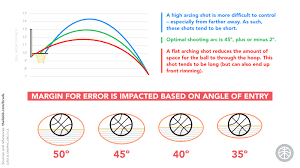
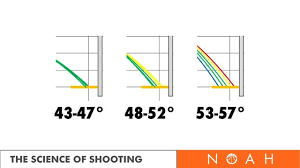
Most coaches today recognize that an ideal arc is around 45 degrees — but not everyone understands what that number really means.
A 45° entry angle is considered ideal because it provides a sweet spot between two competing forces:
- Too flat (e.g., 35–40°) and the ball has a harder time fitting through the rim. The entry angle reduces the usable surface area of the rim.
- Too steep (e.g., 50–55°) and you increase margin for error in terms of depth, but sacrifice distance control.
Here's where it gets more nuanced: the entry angle isn't the same as the launch angle.
The launch angle is how the ball leaves the player's hand. The entry angle is how it arrives at the rim. To create a 45° entry angle, players need to adjust their launch angle — and that launch angle will vary depending on:
- Distance from the hoop (longer shots require flatter launch angles)
- Release height (higher releases allow for flatter launch angles)
In other words, there's no one-size-fits-all launch angle — players must learn to adjust based on their context.
This is where velocity enters the picture.
Arc Alone Isn't Enough
Now let's say we're designing a shot from 23 feet away with a 9-foot release height.
We want to find all the combinations of launch angle and velocity that result in the ball going the correct distance.
When we do this, we uncover something fascinating: the solutions don't form a line — they form a C-curve.
In the chart below, the blue line represents the minimum velocity required to clear the front rim. The red line shows the maximum velocity before the ball hits the back rim. The green band in the middle is the "make window" — every combination of arc and velocity that allows the ball to go the correct distance.
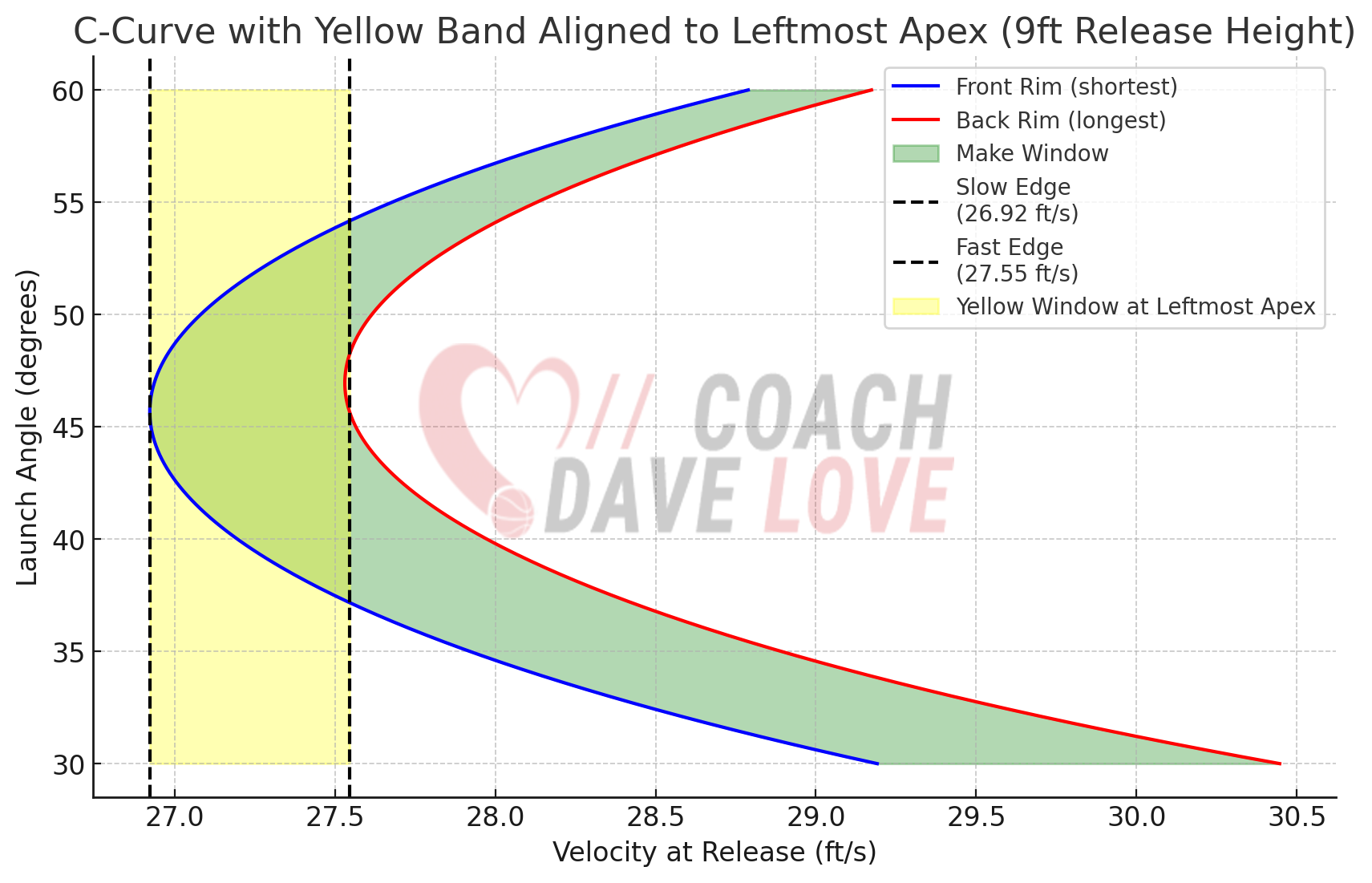
- As you increase launch angle beyond 46°, velocity must also increase — but the make window narrows.
- As you decrease launch angle below 45°, velocity must still increase — and again the window narrows.
The yellow band highlights the area around the apex of this curve — the combinations of arc and velocity that give the shooter the greatest flexibility and adaptability.
It's the combination of the green make window and the yellow adaptability band that shows us where players have the most room for small errors and still make shots.
“You can't talk about a shot's arc without also talking about its velocity — the two are inseparable.”
Tweet thisEntry Angle vs. Launch Angle
Now it's important to circle back to the entry angle to understand an important nuance.
That area of green and yellow would show the most room for flexibility, and so it is easy to assume the optimal shot would be in the middle of that space. In this example, we might say it is 45–46° launch angle and approximately 27.2 ft/s.
But that would be forgetting that the entry angle might be different from the launch angle.
When we factor in that the optimal entry angle is 45°, for this shot the actual optimal launch angle is closer to 48°.
We can calculate and mark this point with a red X.
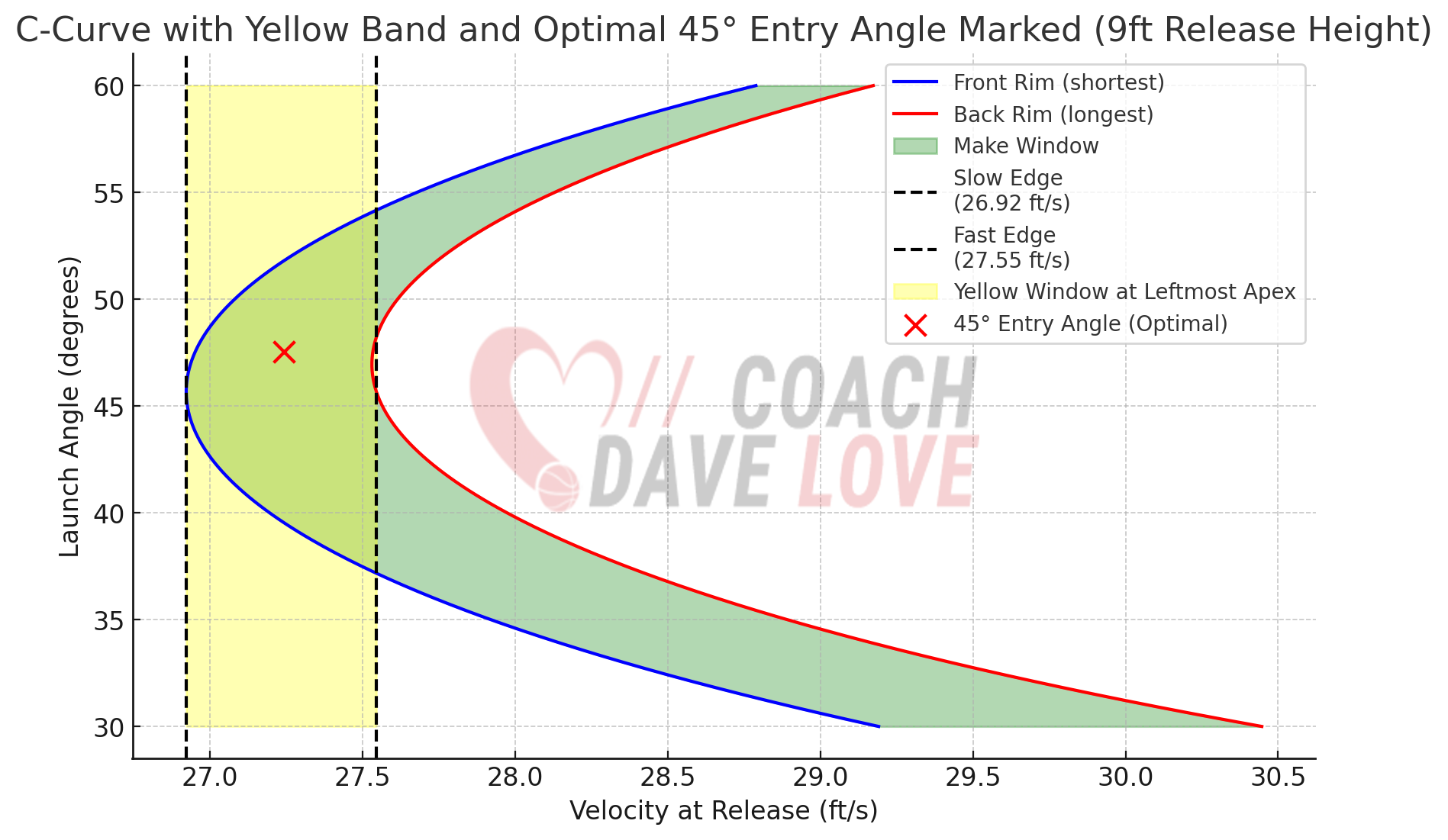
This is the spot that balances everything — a launch angle and velocity combination that results in an entry angle close to 45°, giving us the best mix of margin for error, surface area, and distance control.
It's one more layer of nuance to understanding trajectory — and one that most coaches overlook.
What Player Data Can Reveal
When we have shot data for players, we can begin to map each shot and uncover trends.
In the first graphic below, this theoretical player demonstrates a few important traits:
- They tend to shoot with an arc close to optimal.
- They tend to miss long rather than short.
- Most importantly, their misses are driven more by velocity variability than arc variability.
They control their launch angle reasonably well, but their velocity fluctuates more — and that's where their touch breaks down.
Contrast that with the second player:
- They control their velocity much more consistently.
- But they shoot with too low of an arc, giving them a smaller margin for error in terms of entry angle.
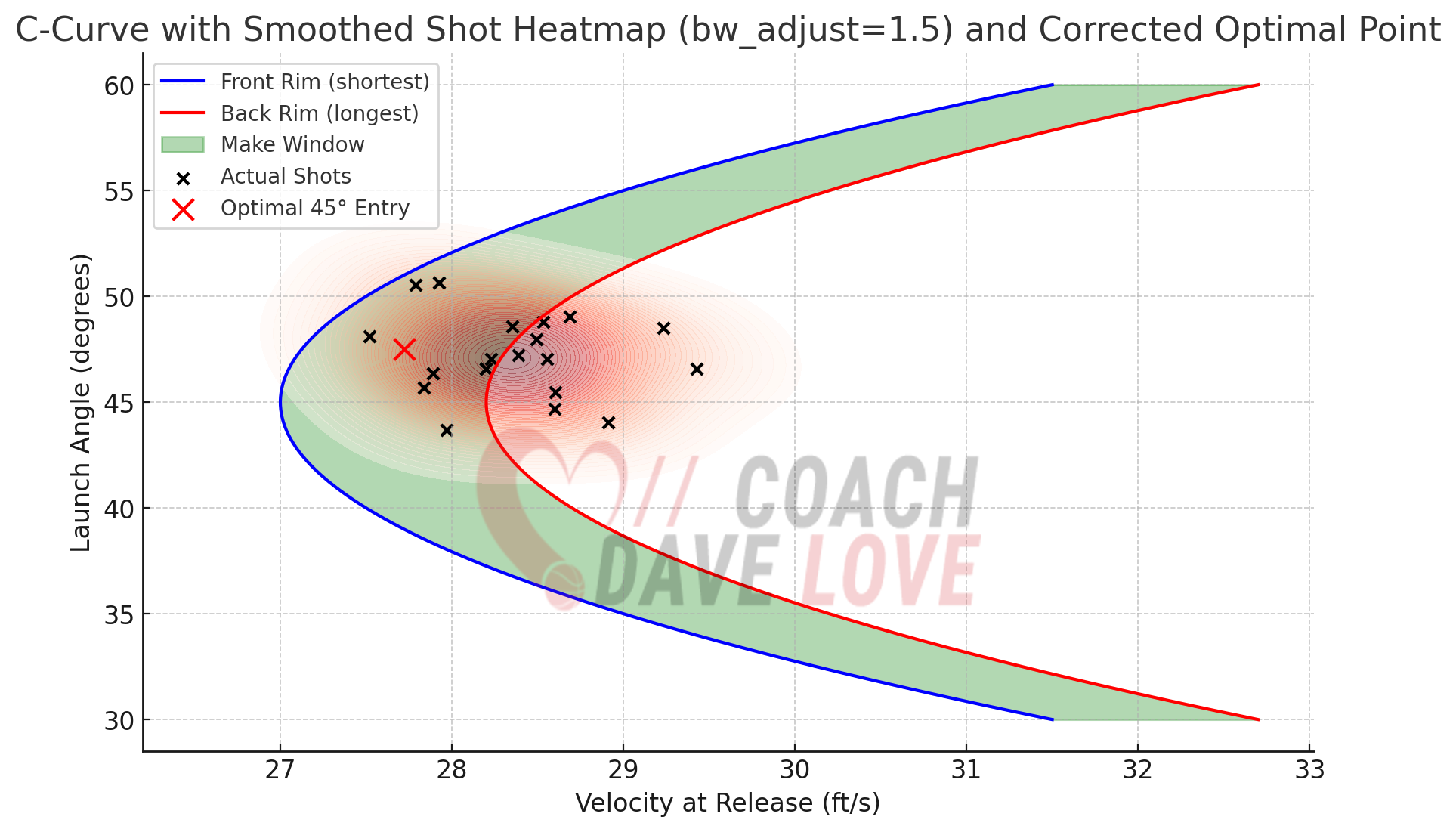
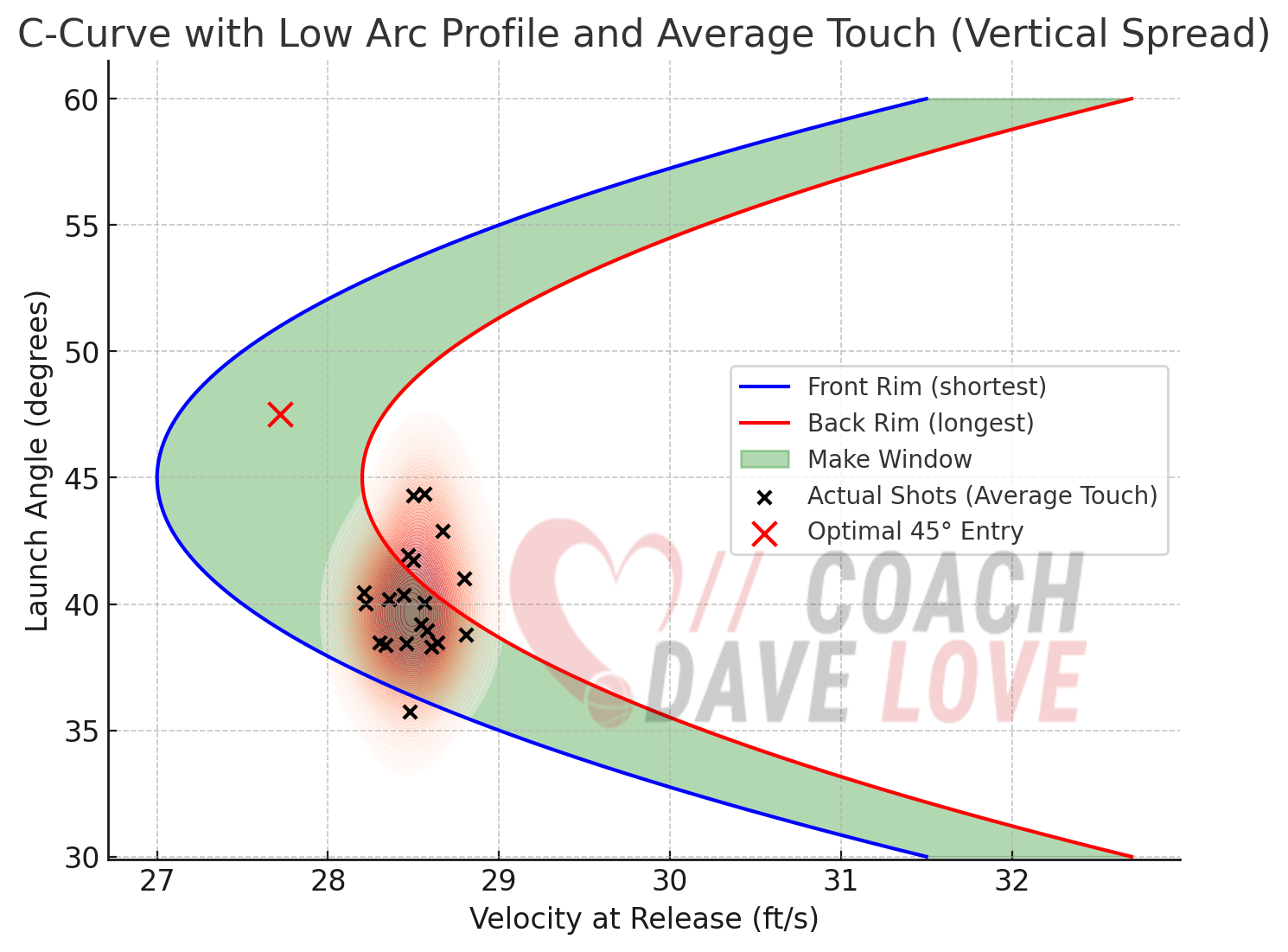
Both examples underscore the same point:
Touch is a balance of arc and velocity. When one is off, even slightly, it reveals itself in the pattern of misses — and we now have the tools to diagnose it.
The Patterns of Touch
This is where things get really interesting.
"Touch" is something that has always been loosely defined and attributed to players on a very anecdotal basis. But when we understand this data and what it means, we can start to see tangible evidence of good touch.
Players need to be able to adapt their shots in game conditions. If a player needs to shoot the ball a little bit higher to get it over a defender's hand, they'd better also shoot the ball a little faster — if they normally have good arc.
But if they normally have a slightly flat shot, they might actually need to shoot the ball a little slower when shooting slightly higher.
That ability to innately control the relationship between the arc and velocity of their shot is what touch really is. And when we map a collection of shots, we can see that skill we once thought to be immeasurable.
Attached are four different profiles of theoretical players:
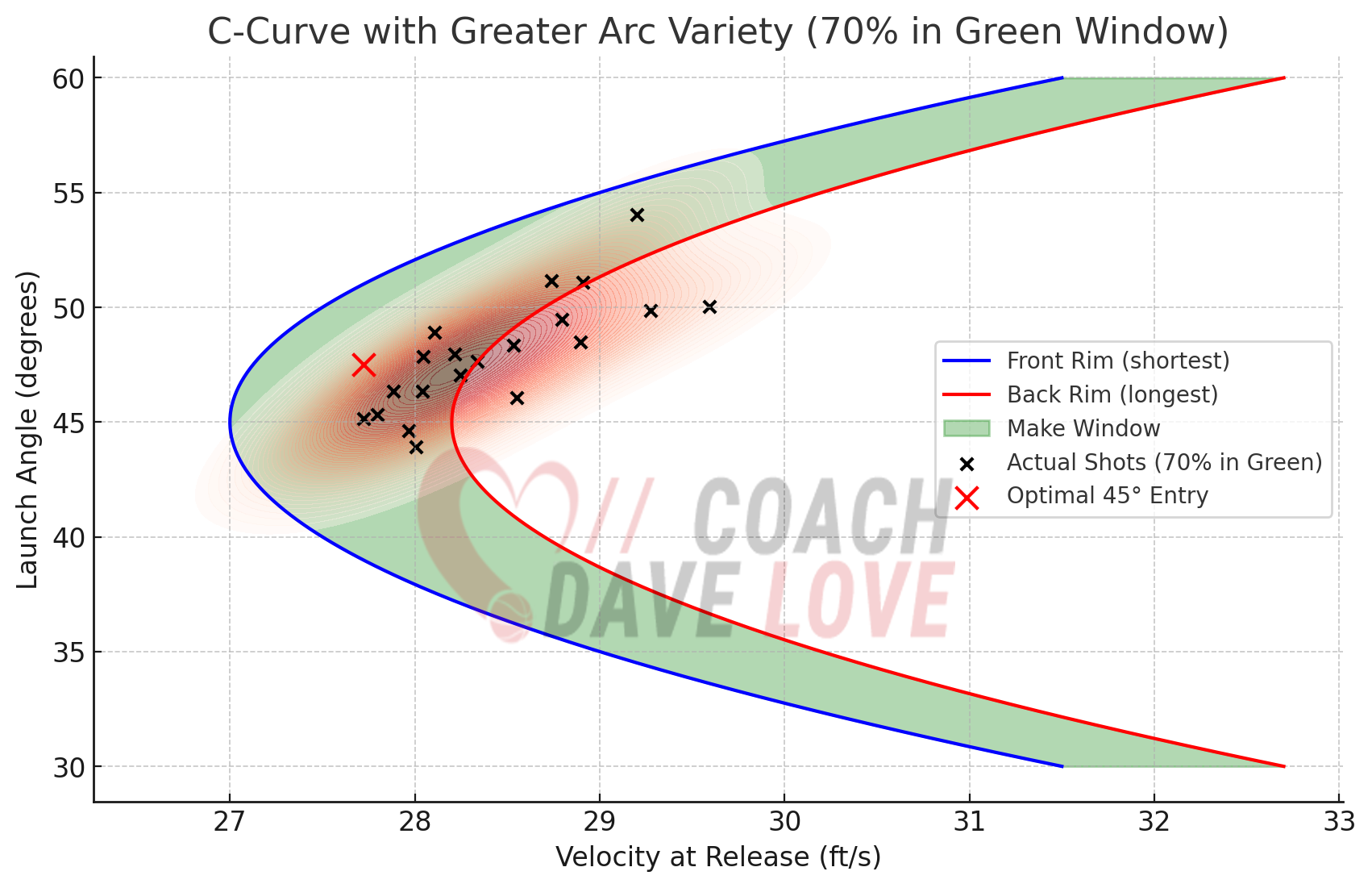
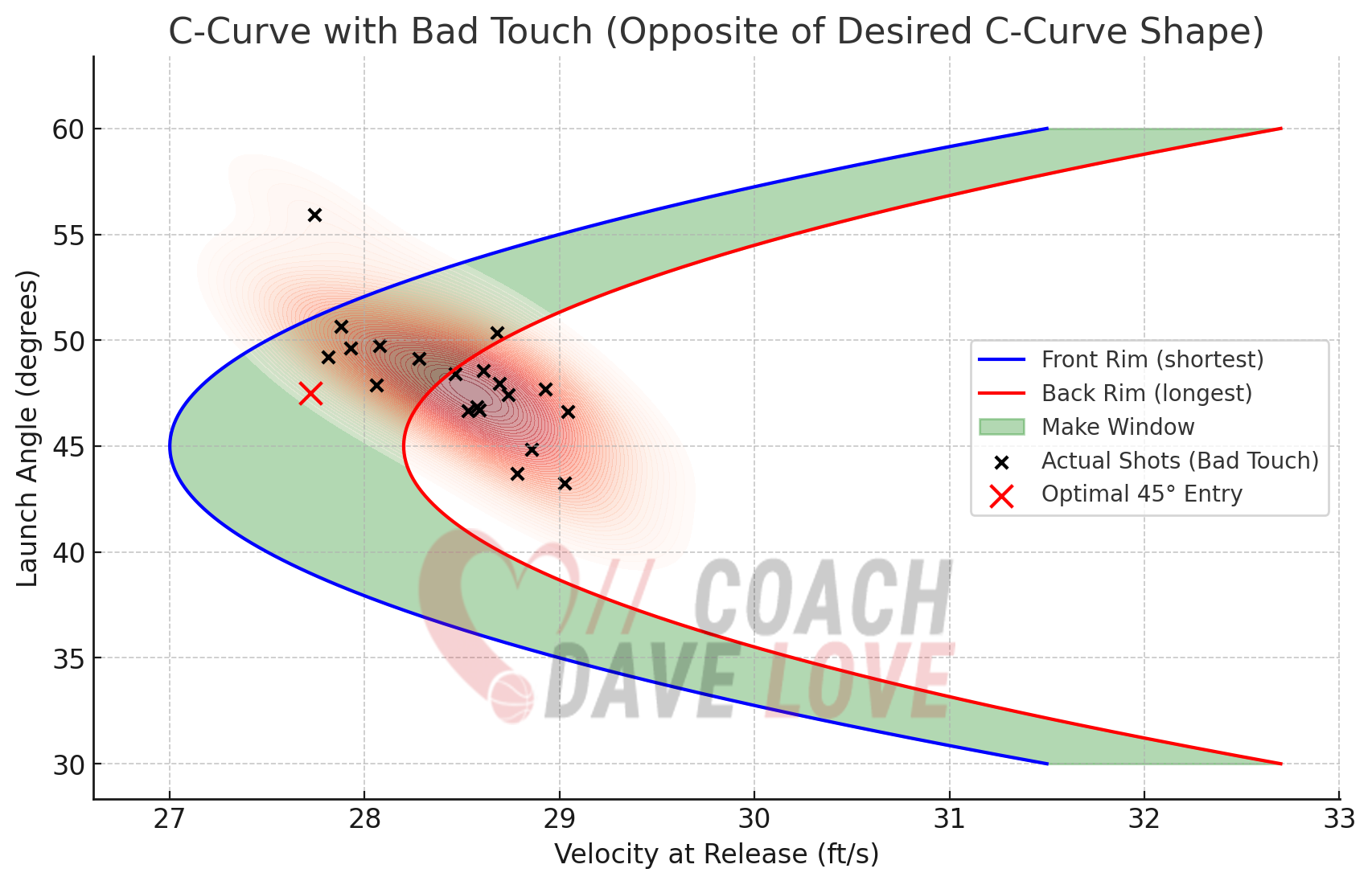
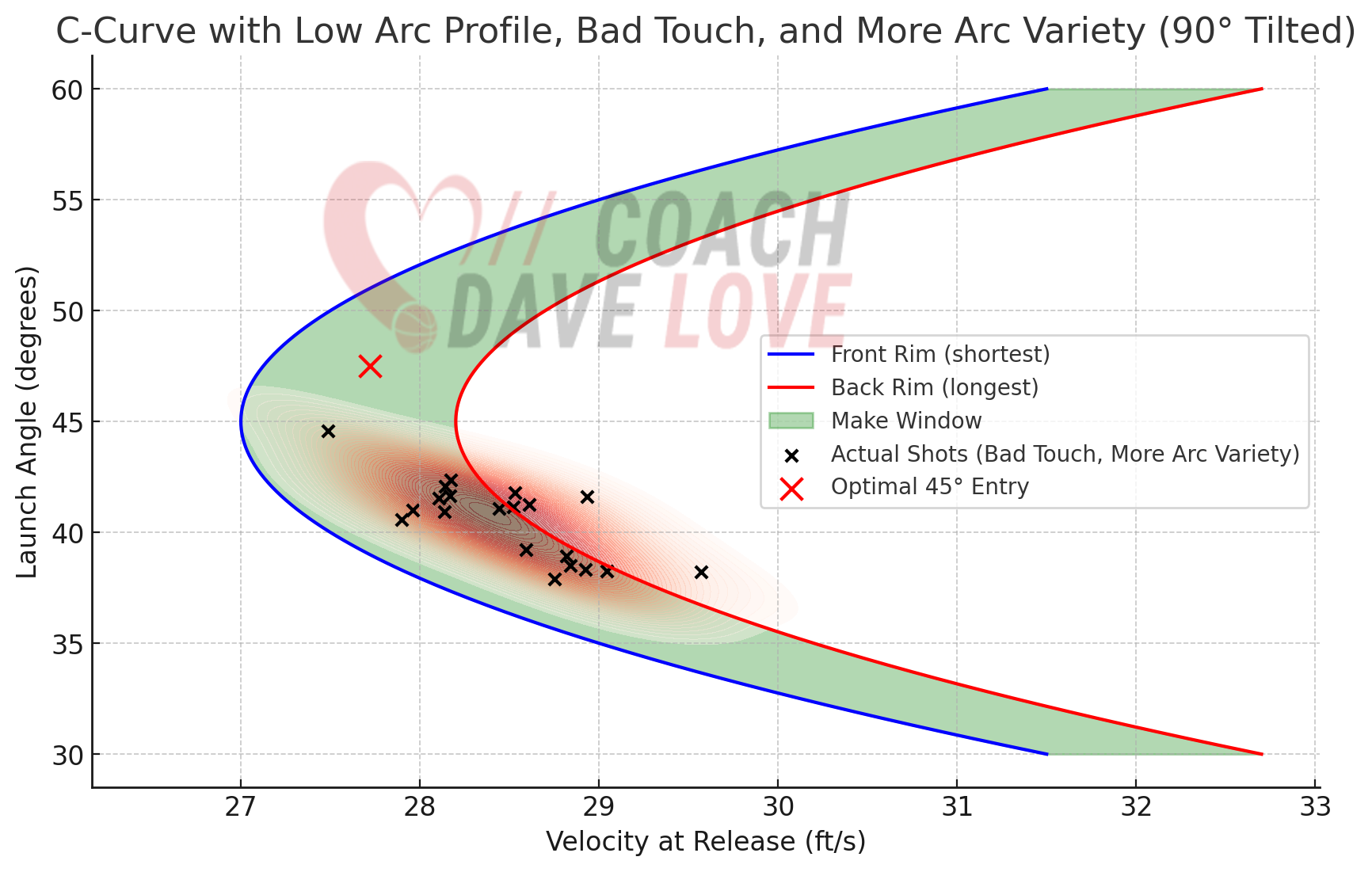
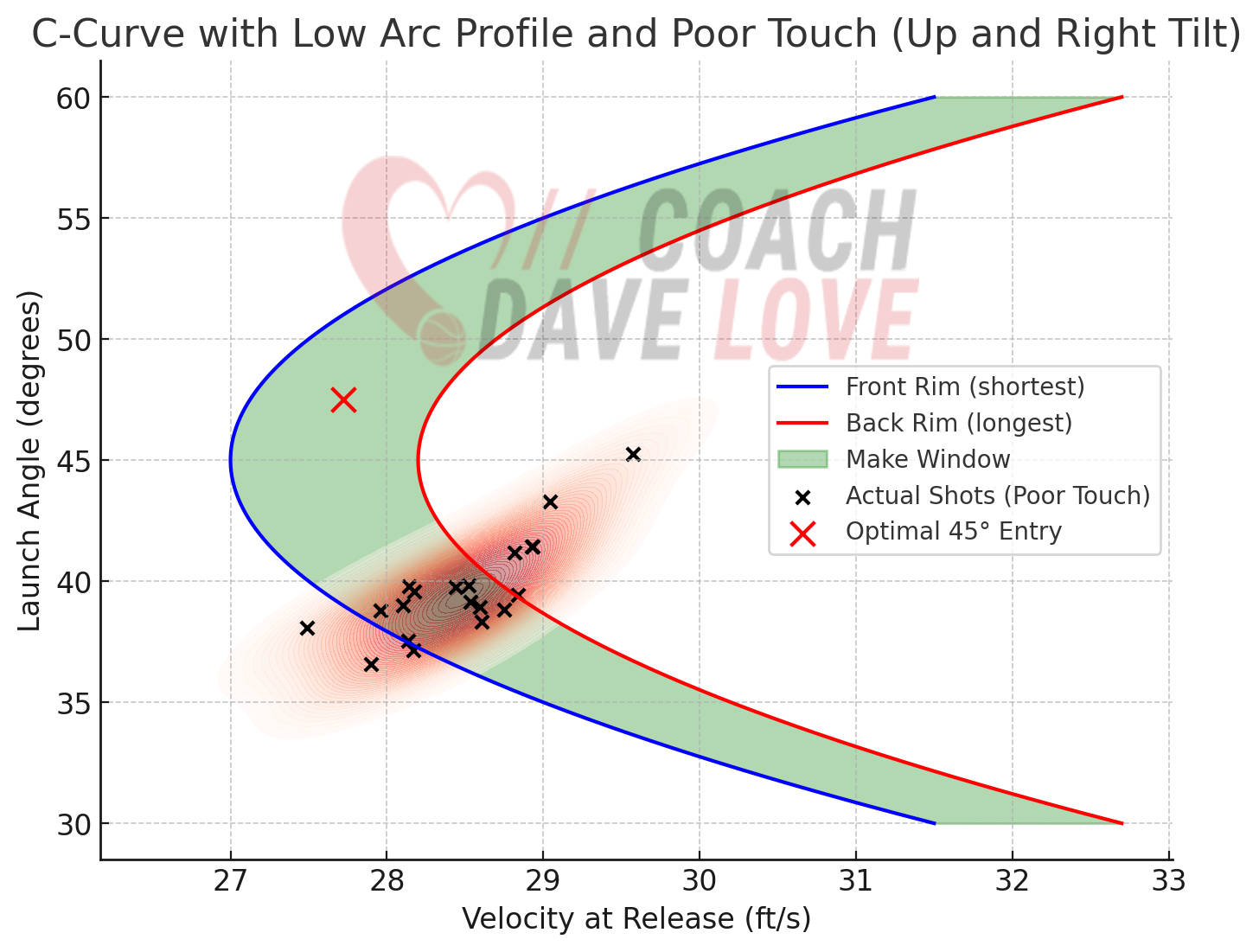
In the first two we can see players that shoot with good arc. But with one we can see their innate ability to adjust in the correct way. When they need to shoot a ball a little higher they also give more velocity, and their heat map follows the curve of the green band. The other player doesn't do that well — their heat map is twisted against the green band.
The same thing with players that shoot the ball slightly flat, but their solution will be different. Having a flat shot and needing to shoot it higher but also shooting it faster will result in a long miss. Those players need to slow the ball down — and we can start to see which players do that naturally better than others.
Conclusion: Why This Matters
Touch has long been treated as a mystical trait — something players either have or don't.
But now we can start to see it, understand it, and teach it.
This isn't about chasing perfection. It's about expanding a player's ability to adapt. The better a player understands how arc and velocity interact, the more they can stay within that green-and-yellow zone of forgiveness. The more flexible they are, the more they can handle variable situations — defenders, fatigue, deeper range — without their shot breaking down.
And for coaches, that changes everything.
Instead of correcting arc in isolation, we can begin developing drills and feedback loops that build the relationship between arc and velocity. We can help players learn to feel it, not just execute it. And we can measure whether their touch is becoming more adaptable over time.
“Great shooters aren't just consistent — they're adaptable. And touch is the fingerprint of that adaptability.”
Tweet thisCDL Coaching Toolbox
The measurements behind everything I coach — balance, release symmetry, and arc — put in your hands to use on your own players. Free to try.