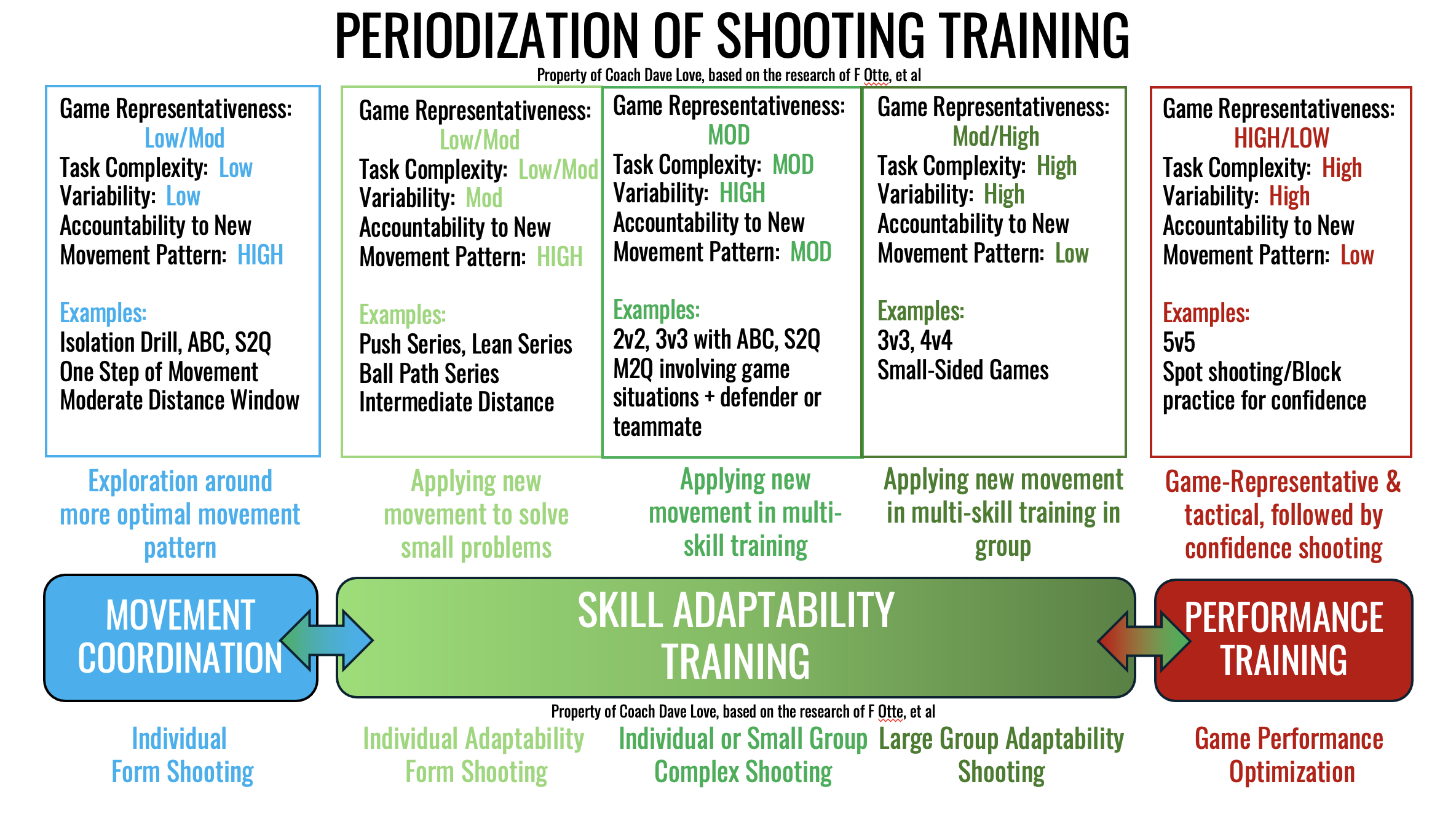
At its core, Movement Coordination Training (MCT) is about one thing: helping a player find more functional, more efficient ways of moving, where the physics of the shot works for them, and helping those patterns settle in until they’re dependable. It’s one of the phases of developing a shot in the PoST framework.
This isn’t a box you check once, up front, before anything else can happen. For a lot of players it unfolds slowly across their whole young development, their movement growing more efficient as they get stronger and more coordinated. For others, like a pro reworking their motion mid-career, it has to happen in a much shorter window. Either way the work is the same: exploring toward the more functional middle of a shooter’s sandbox, and helping the better patterns they find there hold together. How we go about that is where a lot of coaching goes sideways, and it starts with what we think it means to be “skilled.”
What being skilled actually is
The most common way coaches try to build that foundation is to decompose the shot: break it into pieces, teach each one explicitly, and drill the “perfect” rep until it’s automatic. It feels like rigor. But it often builds a shot that looks clean in the gym and comes apart the moment it has to do anything real. The effort isn’t the problem — the picture of skill behind it is.
That decompose-and-drill picture comes from the old Information Processing view: a skill is a fixed motor program you groove in a quiet room and then run wherever you like. Nail the program, the thinking goes, and the rest takes care of itself.
But being skilled isn’t repeating one perfect form. It’s having movement solutions that are functional (the physics of the shot working for the player), stable enough to rely on, and still open enough to adapt. We’re not installing a model for the player to copy. We’re helping them find and stabilize a solution that actually works for their body.
This is still a world of perception–action coupling: action tied to information, moment to moment. But in this phase the coupling I care about most isn’t the closing defender or the flight of a pass. It’s haptic and proprioceptive: the feel of the ball on the hand in different positions, how the ball moves differently through different movements, what changes in results with different habits. We quiet the game’s outside information on purpose, so the player can feel the new movement and organize around it.
“Being skilled isn’t repeating one perfect form. It’s owning movement solutions that are functional, stable, and still free to adapt.”
Tweet thisMovement Coordination Training: stabilizing a functional solution
In the PoST framework, the phase where a player builds and stabilizes a new, more functional movement is Movement Coordination Training (MCT). The goal isn’t a groomed, robotic rep. It’s to make a better solution stable, solid enough to build on, while still leaving room to explore around it.
It helps to think in attractors: the movement pattern a player’s system keeps falling back into. Most shooters who need MCT have a stable but dysfunctional attractor — a habit that holds together but fights the physics. The job is to loosen that old pattern and help a more functional one become the new default.
To do that, I turn down three dials: how much variability, complexity, and representativeness the task carries. That lets the player explore the new solution without the full noise of a game drowning it out. But here’s the part that trips people up: reduce is not eliminate. Turn those dials all the way off and you’re back to decompose-and-drill in a sterile room, and nothing you build there will survive contact with a game.
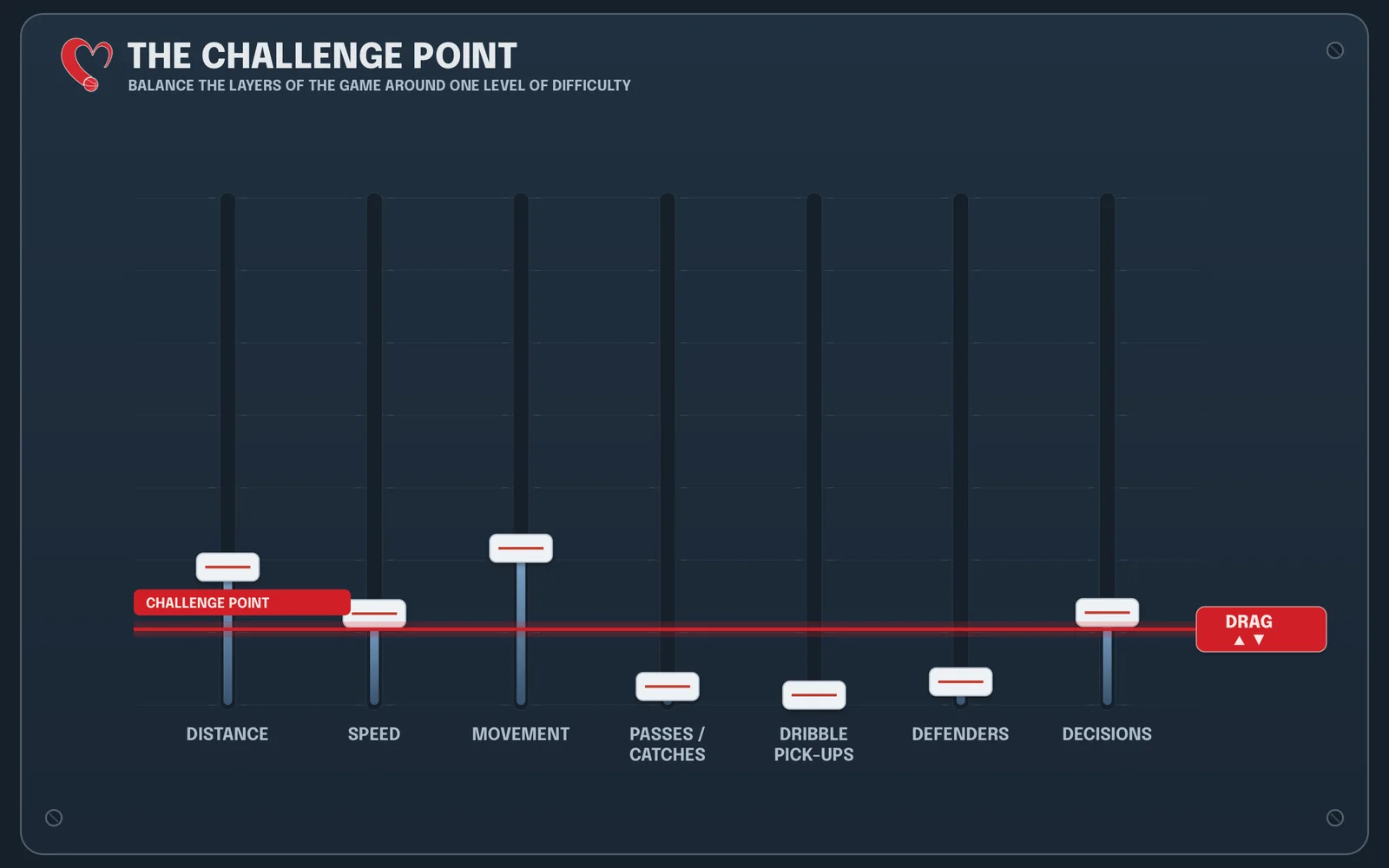
“Reduce the noise so a new habit can stabilize — but don’t eliminate it. A habit built in a vacuum only works in a vacuum.”
Tweet thisThe Periodization Workbook
Movement Coordination is one phase of the PoST framework. The workbook helps you map it, and every other phase, across a season.
Who needs it, and how much
MCT is most beneficial for players whose foundation itself is the problem. If a player already owns functional solutions, they might not need to spend as much time in this phase, and when it is done it should be done in more challenging ways.
The dose is deeply individual. A weak-shooting professional with very stable but very dysfunctional habits might spend more time in this phase — the old attractor is both dysfunctional and deeply grooved, and it takes real work to loosen. An above-average shooting pro might rarely touch MCT at all. What decides it isn’t level or reputation; it’s how functional the current solutions are, and how entrenched.
Don’t wait to perfect it
And even for the player who needs a lot of it, MCT isn’t a gate you have to clear before anything else. Learning is non-linear. I move between phases in scaffolded levels and appropriate doses rather than trying to perfect the foundation before starting to stretch it. Even a player rebuilding a genuinely new pattern (mostly MCT) should still get some Skill Adaptability work. Stabilizing the movement and stretching it under game demands feed each other; neither waits for the other to finish.
You don’t build a shot by drilling the perfect rep. You stabilize a more functional movement solution — then let the game stretch it. Learn how Coach Dave Love builds the foundation.
ShareHow I run it
Whatever the specific drill, the through-line is the same: constrain the player away from the dysfunctional movement and steer them toward a more functional part of the sandbox, without just handing them the answer. A few of the approaches I lean on:
- Guided Discovery. Shape the task and the questions so the player discovers the functional solution for themselves, instead of being told the steps.
- Differential Learning. Deliberately vary the movement so the player explores a wide range and self-organizes toward a functional solution: variability used as a tool, not one target repeated.
- Errorless Learning. Structure the task so the dysfunctional movement is hard or impossible to make, and the functional pattern becomes the path of least resistance.
- Contemporary Movement Coordination. Constraint-led coordination work that shapes the movement without step-by-step instruction; the environment does the coaching.


They look different on the floor, but they’re doing the same job: making the functional solution the easy one to find, and the dysfunctional one hard to keep.
Build the foundation
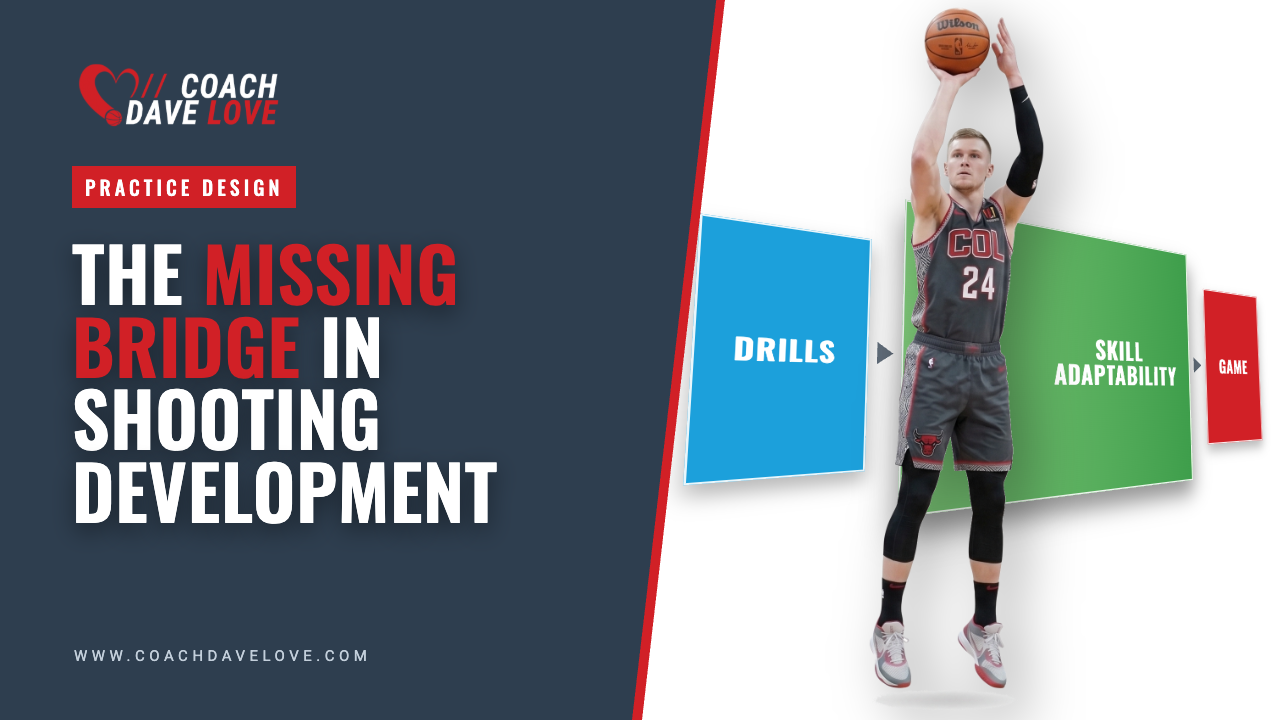
Skilled shooting was never about repeating a perfect form. It’s about owning functional movement solutions — stable enough to trust, free enough to adapt. Movement Coordination Training is where that foundation gets stable. Then you bridge it to the game with Skill Adaptability. Two halves of the same build: stabilize the foundation, then teach it to hold up under everything a game throws at it.
“Stabilize a functional foundation, then bridge it to the game. That’s how a new shot actually gets built.”
Tweet thisReferences
- Otte, F. W., Millar, S.-K., & Klatt, S. (2019). Skill training periodization in “specialist” sports coaching—An introduction of the “PoST” framework for skill development. Frontiers in Sports and Active Living, 1, 61.
- Chow, J. Y., Davids, K., Button, C., & Renshaw, I. (2016). Nonlinear Pedagogy in Skill Acquisition: An Introduction. Routledge.
- Schöllhorn, W. I., et al. (2006). Does noise provide a basis for the unification of motor learning theories? International Journal of Sport Psychology, 37(2–3), 186–206.
- Seifert, L., Komar, J., Araújo, D., & Davids, K. (2016). Neurobiological degeneracy: A key property for functional adaptations of perception and action to constraints. Neuroscience & Biobehavioral Reviews, 69, 159–165.