Most players believe they know what their shot looks like. They repeat the same motion over and over, certain that their form matches what they've been taught. But when they finally see themselves on video, the reality is usually very different. What a shooter feels and what a shooter actually does are rarely the same thing.
That gap between feel and real is why basketball shot analysis matters. Video reveals details that "feel" and the naked eye often misses: subtle habits, inefficient movements, and patterns that repeat across dozens of attempts. When approached with a structured process, analyzing shooting form gives athletes and coaches clarity that guesswork never can.
This article explores how to capture effective video, what to look for in your mechanics, and why trained analysis brings another level of depth. And if you want to accelerate that process, you can submit your own footage for a Video Shot Analysis, a detailed professional breakdown delivered within 10 business days.
Setting Up Your Video – Get the Frame Right
Shooting analysis starts with quality footage. If the video isn't clear, consistent, and properly framed, the conclusions will be flawed.
- Use a tripod or a dedicated filmer. A camera propped against a backpack under the hoop creates a poor angle. The shooter ends up too small in the frame, and important mechanics, like footwork or hand placement, can't be evaluated properly.
- Capture the whole body. Being too close cuts off key movements, while being too far hides critical details. Position the camera to see the full body without excess background.
- Vary your angles. One angle never tells the whole story. A side view highlights arc and rhythm, a 45-degree angle shows sequencing, and a back view exposes alignment. Combining perspectives gives a fuller picture of the shot.
By taking care in setup, you give yourself usable footage that highlights strengths and reveals weaknesses. Coaches at every level, from youth programs to the NBA, rely on these angles to identify mechanical issues. Even major sports science groups emphasize that camera perspective shapes the accuracy of biomechanical analysis (Journal of Sports Sciences).
What to Watch For – Core Mechanics in Action
Once the footage is set, the real work begins: examining the details of your basketball shooting form. Here are the foundational elements to look for:
Negative Energy
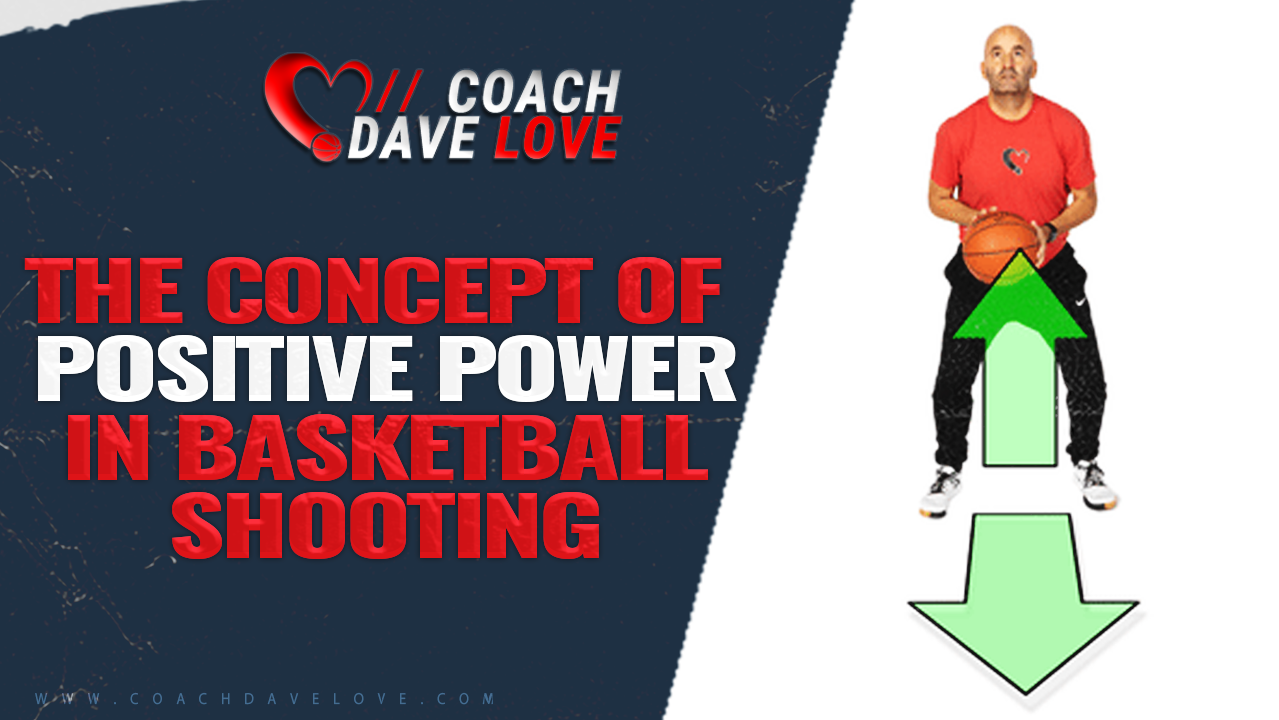
Every movement in a shot should contribute energy toward the hoop or straight up in the air (Positive Energy). But often, body parts generate energy in ways that push the ball off-line. Watch the knees, hips, or non-shooting hand. Are they introducing sideways force? Correcting this reduces misses caused by misdirected power.
Connections
Shooting is about transfer of energy. The most important parts of the shot is where the most energy is transferred and are the areas we should focus on when looking at the video. The key connections are:
- Feet to floor — balance and stability begin here.
- Ball to hands — the last point of contact before release.
When these connections are inconsistent, power leaks or awkward mechanics creep in. I have written extensively about these mechanics, including in Quantifying Stability in Basketball, where stance width was shown to affect both power and efficiency.
Cause vs. Effect
Not every flaw you see is the root problem. Sometimes a poor follow-through or thumb-flick is just a symptom of something that happened earlier in the chain. Correcting the effect won't fix the cause. Coaches and players need to trace errors back to where the motion broke down.
This layered way of watching separates productive analysis from superficial fixes. It also echoes how sports scientists evaluate biomechanical efficiency: not every visible error is the true issue.
Don't Judge One Shot – Look for Habits, Not Mistakes
It's tempting to pause a single miss, point out one flaw, and call it the issue. But no player has a perfect shot every time. Mistakes happen.
What matters is habit.
- Watch multiple attempts. Do you see the same issue repeat across 10 or 20 reps?
- Separate isolated errors from patterns. A player might occasionally push the ball too far left, but if it happens 50% of the time, it's a habit, not a one-off mistake.
This distinction helps coaches decide what to address. Fixing isolated errors wastes time. Fixing habits changes performance.
“Fixing isolated errors wastes time. Fixing habits changes performance.”
Tweet thisThe principle connects closely with concepts like Differential Learning in Basketball, where variability in practice reveals deeper consistency issues. By watching long enough, you separate noise from real patterns.
The Limits of DIY – Why Expert Eyes Still Matter
Even with high-quality video and careful attention, most players and parents only scratch the surface of a shooter's mechanics. What feels like a correct diagnosis might be incomplete or even misleading.
An experienced shooting coach can identify:
- Synchronization issues that affect timing and arc.
- Arc and release patterns that are invisible without trained eyes.
- Sequencing flaws in how the legs, core, and arms work together.
- False positives — issues that look like problems but are actually corrections for something deeper.
That's where a professional basketball shot analysis becomes essential. It's not just about spotting flaws. It's about context, pattern recognition, and years of applied experience at the NBA and collegiate level.
The goal isn't to overwhelm players with technical jargon, but to translate insights into actionable adjustments that change outcomes.
Get Your Professional Breakdown
You can try to evaluate your own mechanics, and the tips in this article will help. But at some point, self-diagnosis reaches its limits. That's why thousands of players and coaches worldwide have turned to a professional Video Shot Analysis.
- Delivered within 10 business days.
- Personalized, detailed feedback that identifies habits and correctable flaws.
- Based on decades of NBA coaching and peer-reviewed research.
For players, parents and coaches who want to take ownership of their development, this service bridges the gap between guesswork and evidence. And for those looking to deepen their learning in the future, keep an eye out for the upcoming "Diagnose Your Own Shot" course, designed to extend these principles into a self-guided system.
If live instruction is what you're after, you can also register for a clinic to experience this process in person.
From Guessing to Structure
Guessing keeps players stuck. Video adds structure. A proper basketball shooting form evaluation reveals what's really happening, highlights patterns, and points directly to solutions.
By using video the right way, watching multiple reps, and focusing on key connections, players can finally move from "I think I know what I'm doing" to "I know exactly what I need to improve."
And when you're ready to apply that clarity, the next step is simple:
Try a Video Shot Analysis and see what a trusted, research-driven breakdown can reveal.
Video Shot Analysis
Send me your footage and I'll break down your shot the way I do for pros — a frame-by-frame diagnosis of what's helping, what's hurting, and exactly what to work on.