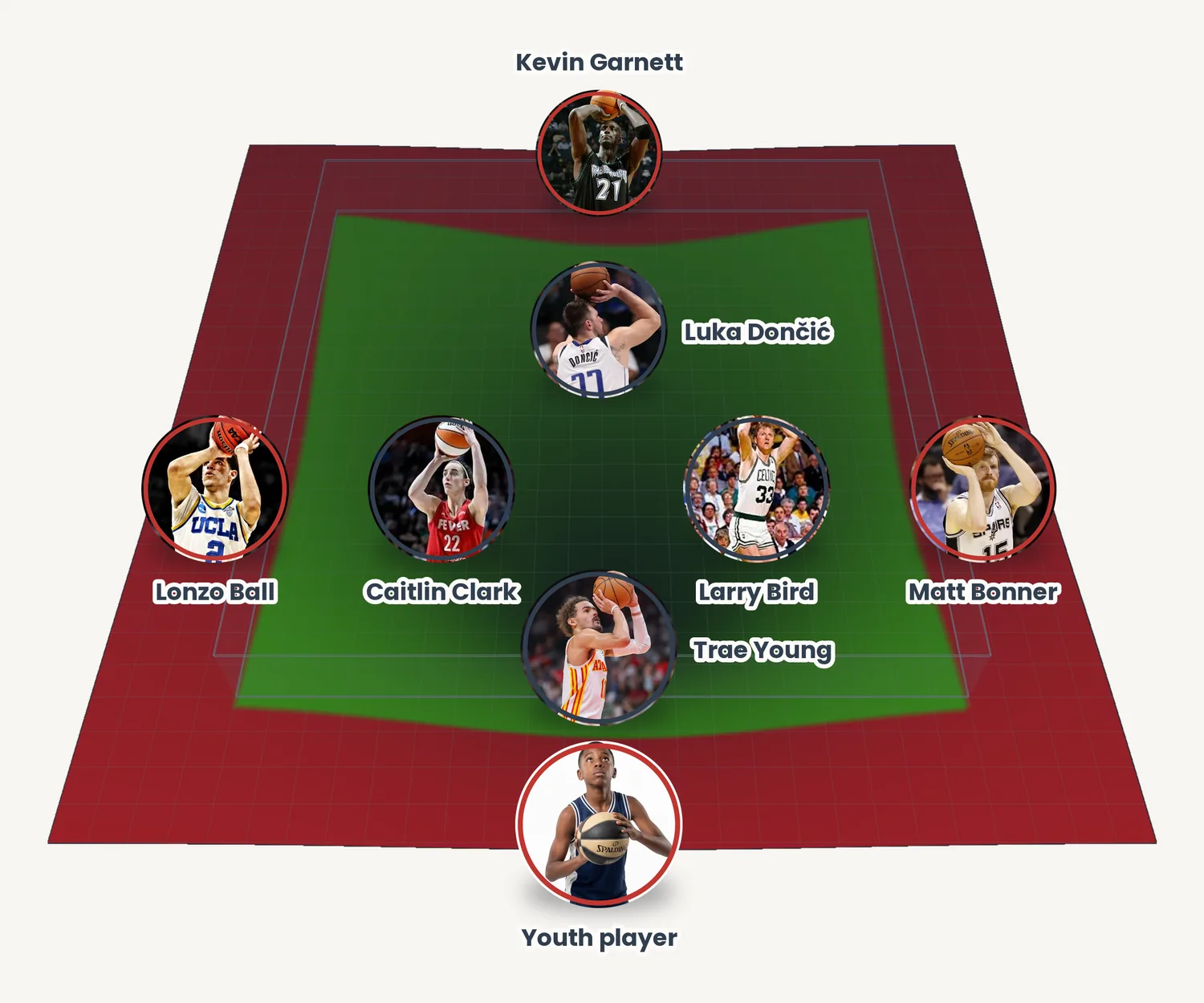
In a previous blog, we introduced the idea of the "sandbox" as a metaphor for the wide range of possible shooting techniques that can result in a made shot. Imagine this sandbox as a visual space representing all the different combinations of habits and techniques a player can use. Each player's shooting form is marked as a dot somewhere within this sandbox, and surrounding that dot is a circle representing how consistent they are in repeating their technique.
Our discussion challenged the traditional approach to skill development, which often aims for a single "perfect" shooting form, located neatly in the center of this sandbox. Instead, we proposed that true shooting skill is about having a larger, adaptable circle—one that allows players to make shots effectively from different spots in the sandbox, under varying conditions and pressures.
To further illustrate this, let's take a closer look at four different types of shooters, each with their own unique place in the sandbox that they made work. Then we'll also look at an example of a similar habit that might have been closer to the edge of the sandbox.
One note on how to read what follows: in this blog we are mapping the sandbox by a single thing — the position of the ball at the set point, how high or low a player holds it and how far it sits to one side. That is the lens for every example below. As we will see at the end, it is far from the only one.
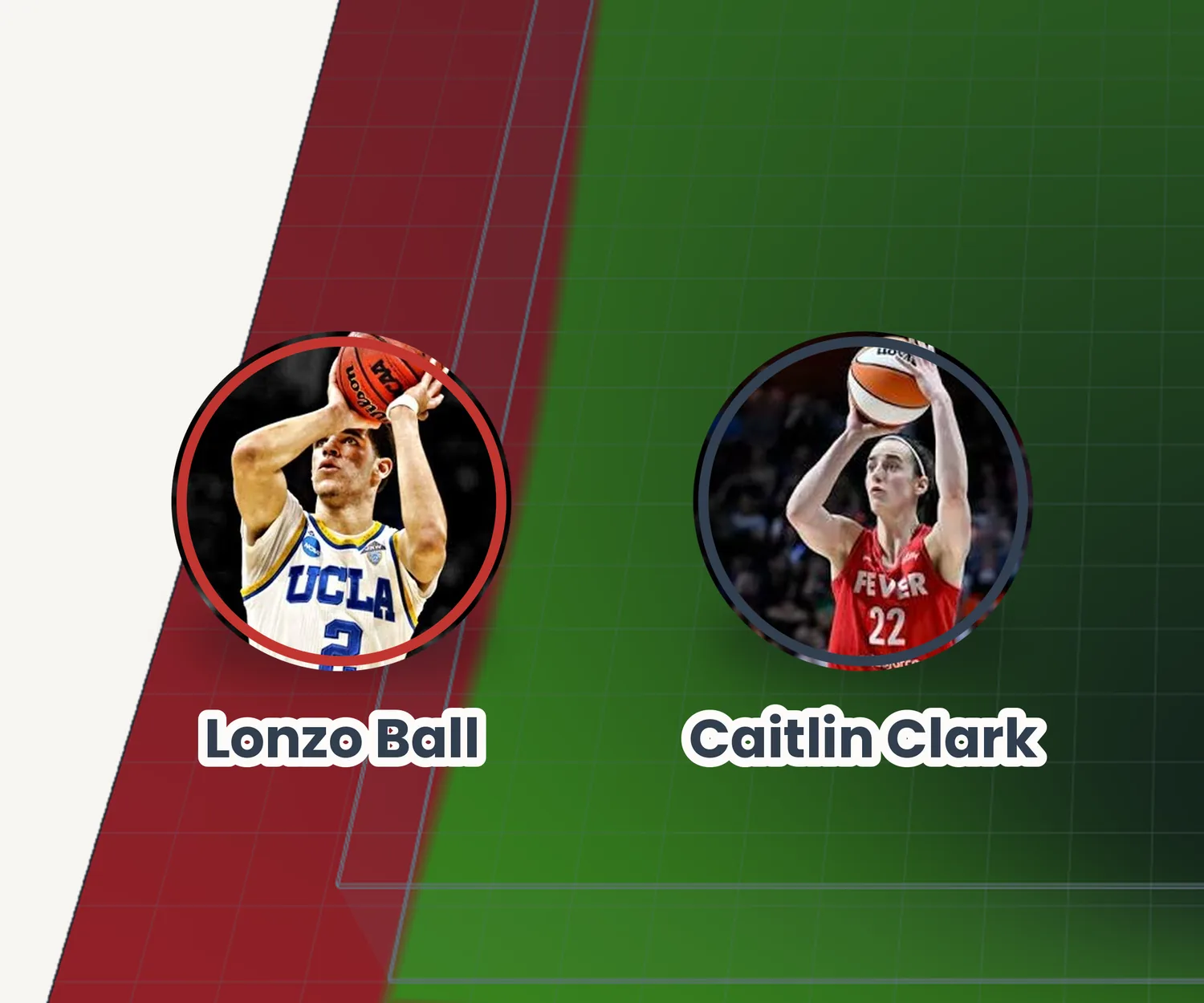
Caitlin Clark - Ball Path Up Left Side
Caitlin Clark is one of the best shooters in the WNBA, but her shooting technique is not what most coaches would consider "ideal." She has a unique habit of bringing the ball path up on the guide hand side of her face, which makes it challenging to get her shooting hand directly under the ball. This causes her guide hand to get more involved in the shot than typically recommended.
Because of this habit, Caitlin's form is slightly skewed to the left side of our metaphorical sandbox. She has mastered a technique that works for her, allowing her to control her shot despite being closer to the edge of adaptability on one side. While she has less room to adjust in that direction, she still has enough flexibility to adapt effectively in most other situations. Caitlin doesn't need to change her form because it doesn't look a certain way, especially when she's found a solution that works for her.
“A shooter doesn't need to change her form just because it doesn't look a certain way — not when she's already found a solution that works for her.”
Tweet thisLonzo Ball had a similar habit early in his career, but in a more exaggerated form, placing his shot even closer to the edge of the sandbox. This meant that he had plenty of room to adapt in one direction, but adapting in the opposite direction pushed him outside the range of effective shooting solutions. Unlike Caitlin, who found consistency with her unconventional form, Lonzo's variability often led to unworkable results, requiring an adjustment to his technique.
Moving his form closer to the center of the sandbox gave him a better foundation to build more adaptable shooting habits. It wasn't that Lonzo needed to look a certain way when he shot, or had to have specific habits, it was just that the habits he had combined with the variability that naturally occurs forced him into too many shots outside the workable sandbox.
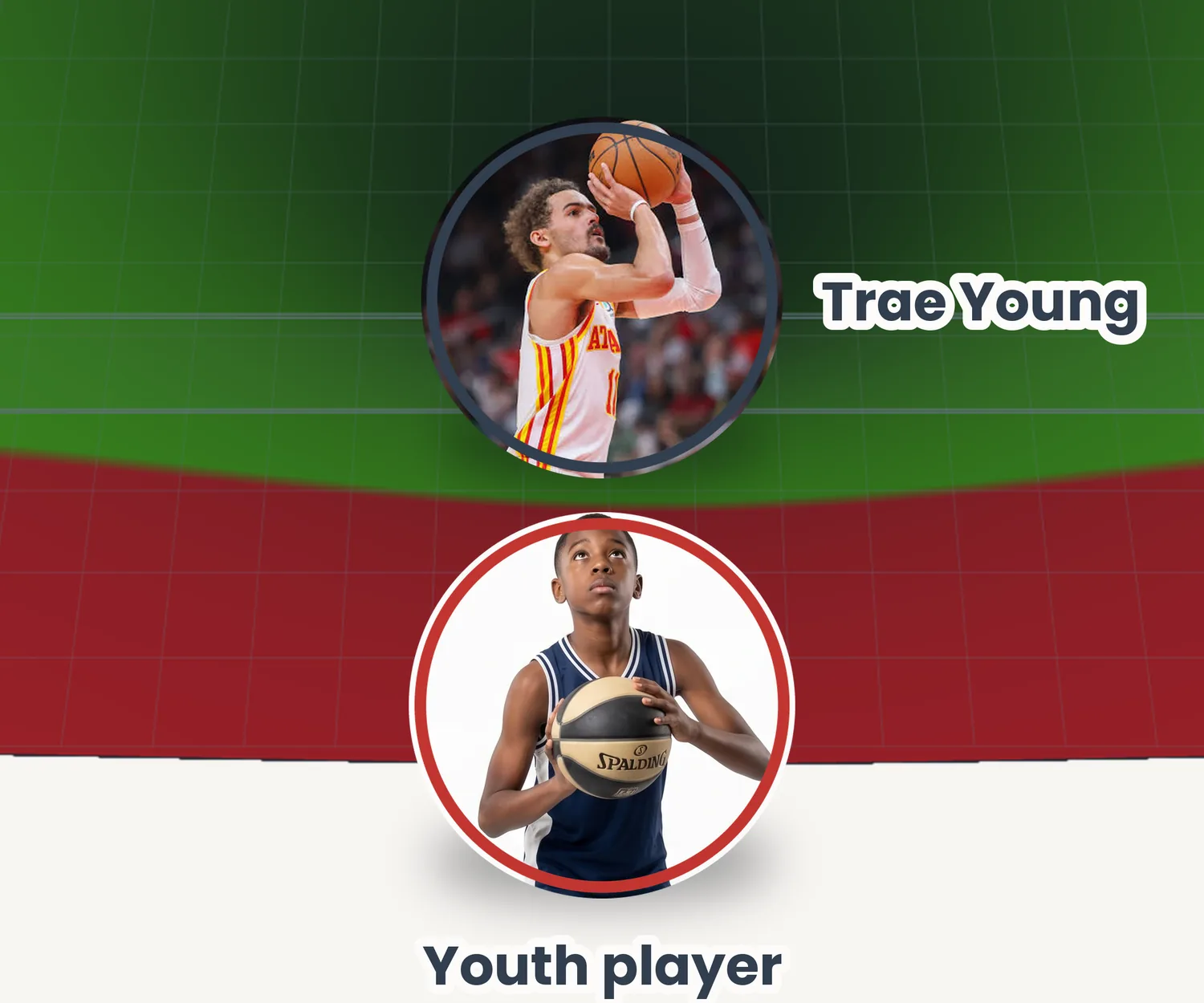
Trae Young - Lower Set Point
Many (including myself) might think a set point above the nose is optimal for a mature, elite shooter, but that (arguably) optimal position doesn't mean every player needs to be able to do only that. Trae Young is a smaller player who regularly shoots from extended range, which requires generating more power than closer to the rim. He's adapted his shooting for the situations that he faces the most as a player. To achieve this, he often lowers his set point below his nose, allowing him to add power while maintaining hand positioning.
This adjustment works for Trae, but it also pushes him closer to the lower edge of the sandbox, where his shot risks becoming too flat or his guide hand could become overly involved. He's found a balance that maximizes his range without sacrificing too much consistency, but any further drop in his set point might push him into unworkable territory. Trae is then adept at raising his set point for the situations closer to the rim that might require that kind of solution.
In contrast, the average youth player often has an even lower set point, dropping it below their chin to generate power. They lack the physical strength to shoot the ball with only one hand (one variable) and have adapted to adding power by lowering their set point and adding a second hand.
This places them on the very bottom edge of the sandbox, where their shot is already flat and forward. Because they're operating at such a low angle, there's little room to adjust in that direction. When conditions change, they have limited options to adapt effectively, making it harder to succeed outside of ideal situations. To improve, players would need to gain physical strength so they can explore the upper half of the sandbox with one variable instead of two.
Luka Dončić - Higher Set Point
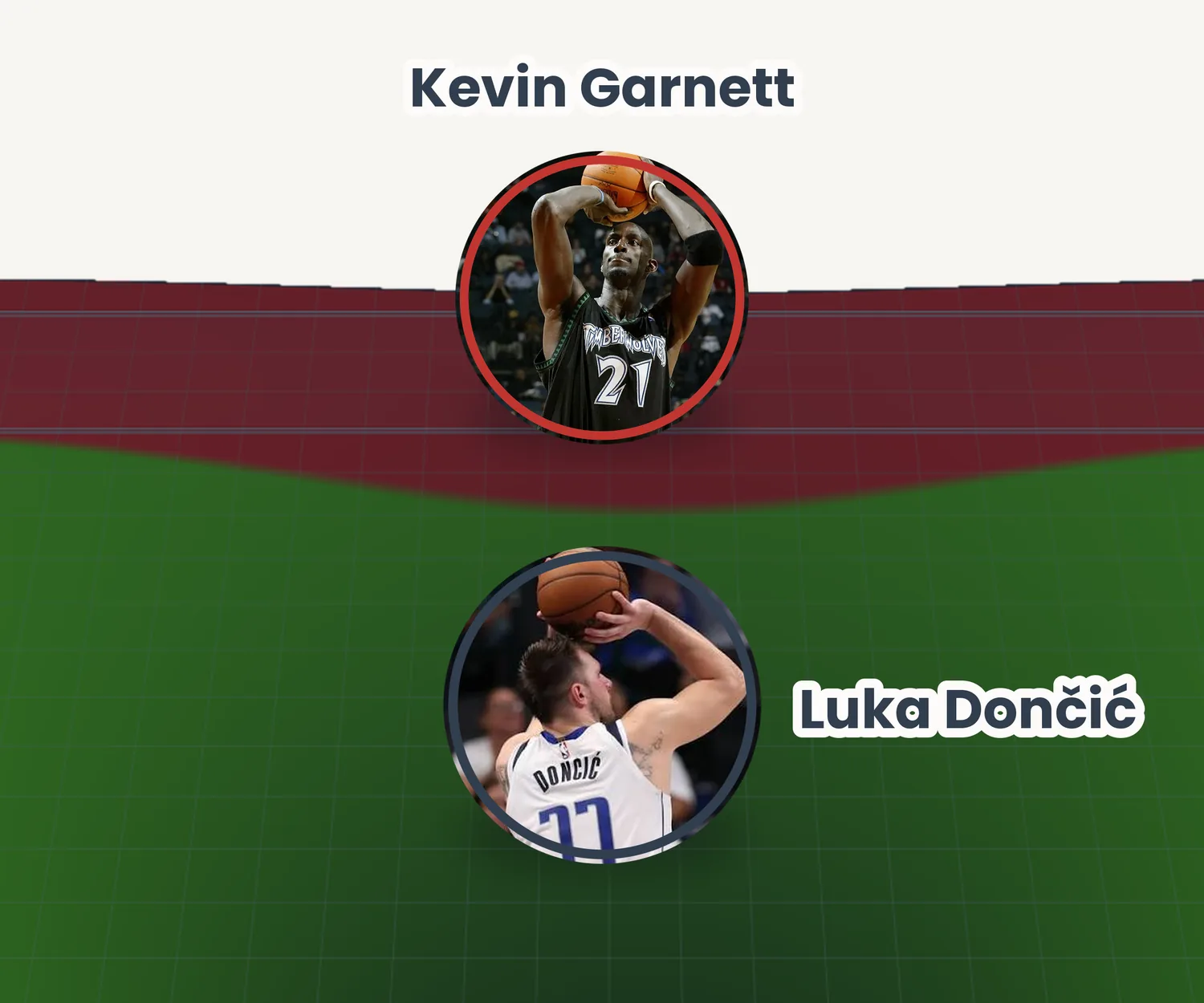
Luka Dončić uses a higher set point in his shooting form, which suits his style as a player who frequently has to shoot over contesting defenders. A lower set point would make it difficult for him to release the ball cleanly over defenders, so raising it above his head gives him an edge in these situations.
However, this adaptation places him slightly closer to the top edge of the sandbox, where it may limit his variability in lower situations. Fortunately, he is stronger than smaller players, and where they need to adjust in one direction to compensate for their physical limitations, Luka needs to adjust in the opposite direction for the game conditions he often plays in.
Kevin Garnett took this adaptation to an even greater extreme, bringing the ball far above his head. This high set point was effective for shooting over defenders but that adjustment caused him to be less adaptable in another way. While a higher set point made his shot harder to block, it forced him into greater release curvature, which makes controlling the distance of shots harder.
Kevin's shot placement was pushed toward the top edge of the sandbox, leaving him little room to adapt higher. He optimized his form for his most frequent situations, but this extreme positioning limited his ability to adjust for other scenarios. He often had to shoot over long defenders, but his habits left him so far removed from the lower end of the sandbox that adapting in that way wasn't an option for Kevin.
Larry Bird - Shooting Over the Right Shoulder
Larry Bird brought the ball up and released it from over his right shoulder, rather than closer to the midline of his body — a spot most coaches would flag as unconventional. But Bird was one of the great shooters the game has seen, and he made that habit work at the highest level. His form sits to the right side of the sandbox, and because he was so adaptable around it, he kept a large circle: he could adjust to different shots, defenders, and situations without the technique breaking down.
Matt Bonner shot from a similar spot — the ball coming up and across from the right — and he was a genuinely great shooter too, one of the best open catch-and-shoot specialists of his era. This is the one place in the sandbox where it's hard to point to a well-known player who took the movement to a true extreme. So unlike the other pairings, both Bird and Bonner really belong in the green — neither was shooting from outside the workable range. The difference between them wasn't inside-versus-outside the sandbox. It was the size of their circle.
Bonner's was simply smaller. Where Bird could adapt his right-shoulder shot to a wide range of situations, Bonner was more limited by his. He was exceptional catching and shooting when open, but the same habit made him harder to adapt off the dribble moving left — getting there meant bringing the ball back across his body to the right, giving defenders more time to contest. Same idea, same side of the sandbox, both effective — one just had more room to move around it.
“Bird and Bonner shot from the same unconventional spot, and both were great. The difference wasn’t right or wrong — it was how much room each had to adapt around it.”
Tweet this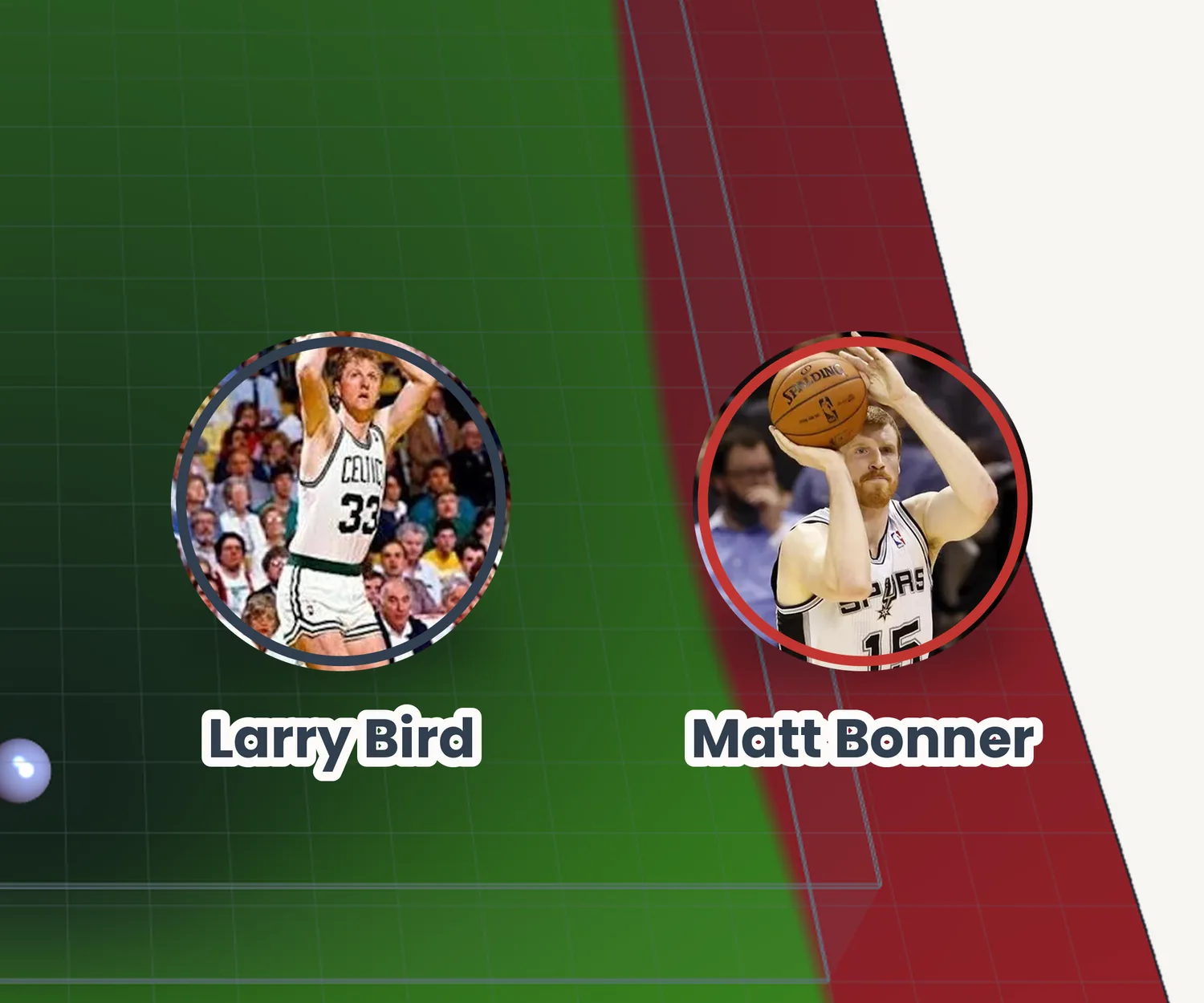
Adaptable, Not "Perfect"
There isn't a single, universal shooting form that fits all players and situations. Each athlete will develop unique habits based on their body type, playing style, and physical abilities. While there are general principles and more optimal habits that can help guide players, there will always be room for variation in how those habits are executed.
“There isn't a single, universal shooting form that fits all players and situations.”
Tweet thisAs coaches, our role is to help players explore and refine their technique around these core principles when needed—encouraging them to find what works best for them while still understanding the boundaries of what is effective. However, it's also crucial to recognize that the closer a player's form is to the edge of the sandbox, the less adaptability they may have in certain directions. Pushing too far in one area, like an extreme set point or shooting angle, can solve specific challenges but may also introduce new limitations.
And notice that everything above mapped just one habit: where the ball sits at the set point. The same lens works for almost any part of the shot. Stance width is its own sandbox — a very wide base sits on one side, a narrow one on the other, with something near hip-width through the middle. Balance is another — leaning forward puts a player toward one edge, leaning back toward the other, with a balanced, athletic base in the center. Seen this way, almost any habit becomes a range with workable middle ground and rising costs toward the extremes, rather than a binary of right and wrong.
The goal, then, is not to force every player into a single ideal mold but to help them build a large circle of solutions that is adaptable, effective, and controllable in game environments.
CDL Coaching Toolbox
The measurements behind everything I coach — balance, release symmetry, and arc — put in your hands to use on your own players. Free to try.